
Car Accident Attorney Koreatown, California
Motor vehicle accidents remain one of the leading causes of personal injury in urban areas throughout California. Communities with dense traffic and high population levels often experience frequent collisions involving cars, pedestrians, cyclists, and public transportation. Koreatown, located in Los Angeles, is one such area where heavy traffic congestion and busy intersections create conditions for unexpected accidents.
When a car accident happens, individuals may face a range of challenges that extend beyond the immediate physical impact. Injured parties may require medical treatment, rehabilitation, and time away from work while recovering. At the same time, insurance claims, vehicle repairs, and legal questions can add to the stress during an already difficult time.
A Car Accident Attorney in Koreatown, California, helps individuals understand the legal aspects of personal injury claims that arise from motor vehicle collisions. California law allows injured individuals to seek compensation when another party’s negligence contributes to an accident. However, proving liability, documenting damages, and navigating insurance negotiations often requires a clear understanding of legal procedures.
Legal professionals in personal injury law assist individuals in evaluating their cases, gathering supporting documentation, and ensuring that legal deadlines are met. Rod Armande Law handles car accidents and other personal injury cases, helping clients understand the legal process for accident-related injuries and financial losses.
The following guide explains common causes of accidents, types of collisions, injury patterns, liability rules under California law, and the legal steps involved in pursuing compensation after a car accident in Koreatown.
Understanding Car Accidents in Koreatown, California
Koreatown is one of the most vibrant and densely populated neighborhoods in Los Angeles. The area contains residential buildings, commercial businesses, restaurants, and entertainment venues that attract both residents and visitors. As a result, traffic levels remain consistently high throughout the day and often extend late into the evening hours.
High vehicle volume combined with narrow city streets can increase the risk of collisions. Drivers may encounter congested traffic, frequent stops at intersections, and large numbers of pedestrians crossing the roadway. In addition, rideshare services, delivery vehicles, and public transportation contribute to a complex traffic environment.
Accidents in Koreatown often occur in areas such as:
Busy intersections with multiple traffic signals
Commercial districts with heavy pedestrian activity
Residential streets with limited parking spaces
High-traffic boulevards connecting major parts of Los Angeles
Parking garages and shopping centers
Urban driving environments require constant attention and awareness. Drivers must navigate changing traffic patterns, cyclists sharing the roadway, and pedestrians crossing streets at designated crosswalks or mid-block locations.
When an accident occurs in such a setting, determining liability can involve examining several factors. Police reports, surveillance cameras from nearby businesses, and eyewitness statements may all play a role in reconstructing how the accident occurred.
Because multiple vehicles or parties may be involved, accident investigations often require careful evaluation of the sequence of events leading up to the collision.
Common Causes of Car Accidents
Motor vehicle collisions can occur for a variety of reasons, but many accidents result from preventable behaviors or unsafe driving practices. Understanding these causes helps illustrate how negligence may contribute to personal injury cases.
Some of the most frequently identified causes of car accidents include:
Distracted Driving: Distracted driving occurs when a driver’s attention shifts away from the road. Mobile phone use, texting, adjusting navigation systems, eating, or interacting with passengers can all reduce focus. Even a brief distraction can delay reaction time and increase the risk of a collision.
Speeding: Driving above the posted speed limit or traveling too fast for the traffic conditions increases the risk of accidents. Higher speeds reduce a driver’s ability to stop quickly and make it more difficult to control a vehicle during sudden maneuvers.
Driving Under the Influence: Alcohol and drugs impair judgment, coordination, and reaction time. Drivers operating vehicles while intoxicated are significantly more likely to cause serious or fatal accidents.
Reckless Driving: Aggressive driving behaviors such as tailgating, weaving between lanes, and ignoring traffic signals can endanger other drivers on the road.
Failure to Obey Traffic Signals: Running red lights or failing to stop at stop signs can lead to intersection collisions, which are often severe due to the angle of impact.
Fatigued Driving: Extremely tired drivers may experience slower reaction times and decreased awareness of their surroundings.
Roadway Hazards: Poor road conditions, construction zones, and limited visibility may also contribute to accidents.
Identifying the cause of a crash often helps determine which party may be legally responsible for resulting injuries and damages.
Types of Car Accidents Handled in Personal Injury Cases
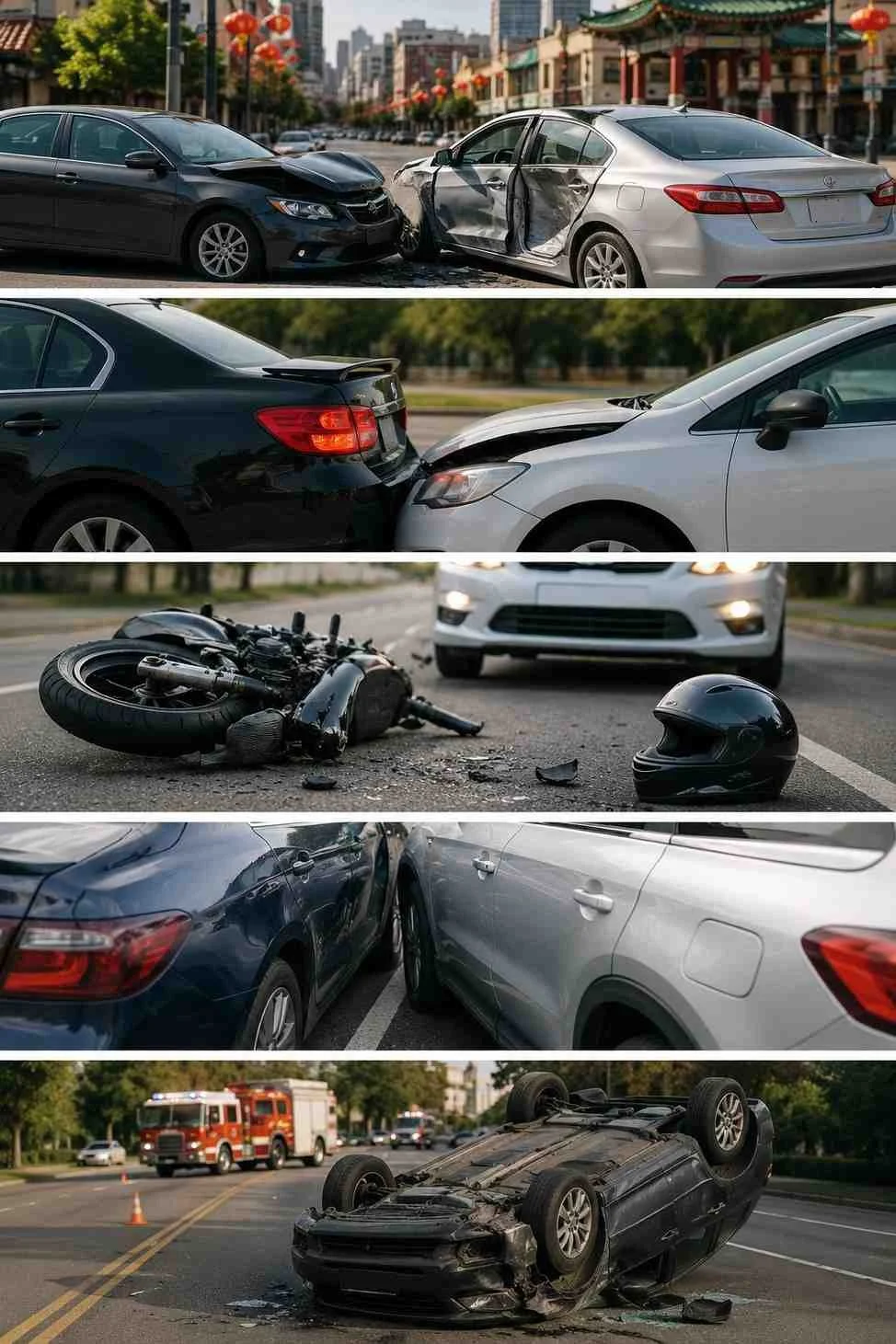
Car accidents can occur in several forms depending on vehicle positioning, traffic conditions, and driver actions. Each type of accident can involve different injury patterns and legal considerations.
Rear-End Collisions
Rear-end accidents occur when one vehicle strikes the back of another vehicle. These collisions frequently happen in heavy traffic where drivers must stop suddenly. Although some rear-end accidents involve minor damage, others can cause serious neck and spinal injuries.
Head-On Collisions
Head-on crashes involve two vehicles traveling in opposite directions that collide front-to-front. These accidents often occur on two-lane roads when a driver crosses the center line or attempts an unsafe passing maneuver.
Because both vehicles may be traveling at high speeds, head-on collisions can cause severe injuries and extensive vehicle damage.
T-Bone or Side-Impact Accidents
Side-impact accidents occur when the front of one vehicle strikes the side of another vehicle. These collisions frequently happen at intersections when a driver fails to yield or runs a red light.
Multi-Vehicle Accidents
Multi-vehicle accidents involve three or more vehicles. They often occur on busy roads or highways, when a single collision triggers a chain reaction involving several drivers.
Determining fault in multi-vehicle crashes can be complicated because multiple drivers may have contributed to the accident.
Hit-and-Run Accidents
In hit-and-run incidents, a driver leaves the accident scene without providing identification or assisting injured individuals. These cases may involve additional investigative steps to identify the responsible driver.
Rollover Accidents
Rollover accidents occur when a vehicle flips onto its side or roof. These incidents can happen due to high speeds, sharp turns, or collisions with other vehicles.
Pedestrian and Bicycle Accidents
Urban neighborhoods like Koreatown experience significant pedestrian and bicycle traffic. Accidents involving pedestrians or cyclists often result in serious injuries due to the lack of physical protection.
Common Injuries in Car Accidents
The physical impact of a motor vehicle collision can cause a wide range of injuries. The severity of these injuries often depends on factors such as vehicle speed, seatbelt use, and the angle of impact.
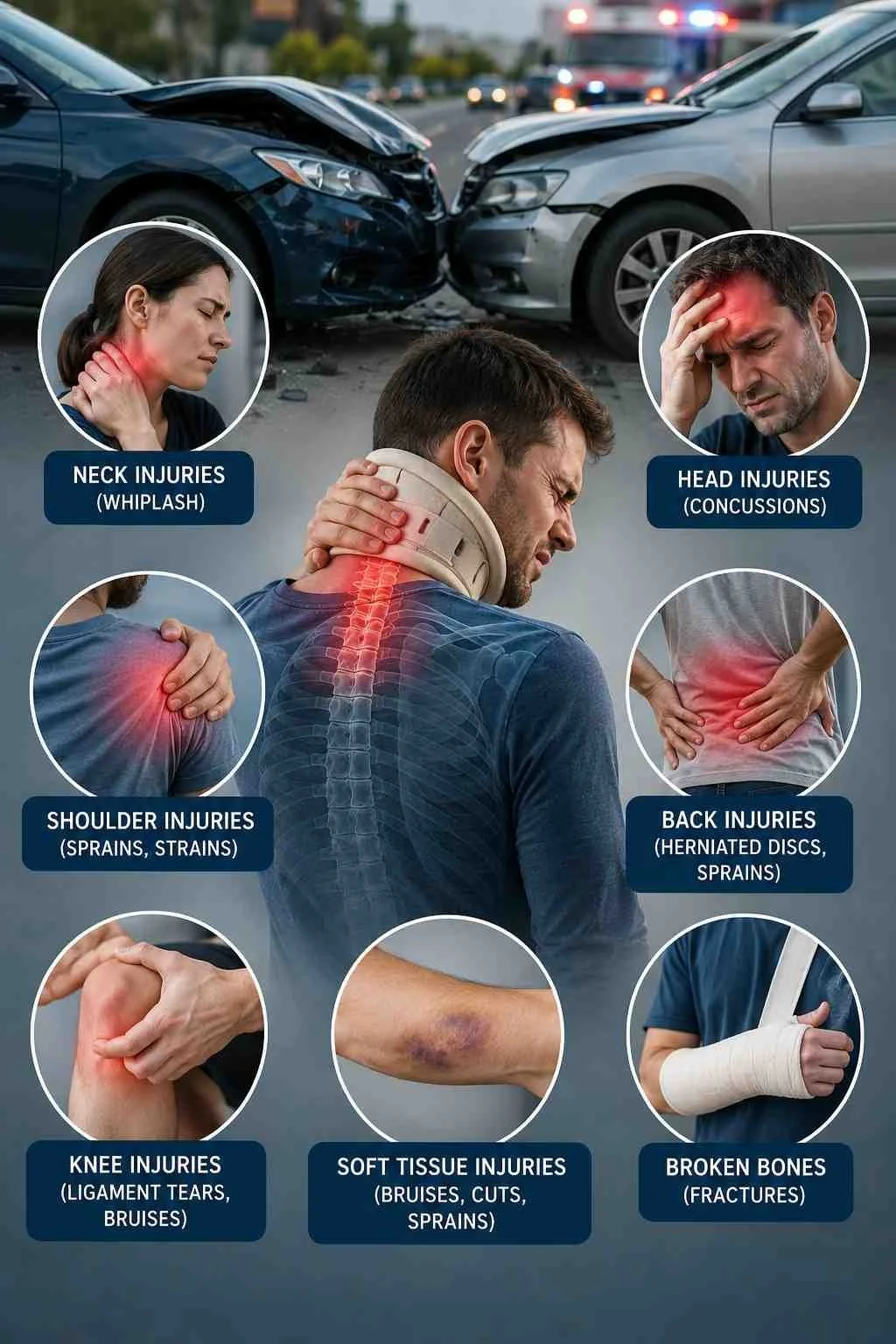
Common injuries associated with car accidents include:
Whiplash and neck injuries
Traumatic brain injuries (TBI)
Spinal cord injuries
Broken or fractured bones
Internal bleeding or organ damage
Soft tissue injuries affecting muscles and ligaments
Psychological trauma, such as anxiety or post-traumatic stress
Some injuries may not be immediately visible after a collision. Symptoms such as headaches, dizziness, or back pain may develop hours or days later. Because of this, medical evaluation after an accident is often recommended even if injuries initially appear minor.
Treatment may involve emergency care, diagnostic imaging, physical therapy, or long-term rehabilitation, depending on the nature of the injury.
What to Do After a Car Accident in Koreatown
Taking the appropriate steps after a car accident can help protect personal safety and preserve important information relevant to insurance claims or legal proceedings.
Ensure Safety: The priority after an accident is ensuring the safety of everyone involved. If possible, vehicles should be moved to a safe location away from traffic.
Contact Emergency Services: Calling law enforcement and emergency medical services ensures that injuries are treated and that an official accident report is created.
Seek Medical Attention: Even if injuries appear minor, medical evaluation can help identify conditions that may worsen without treatment.
Document the Accident Scene: Photographs of the vehicles, road conditions, traffic signals, and the surrounding area can provide valuable evidence.
Exchange Information: Drivers should exchange contact details, driver’s license numbers, license plate numbers, and insurance information.
Speak With Witnesses: Witnesses may provide independent accounts of how the accident occurred.
Notify the Insurance Company: Insurance providers typically require prompt notification of accidents.
Consider Legal Guidance: Consulting a car accident attorney may help individuals understand their legal rights and available options under California law.
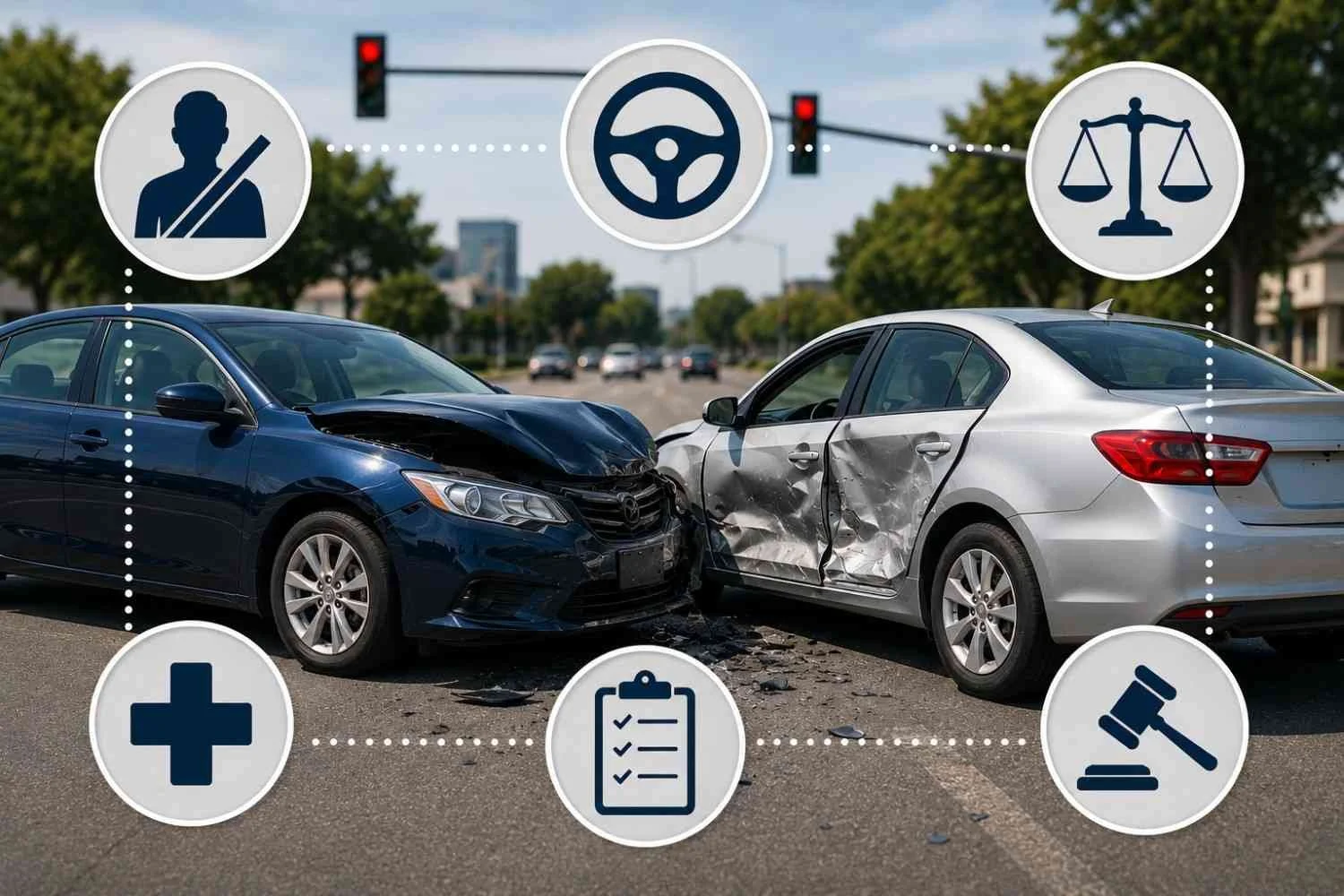
Understanding Liability in Car Accident Cases
Liability refers to legal responsibility for an accident and the damages that result from it. In personal injury law, liability is typically determined based on negligence.
Negligence occurs when a person fails to exercise reasonable care while performing an activity, such as driving a vehicle. For example, drivers have a duty to obey traffic laws and operate their vehicles safely.
Establishing negligence generally involves demonstrating four elements:
Duty of care
Breach of that duty
Causation linking the breach to the accident
Actual damages resulting from the incident
Evidence used to determine liability may include accident reports, traffic camera footage, witness statements, and expert analysis.
California Comparative Negligence Law
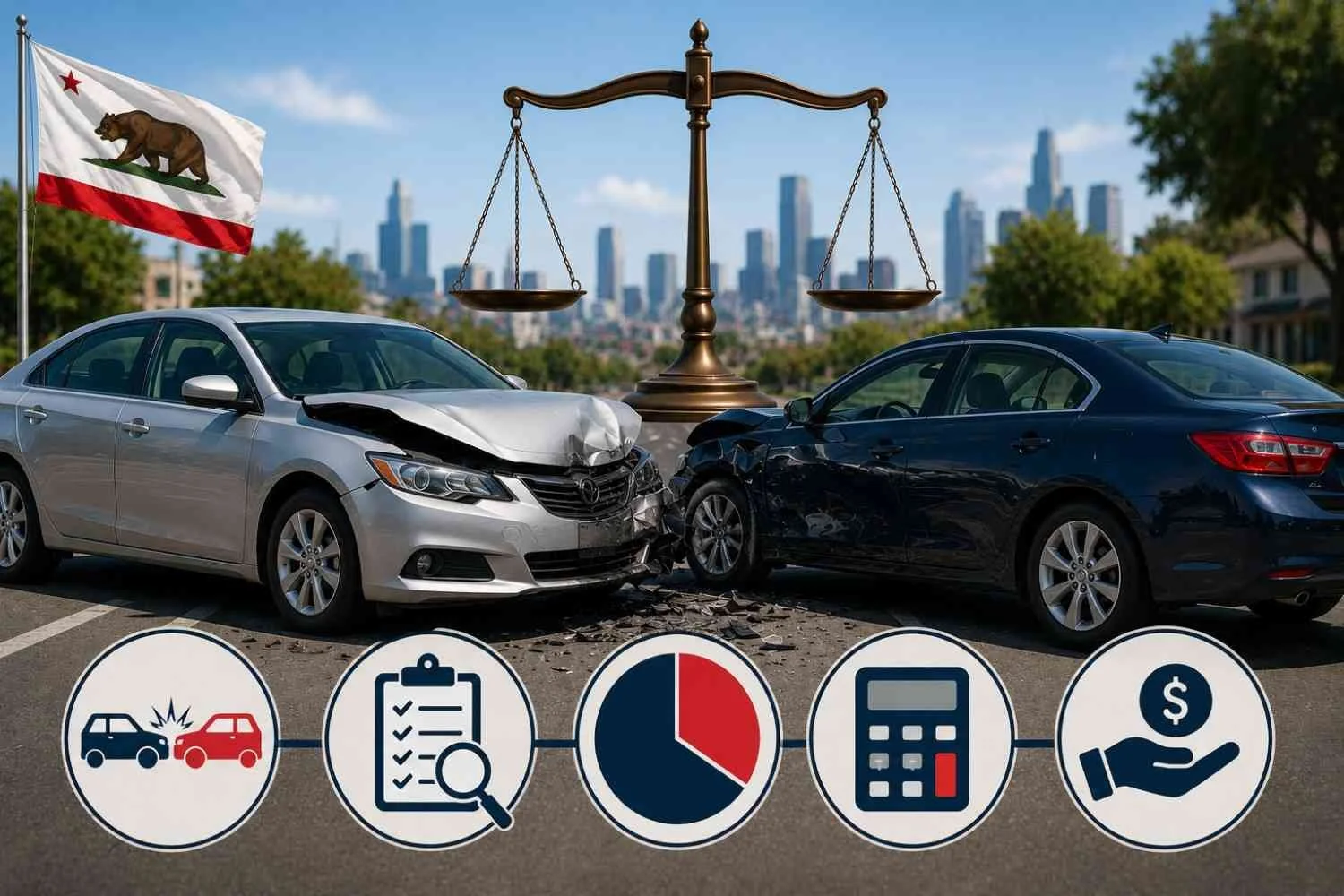
California operates under a pure comparative negligence system, which means that an injured person can recover compensation even if they are partially at fault for an accident. Unlike other states that bar recovery if a victim shares any fault, California allows a proportional reduction of damages. For example, if an injured driver is found 30% responsible for the accident, the total compensation they are eligible for will be reduced by that percentage.
Comparative negligence applies in a wide range of scenarios. It may include situations where a driver fails to signal, exceeds the speed limit, or misjudges another vehicle’s movements, while the other party is also negligent. Courts and insurance companies assess the facts of the accident to assign fault percentages to all involved parties.
Understanding this system is crucial because it directly affects the financial outcome of a claim. An experienced attorney can analyze evidence, reconstruct the accident, and advocate for a fair assessment of responsibility. Legal guidance ensures that the injured party’s share of fault is not overstated and that compensation reflects the true impact of the accident.
Compensation Available After a Car Accident
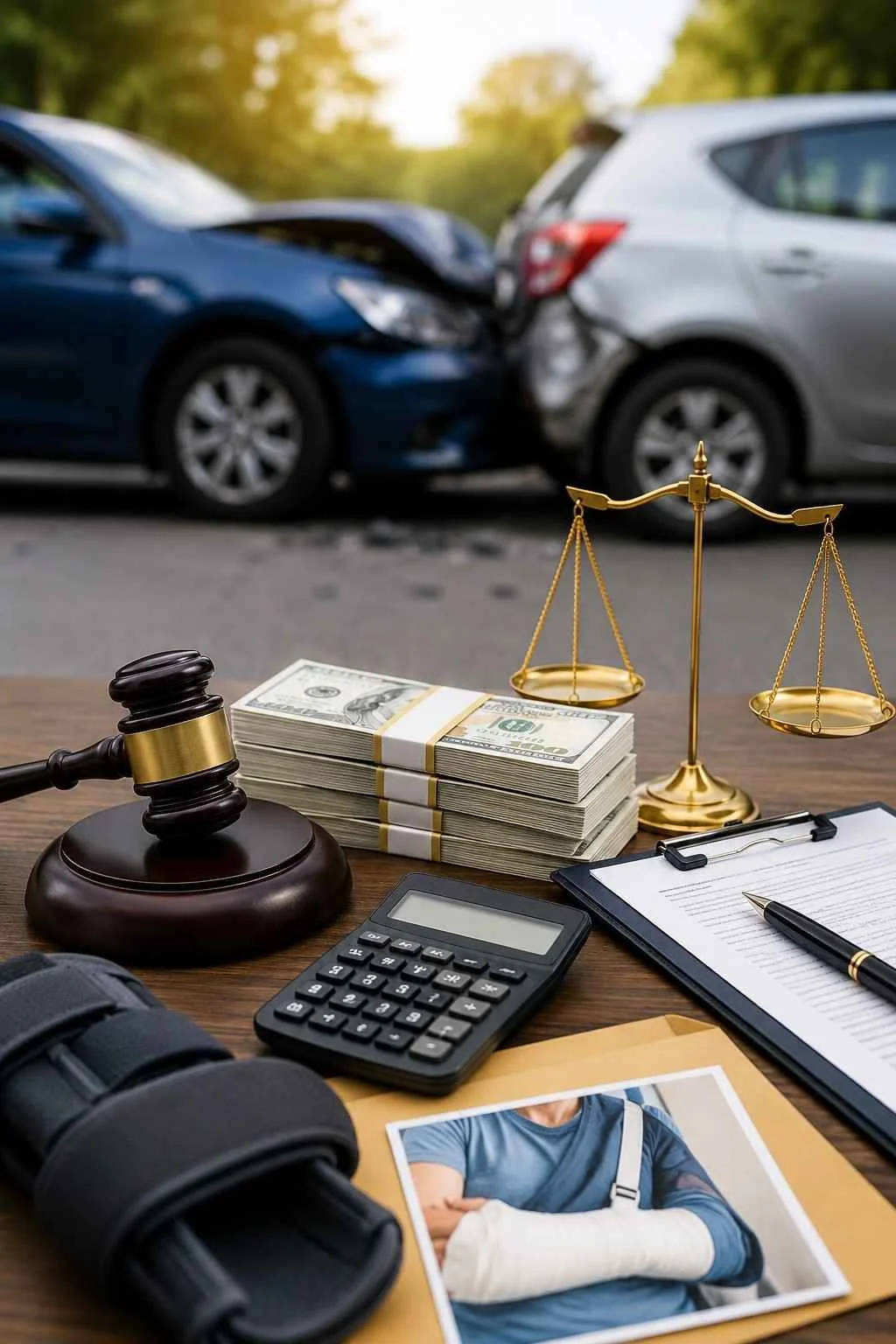
Victims of car accidents may pursue two primary categories of damages: economic and non-economic. Economic damages are tangible, quantifiable losses, while non-economic damages address the broader impacts on the victim’s life.
Economic damages include medical expenses for hospital visits, surgery, diagnostic tests, and ongoing rehabilitation. Lost wages, reduced earning capacity, and vehicle repair or replacement costs are also considered economic losses. These damages are straightforward to calculate using receipts, bills, and employment records.
Non-economic damages cover the physical and emotional toll of an accident. These may include pain and suffering, emotional distress, loss of quality of life, and permanent disability. While harder to quantify, these damages reflect the personal impact of injuries on day-to-day life, including limitations on mobility, recreational activities, and overall independence.
In certain cases, punitive damages may also be awarded if a driver’s conduct was especially reckless or egregious. Understanding the full scope of compensation requires careful documentation and legal evaluation to ensure all potential losses are considered.
The Car Accident Claims Process
The process of pursuing a car accident claim involves multiple stages, each contributing to building a strong legal case.
Initial Consultation – The attorney evaluates the accident, reviews available evidence, and explains potential legal strategies.
Case Investigation – Professionals may reconstruct the accident, gather police and medical reports, and identify witnesses.
Evidence Collection – Critical documentation such as accident photos, vehicle damage reports, and traffic camera footage is compiled.
Insurance Claim Filing – The injured party’s attorney submits claims with detailed documentation of damages to the responsible party’s insurer.
Negotiation – Attorneys negotiate with insurance adjusters to achieve fair settlements based on medical costs, property damage, and pain and suffering.
Settlement Discussions – Many cases resolve here, avoiding the time and cost of litigation.
Filing a Lawsuit – If a fair settlement cannot be reached, a formal lawsuit may be filed in civil court.
Trial Proceedings – Judges or juries may determine fault, assess damages, and issue compensation if the case goes to trial.
This process emphasizes the importance of timely action and accurate documentation to protect legal rights. Attorneys guide clients through each stage to maximize recovery while minimizing complications.
Evidence That Can Strengthen a Car Accident Claim
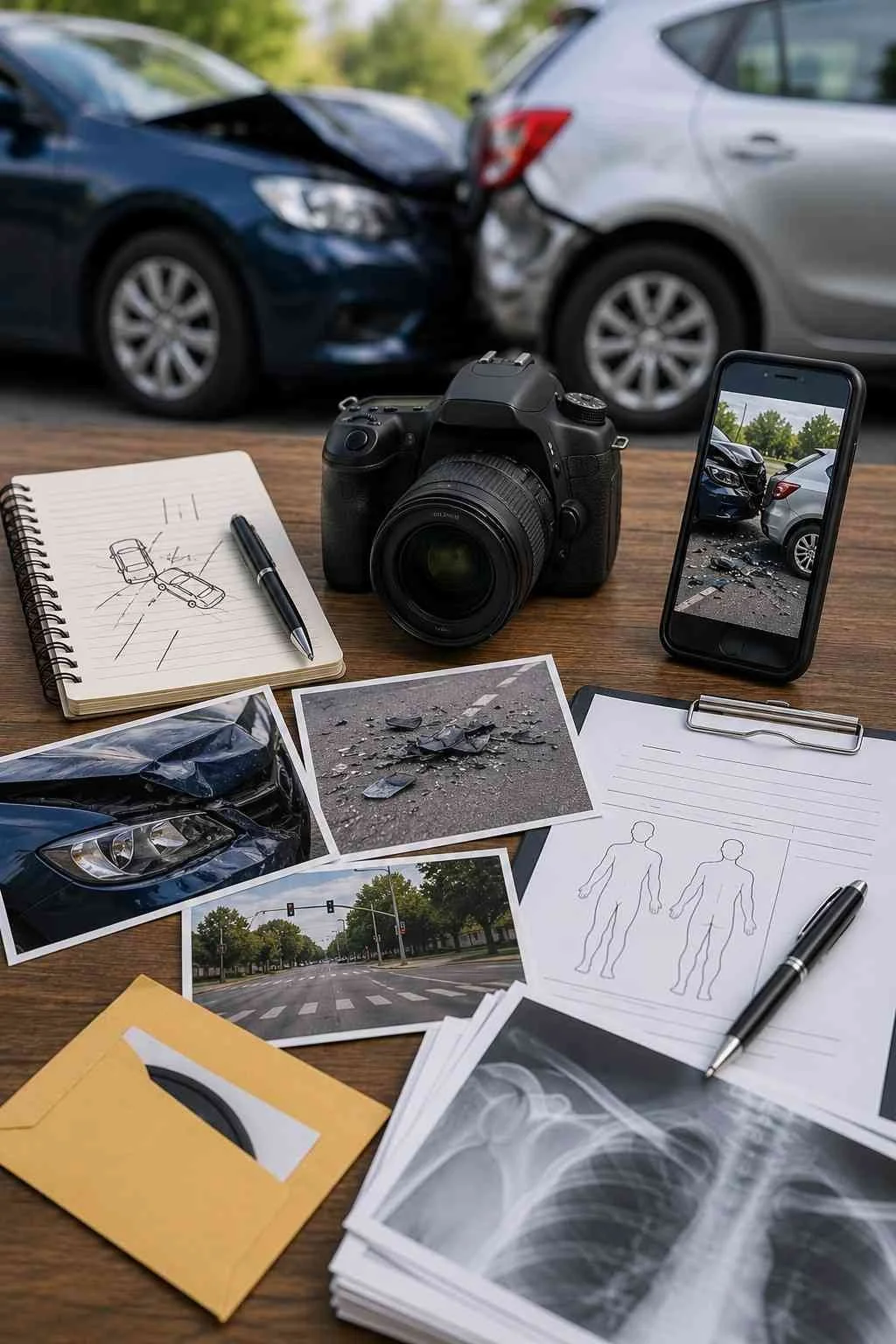
Evidence is the backbone of any car accident case. Collecting strong, well-documented evidence can make a significant difference in the outcome of a claim.
Common types of evidence include:
Police Reports – Official documentation of the accident, witness statements, and officer observations.
Medical Records – Treatment notes, diagnostic reports, and physical therapy documentation that establish the extent of injuries.
Photographs – Images of vehicle damage, skid marks, road conditions, and accident scene layout.
Witness Statements – Independent accounts that clarify the sequence of events or identify negligent behaviors.
Traffic Camera or Surveillance Footage – Visual proof of how the accident occurred, useful in liability disputes.
Vehicle Damage Reports – Professional assessments of repair costs or collision severity.
Expert Testimony – Accident reconstruction experts can provide detailed explanations about speed, impact, and fault.
Collecting comprehensive evidence supports both settlement negotiations and courtroom arguments. An attorney can ensure that all relevant documentation is obtained promptly and presented accurately to maximize the chances of fair compensation.
Car Accident Laws and Statute of Limitations in California
California law sets specific timelines for filing personal injury claims resulting from car accidents. The statute of limitations generally allows two years from the date of the accident to file a personal injury lawsuit. Failing to act within this period may result in the loss of legal rights to recover compensation.
Certain exceptions may apply, such as claims involving government entities, where shorter deadlines exist. Legal professionals can determine the appropriate timeframes and ensure all deadlines are met. Acting promptly not only protects legal rights but also allows for more effective evidence collection and witness testimony, which may degrade over time.
Challenges in Car Accident Cases
Car accident claims can involve multiple challenges that impact both resolution and compensation. Some of these include:
Conflicting Evidence – Differences in witness statements, accident reports, and vehicle damage assessments can complicate liability determination.
Disputed Fault – When multiple parties share responsibility, determining each party’s percentage of fault can be complex.
Delayed Injuries – Some injuries may appear after a period of time, requiring ongoing medical documentation.
Insurance Disputes – Insurers may deny claims or attempt to minimize payouts.
Multiple Parties Involved – Accidents involving several vehicles or third-party drivers require careful investigation and coordination.
Addressing these challenges requires detailed legal evaluation, prompt action, and thorough documentation to strengthen claims and support fair compensation.
Preventing Car Accidents in Urban Areas
While not all accidents are preventable, drivers can take steps to minimize the risk of collisions in high-traffic urban areas like Koreatown.
Safety measures include:
Avoiding distractions such as mobile phones or navigation adjustments while driving
Adhering to speed limits and adjusting for traffic conditions
Maintaining a safe distance from other vehicles to allow adequate reaction time
Remaining alert for pedestrians, cyclists, and public transportation
Practicing defensive driving techniques, anticipating potential hazards, and exercising patience at intersections
Proactive driving habits not only reduce the risk of accidents but also help protect individuals and the community at large.
Speak With a Car Accident Attorney in Koreatown, California
Individuals involved in a motor vehicle accident may have questions about their legal rights and options under California law. Rod Armande Law provides legal guidance on car accident claims in Koreatown, California, helping individuals understand liability, insurance issues, and the legal process for pursuing compensation after an accident.
Frequently Asked Questions (FAQs)
-
In most cases, California law allows two years from the date of the accident to file a personal injury lawsuit. However, certain exceptions may apply depending on the circumstances of the case.
-
After a car accident, prioritize safety, call emergency services, seek medical attention, document the accident scene, and exchange information with other drivers.
-
Yes. California follows a comparative negligence rule, which allows individuals to recover compensation even if they share partial responsibility for the accident.
-
Compensation is typically based on factors such as medical expenses, lost wages, property damage, and the severity of injuries.
-
No. Many car accident claims are resolved through negotiations and settlements with insurance companies without proceeding to trial.
-
Important evidence may include police reports, medical records, witness statements, accident scene photographs, and vehicle damage documentation.