
Green Card Attorney Silver Lake, California
Obtaining a green card, also known as lawful permanent residence, is a significant milestone for many individuals seeking to establish long-term residence in the United States. A green card allows foreign nationals to live and work in the country permanently and to pursue personal, professional, and family goals. It also serves as an important step toward eventual U.S. citizenship for many immigrants.
The process of obtaining lawful permanent residency is governed by federal immigration laws and regulations administered by the United States Citizenship and Immigration Services (USCIS) and other government agencies. Each application is reviewed carefully to confirm that the applicant meets eligibility requirements and provides sufficient supporting documentation. Because immigration procedures involve numerous forms, eligibility rules, and legal standards, applicants must prepare their cases with attention to detail.
For many individuals and families, the immigration system can appear complicated. Different green card categories have distinct requirements, processing times, and documentation standards. Some applicants rely on family relationships, while others pursue employment-based pathways or humanitarian protection. The correct process depends on the applicant’s individual circumstances and immigration history.
Residents of Silver Lake, California, who are exploring permanent residency options may encounter many of the same questions that immigrants across the country face. Understanding the eligibility requirements, documentation expectations, and procedural steps involved in green card applications can help individuals navigate the process more effectively. A green card lawyer can assist by explaining legal requirements, reviewing documentation, and helping applicants understand the stages of the immigration process.


Understanding Lawful Permanent Residency in the United States
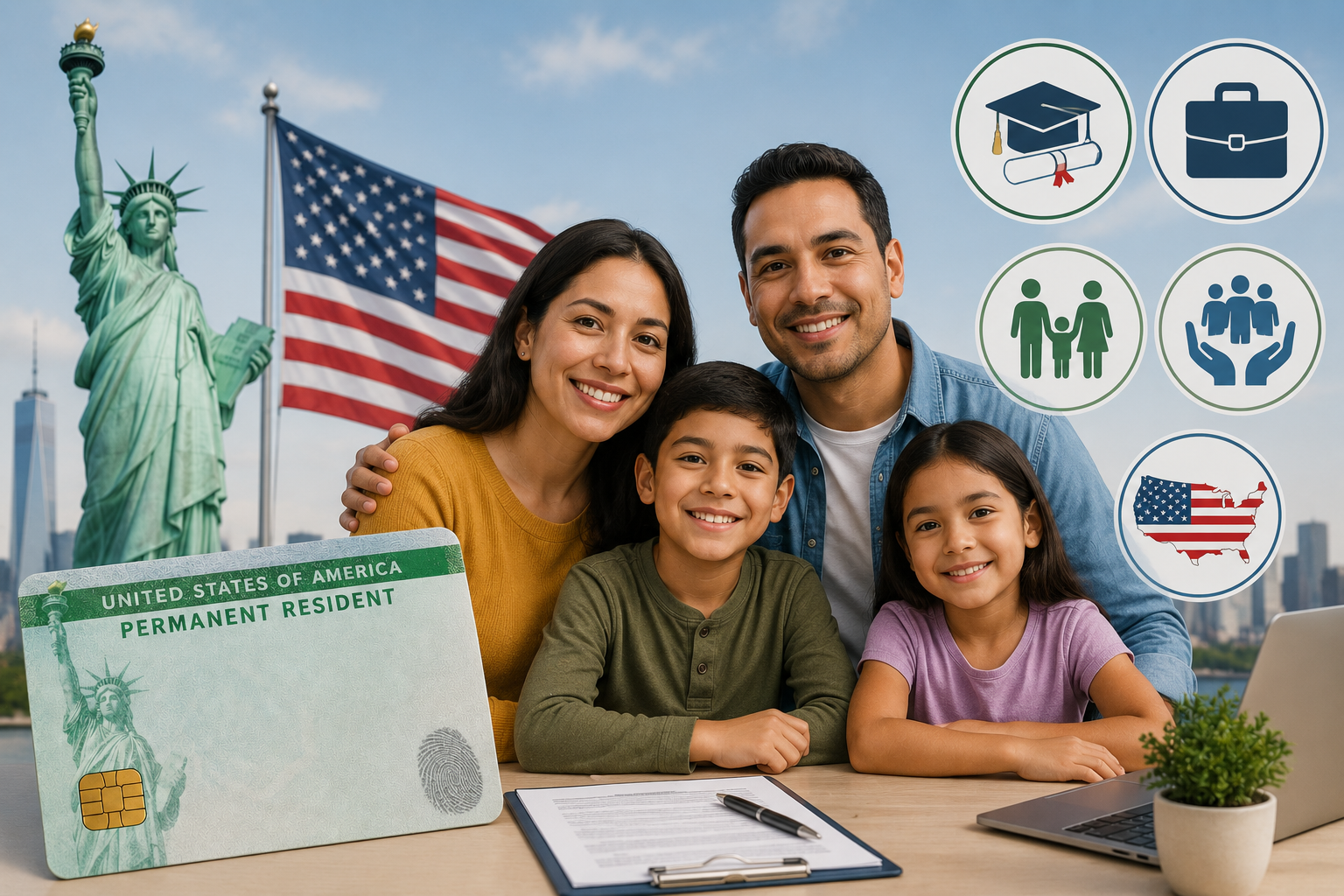
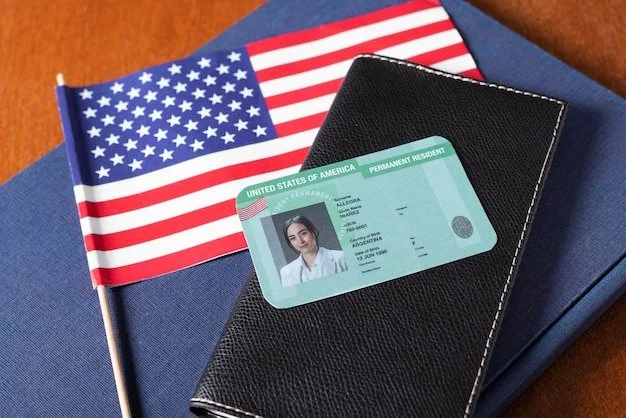
Lawful permanent residency grants a foreign national the legal right to reside in the United States indefinitely. Individuals who obtain this status receive a Permanent Resident Card, commonly referred to as a green card. This document serves as proof that the individual has been granted authorization to live and work permanently in the country.
Permanent residents enjoy several rights under U.S. immigration law. These rights include the ability to accept employment with most employers, travel internationally under certain conditions, and access educational opportunities within the United States. In addition, permanent residents may sponsor certain family members for immigration benefits, depending on their relationship and eligibility.
Although permanent residency provides significant benefits, it also carries responsibilities. Green card holders must comply with U.S. federal, state, and local laws. They are also required to file income taxes and maintain their primary residence in the United States. Extended trips outside the country can sometimes raise concerns regarding whether an individual intends to maintain permanent residence.
Another important aspect of lawful permanent residency is the opportunity to apply for U.S. citizenship through naturalization. After meeting residency requirements and other eligibility standards, permanent residents may choose to apply for citizenship and gain additional rights, such as voting in federal elections and obtaining a U.S. passport.
Understanding both the benefits and obligations of permanent residency is an important step for individuals considering a green card application.
Types of Green Card Categories
The U.S. immigration system offers several different pathways for individuals seeking permanent residency. Each pathway is designed to address specific immigration situations, such as family reunification, employment opportunities, or humanitarian protection.
Family-Based Green Cards
Family sponsorship remains one of the most common ways individuals obtain permanent residency in the United States. U.S. citizens and lawful permanent residents may sponsor certain relatives for immigration benefits.
Immediate relatives of U.S. citizens are given priority under immigration law because their visas are not subject to annual numerical limits. These immediate relatives include:
Spouses of U.S. citizens
Unmarried children under the age of 21
Parents of U.S. citizens who are at least 21 years old
In addition to immediate relatives, U.S. immigration law provides family preference categories for other relationships. These categories are subject to annual visa limits and often involve waiting periods due to high demand.
Family preference categories may include:
Unmarried adult children of U.S. citizens
Married children of U.S. citizens
Siblings of U.S. citizens
Spouses and unmarried children of lawful permanent residents
Because the number of available visas is limited each year, applicants in family preference categories may wait several years before they are eligible to complete the final stage of their green card application.
Employment-Based Green Cards
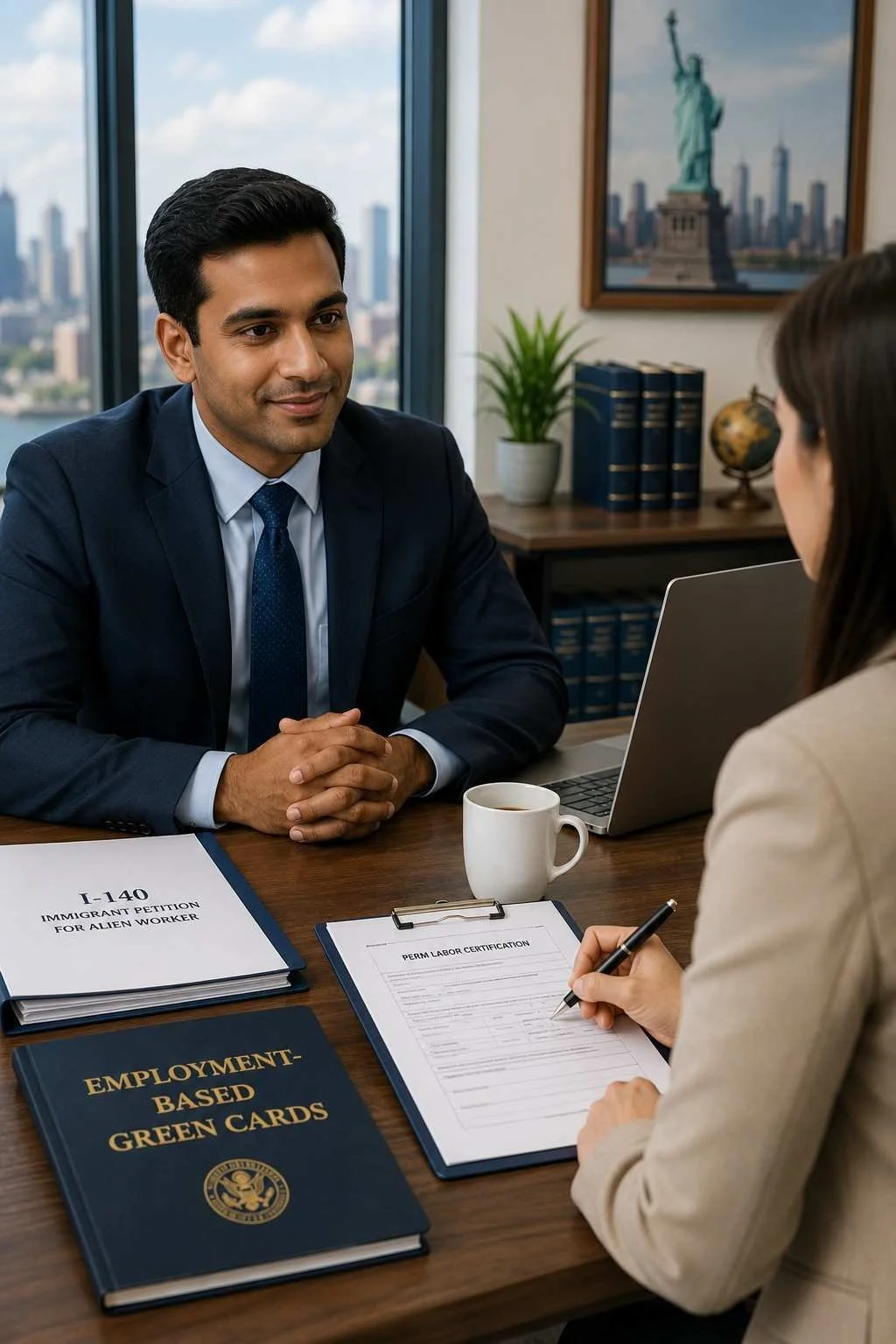
Employment-based immigration allows foreign nationals with specific skills, education, or professional qualifications to pursue permanent residency through employment opportunities in the United States.
Employment-based green cards are typically organized into several preference categories. The most common categories include:
EB-1: Individuals with extraordinary ability in fields such as science, arts, education, business, or athletics; outstanding professors or researchers; and multinational executives
EB-2: Professionals with advanced degrees or individuals who demonstrate exceptional ability in their field
EB-3: Skilled workers, professionals with bachelor’s degrees, and certain other workers
Many employment-based green card applications require an employer to sponsor the worker. Employers may also be required to obtain labor certification through the United States Department of Labor, demonstrating that hiring a foreign worker will not negatively affect U.S. workers in the same field.

Marriage-Based Green Cards
Marriage to a U.S. citizen or lawful permanent resident may provide a pathway to permanent residency. However, immigration authorities closely examine these applications to ensure that the marriage is genuine and not entered into solely for immigration purposes.
Applicants must demonstrate the authenticity of the marriage by submitting evidence that may include:
Joint financial accounts
Shared housing agreements
Photographs and travel records
Affidavits from friends and family
When a marriage is less than two years old at the time permanent residency is granted, the foreign spouse typically receives a conditional green card valid for two years. The couple must later file a petition to remove conditions on their green card to obtain a permanent 10-year green card.
Humanitarian Green Cards
Certain individuals may qualify for permanent residency through humanitarian immigration programs. These programs are designed to protect individuals who face danger or hardship in their home countries.
Humanitarian pathways to permanent residency may include:
Refugees admitted to the United States
Individuals granted asylum
Victims of human trafficking
Victims of certain qualifying crimes
After meeting specific requirements and maintaining their immigration status for a designated period, individuals in these categories may apply for lawful permanent residency.
Adjustment of Status vs Consular Processing
Green card applicants generally complete the permanent residency process through one of two procedures: adjustment of status or consular processing. The appropriate pathway depends on whether the applicant is currently located inside or outside the United States.
Adjustment of Status
Adjustment of status allows eligible individuals who are already present in the United States to apply for permanent residency without leaving the country. Applicants submit Form I-485 along with supporting documentation to the United States Citizenship and Immigration Services.
The adjustment of status process typically includes several steps:
Submitting the permanent residency application
Attending a biometrics appointment
Completing a medical examination
Participating in an interview with an immigration officer
During the application period, many applicants are also eligible to apply for employment authorization and advance parole travel permission while their case is pending.

Consular Processing
Consular processing is used when applicants complete their immigration procedures through a U.S. embassy or consulate outside the United States. Once an immigrant petition is approved, the case is transferred to the National Visa Center, which collects supporting documents and schedules an interview abroad.
At the interview, a consular officer evaluates the applicant’s eligibility for an immigrant visa. If approved, the applicant receives a visa allowing entry to the United States as a permanent resident.
Both processes involve detailed documentation and background checks, and the choice between them depends on the applicant’s immigration status and location.

Green Card Eligibility Requirements
Eligibility for a green card is determined by several factors established under U.S. immigration law. Although requirements vary by immigration category, most applicants must demonstrate eligibility through a recognized immigration pathway.
General eligibility requirements often include:
A qualifying family relationship or employment offer
Approval of an immigrant petition
Availability of an immigrant visa number
Admissibility to the United States under immigration law
Admissibility is an important aspect of the green card process. Immigration authorities review factors such as criminal history, prior immigration violations, security concerns, and health-related conditions. Applicants may also be required to demonstrate financial support through a sponsor-provided Affidavit of Support.
Understanding these requirements before submitting an application can help applicants avoid unnecessary delays and properly prepare their documentation.
Documents Required for a Green Card Application
Green card applications require substantial documentation to verify eligibility and identity. Immigration authorities rely on official records to confirm the accuracy of the information provided in the application.
Although document requirements vary depending on the immigration category, applicants commonly submit:
Passport and identification documents
Birth certificates
Marriage certificates or divorce decrees
Employment records and verification letters
Financial documentation from sponsors
Affidavit of Support forms
Immigration history records
Applicants must also undergo a medical examination conducted by an authorized physician. This exam confirms that the applicant meets health-related requirements and does not have medical conditions that would make them inadmissible under immigration law.
Providing clear and complete documentation is essential because incomplete applications may result in delays or requests for additional evidence from immigration authorities.
Steps in the Green Card Application Process
The process of applying for permanent residency typically involves several stages, although the exact procedures may vary by immigration category.
Determining Eligibility: Applicants must first determine whether they qualify under a particular immigration category. This involves reviewing immigration laws and evaluating family relationships, employment opportunities, or humanitarian eligibility.
Filing the Immigrant Petition: A family member or employer typically files an immigrant petition with immigration authorities. This petition establishes the legal basis for the green card application.
Visa Availability and Priority Dates: Many immigration categories are subject to annual visa limits. Applicants must wait until their priority date becomes current before proceeding to the final stage of the application.
Submitting the Green Card Application: Once a visa number becomes available, applicants may file for adjustment of status or begin consular processing.
Biometrics Appointment: Applicants attend a biometrics appointment where fingerprints, photographs, and signatures are collected for background checks.
Interview: Many applicants must attend an interview with an immigration officer or consular officer who reviews the application and verifies eligibility.
Final Decision: After reviewing the application and supporting documents, immigration authorities issue a final decision approving or denying the request for permanent residency.
Green Card Processing Times
Processing times for green card applications vary widely depending on several factors. Some cases may be completed within a year, while others may take several years due to visa limits or administrative delays.
Factors that influence processing times include:
The immigration category used for the application
Visa availability based on priority dates
Country of origin of the applicant
Government processing backlogs
Requests for additional documentation
Applicants can monitor the status of their case through official government tracking systems. However, processing times may change depending on government workload and policy changes.

Preparing for a Green Card Interview
The green card interview is an important stage of the immigration process. During the interview, an immigration officer reviews the applicant’s documentation and asks questions to confirm the accuracy of the information provided.
Applicants should prepare by reviewing their submitted forms and organizing supporting documents before the interview. Officers may ask questions about:
Personal background and immigration history
Family relationships or employment details
Travel history and residence information
For marriage-based applications, couples may be asked additional questions about their relationship to verify the authenticity of the marriage.
Providing consistent and truthful answers during the interview is important because discrepancies between the application and the interview responses may lead to additional review.
Common Challenges in Green Card Applications
Green card applications sometimes encounter obstacles that can delay the process or require further documentation.
Common challenges include:
Missing or incomplete documentation
Requests for Evidence from immigration authorities
Visa backlog delays
Prior immigration violations
Errors or inconsistencies in submitted forms
Applicants may need to respond to government requests or submit additional documentation to resolve these issues before a final decision is made.
Maintaining Permanent Resident Status
Once an individual becomes a permanent resident, certain responsibilities must be met to maintain that status.
Permanent residents should:
Maintain their primary residence in the United States
Avoid extended absences from the country without proper documentation
File federal income taxes as required
Renew their green card before it expires
Failure to fulfill these responsibilities may complicate the process for individuals seeking to renew their green card or apply for citizenship.

Pathway From Green Card to U.S. Citizenship
Many permanent residents eventually choose to apply for U.S. citizenship through the naturalization process. Most green card holders become eligible after five years of continuous residency, although spouses of U.S. citizens may qualify after three years.
The naturalization process generally includes:
Filing a citizenship application
Completing biometrics
Attending a citizenship interview
Passing English and civics tests
Successful applicants take an oath of allegiance and become naturalized citizens of the United States.

How a Green Card Lawyer Can Assist
Immigration law is highly detailed and involves numerous procedures, forms, and eligibility requirements. A green card lawyer can help individuals better understand these legal processes and prepare their applications accurately.
Legal assistance may involve:
Evaluating immigration eligibility
Reviewing documentation for completeness and accuracy
Preparing immigration forms
Responding to government requests for additional evidence
Explaining the requirements of immigration interviews
Guidance from an immigration lawyer may help applicants better understand the legal framework surrounding permanent residency and avoid common mistakes during the application process.

Green Card Legal Services in Silver Lake, California
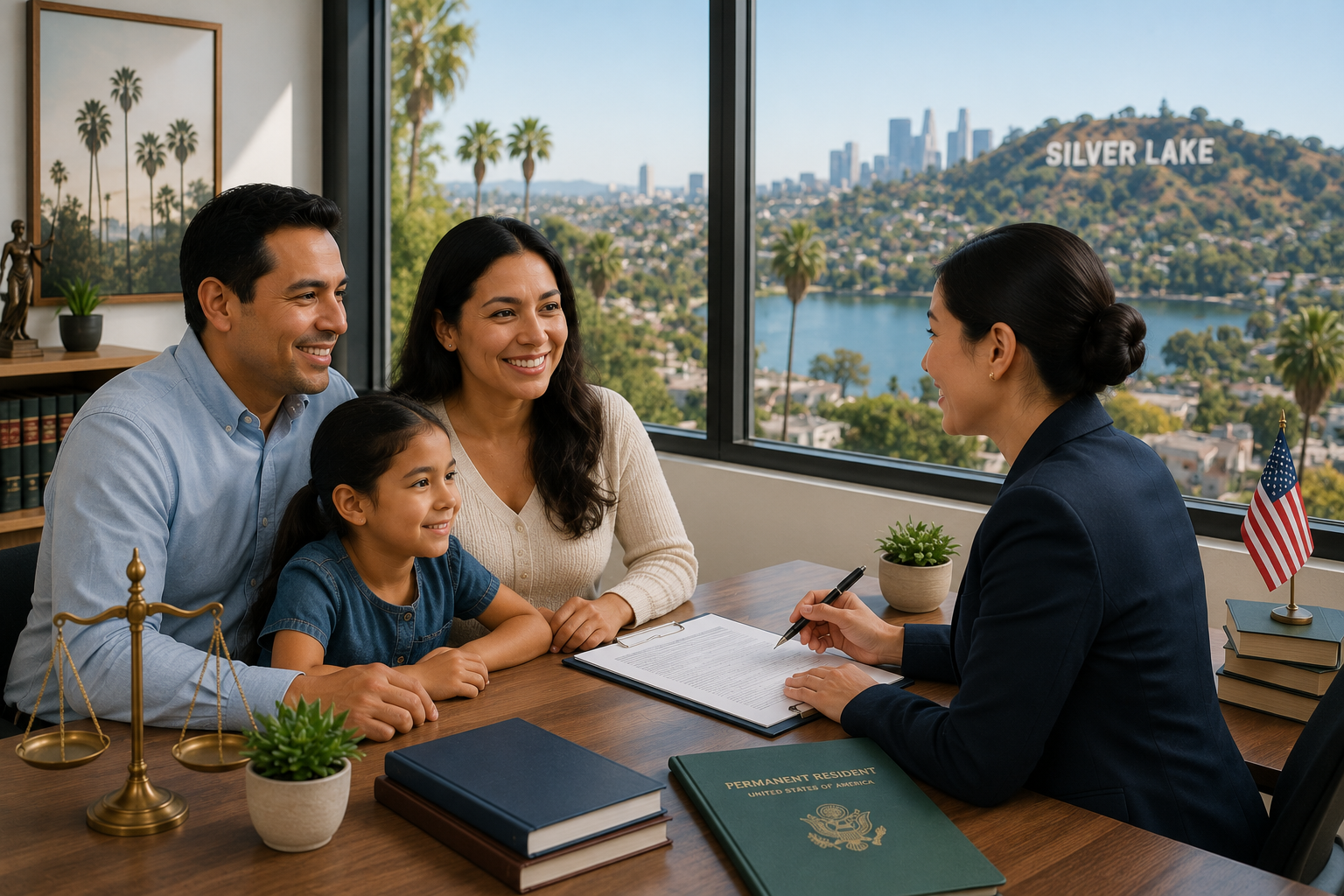
Silver Lake, located within the Los Angeles area, is a community known for its cultural diversity and international population. Many residents in the area come from different parts of the world and pursue immigration benefits through family sponsorship, employment opportunities, or humanitarian programs.
Because immigration procedures are governed by federal law and involve multiple government agencies, individuals applying for permanent residency often need to organize detailed documentation and follow strict timelines. Access to accurate information and legal guidance can help applicants understand their options and prepare their applications carefully.
Residents in Silver Lake who are navigating immigration processes may benefit from learning about the requirements, documentation standards, and procedural steps involved in obtaining lawful permanent residency in the United States.
Conditional Green Cards and Removal of Conditions
Some individuals who obtain permanent residency through marriage receive a conditional green card. This type of green card is typically issued when the marriage between a foreign national and a U.S. citizen or lawful permanent resident is less than 2 years old at the time of the grant of permanent residency.
A conditional green card is generally valid for two years rather than the standard ten-year period. The purpose of this conditional status is to allow immigration authorities to verify that the marriage is genuine and not entered into solely for immigration benefits. After two years, the couple must submit a petition to remove the conditions on the permanent residency.
To remove conditions, the couple usually files a joint petition with the United States Citizenship and Immigration Services within 90 days before the conditional green card expires. The petition must include documentation demonstrating that the marriage is legitimate and ongoing.
Common evidence used during this process may include:
Joint tax returns
Shared bank accounts
Lease or mortgage agreements
Insurance policies listing both spouses
Photographs and travel records
Birth certificates of children, if applicable
In some situations, individuals may request a waiver of the joint filing requirement if the marriage ended due to divorce, abuse, or other qualifying circumstances. Immigration authorities review these cases carefully and may request additional documentation before granting permanent residency without conditions.
Requests for Evidence (RFEs) in Green Card Applications
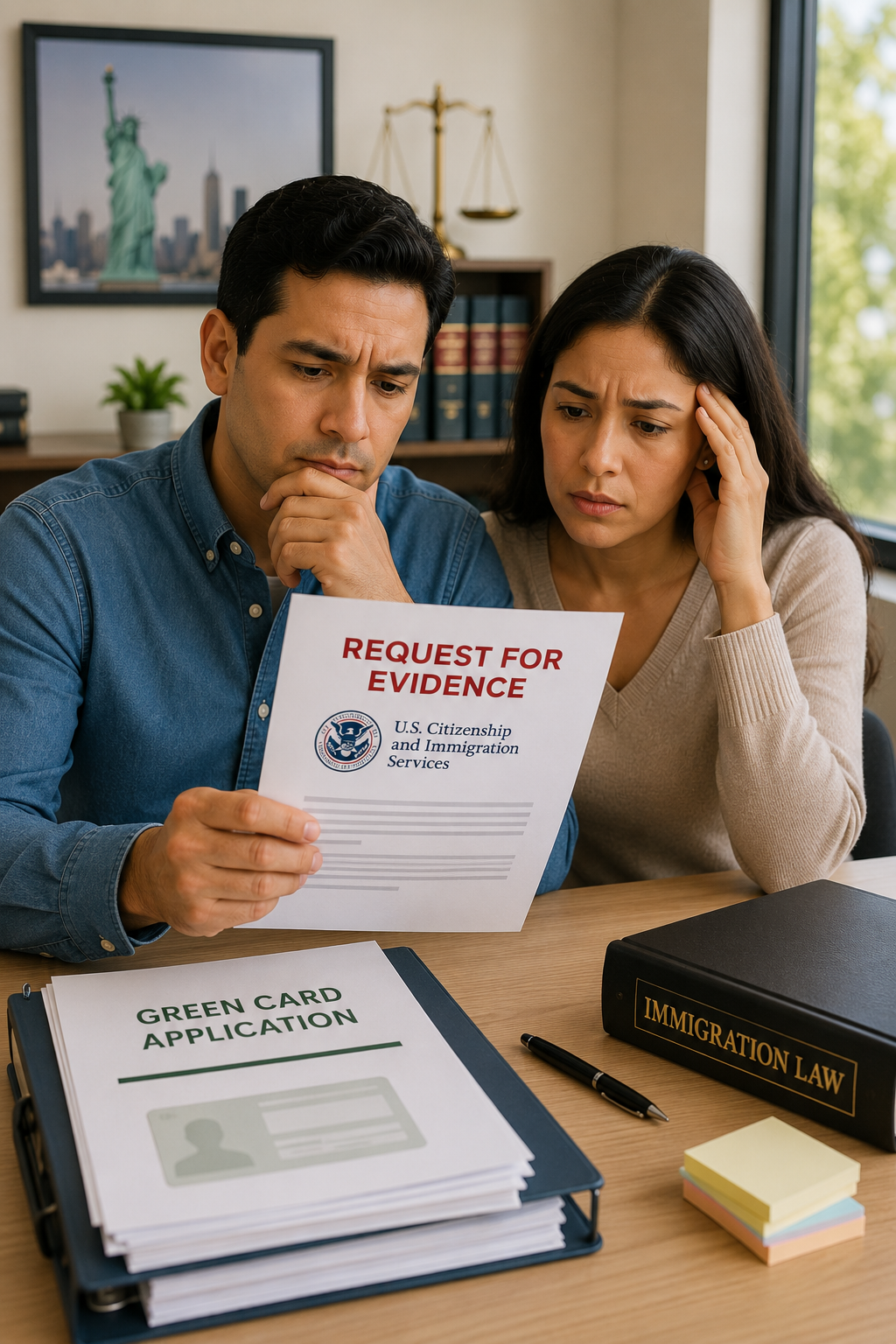
During the review of a green card application, immigration authorities may determine that additional information is required before a final decision can be made. When this occurs, the applicant may receive a Request for Evidence (RFE) from the United States Citizenship and Immigration Services.
An RFE does not necessarily mean that an application will be denied. Instead, it indicates that the reviewing officer requires more documentation to verify eligibility or clarify specific aspects of the case. Applicants are typically given a deadline to submit the requested materials.
Requests for Evidence may be issued for several reasons, including:
Missing supporting documents
Incomplete immigration forms
Insufficient proof of a family relationship or marriage
Unclear financial documentation for sponsorship
Questions regarding employment eligibility
Responding to an RFE requires careful attention because incomplete or late responses may lead to delays or denial of the application. Applicants should review the request thoroughly and provide all requested documentation within the specified timeframe.
Providing clear, well-organized responses helps immigration officers evaluate the application more efficiently and continue processing the case.
Travel Considerations for Green Card Applicants and Permanent Residents
International travel is an important consideration for both green card applicants and individuals who already hold permanent resident status. Immigration rules regarding travel can affect an applicant’s eligibility and immigration status if not properly followed.
For individuals applying for adjustment of status within the United States, traveling outside the country before receiving approval may affect their application. Many applicants apply for advance parole, which allows them to travel temporarily while their green card application is pending. Without advance parole authorization, leaving the United States may result in the application being considered abandoned.
Permanent residents who already hold a green card may travel internationally, but they must maintain their primary residence in the United States. Extended stays abroad may raise concerns about whether the individual intends to maintain permanent residency.
To avoid potential issues, permanent residents should consider the following guidelines:
Carry a valid green card when traveling internationally
Avoid trips outside the United States lasting more than six months when possible
Consider applying for a reentry permit for longer travel periods
Maintain ties to the United States, such as housing, employment, and tax filings
Careful planning before international travel can help green card holders maintain their immigration status and avoid complications when returning to the United States.

Green Card Renewal and Replacement Process in Silver Lake, California
Individuals who already hold lawful permanent resident status may eventually need to renew or replace their green card. A valid Permanent Resident Card serves as official proof of immigration status and employment authorization in the United States. For many residents seeking guidance from a Green Card Attorney Silverlake California, understanding the renewal and replacement process is an important part of maintaining lawful permanent residency.
Most green cards are valid for ten years and should be renewed before the expiration date. Although permanent resident status itself may not expire, an expired green card can create practical difficulties related to employment verification, international travel, driver’s license renewals, and identification requirements. Permanent residents typically file Form I-90, Application to Replace Permanent Resident Card, with the United States Citizenship and Immigration Services to request renewal or replacement.
Green card replacement may also be necessary when a card is lost, stolen, damaged, or contains incorrect information. In some situations, individuals may need to replace older versions of permanent resident cards that no longer meet current government standards. Conditional permanent residents who received a two-year green card through marriage must follow a separate process to remove conditions before obtaining a standard ten-year card.
Applicants are generally required to submit supporting identification documents, immigration records, photographs, and filing fees during the renewal or replacement process. USCIS may also require biometrics appointments to collect fingerprints and photographs for updated background checks.
For many immigrants, maintaining valid documentation is essential for preserving uninterrupted proof of lawful status. A Green Card Attorney Silverlake California may assist individuals in understanding filing requirements, reviewing immigration records, and addressing complications that could arise during the renewal process.

Waivers of Inadmissibility in Immigration Cases
Certain green card applicants may encounter legal barriers that affect their admissibility under United States immigration law. In these situations, applicants may need to apply for a waiver of inadmissibility before permanent residency can be approved. Individuals often seek guidance from a Green Card Attorney Silverlake California when immigration violations, prior unlawful presence, criminal matters, or other legal concerns complicate their case.
Under federal immigration law, inadmissibility grounds may include prior visa overstays, misrepresentation during immigration procedures, certain criminal convictions, public charge concerns, prior deportation orders, or health-related issues. When immigration authorities determine that an applicant is inadmissible, the green card application may be denied unless a qualifying waiver is available.
Waiver applications are highly case-specific and often require substantial supporting evidence. In many family-based immigration cases, applicants must demonstrate that denying the waiver would result in extreme hardship to a qualifying U.S. citizen or lawful permanent resident family member. Supporting evidence may include medical records, financial documentation, family dependency information, psychological evaluations, and evidence of community ties.
Some waivers are filed using Form I-601 or Form I-601A depending on the immigration issue involved. The review process may include detailed background checks, requests for additional evidence, and discretionary evaluation by immigration authorities. Because waiver applications involve extensive legal standards and documentation requirements, applicants must prepare their submissions carefully.
Residents seeking assistance from a Green Card Attorney Silverlake California often need guidance understanding whether a waiver is available under their specific circumstances. Proper preparation and documentation can play a significant role in addressing inadmissibility concerns during the permanent residency process.
Understanding Priority Dates and Visa Bulletins
Visa availability plays a major role in many family-based and employment-based green card applications. Individuals applying under preference categories often experience waiting periods because immigrant visas are subject to annual numerical limits established by federal immigration law. Many applicants consult a Green Card Attorney Silverlake California to better understand how priority dates and visa bulletins affect their immigration timeline.
A priority date generally refers to the date an immigrant petition is properly filed with the United States Citizenship and Immigration Services. This date determines an applicant’s place in line for visa availability. Since the number of immigrant visas issued each year is limited in several immigration categories, applicants may need to wait until their priority date becomes current before they can complete the final stage of the green card process.
The United States Department of State publishes a monthly Visa Bulletin that identifies which priority dates are currently eligible for processing. The bulletin includes separate charts for family-sponsored immigration categories and employment-based immigration categories. Processing times often vary depending on the applicant’s country of origin and immigration category.
Applicants from countries with high demand for immigrant visas may experience significantly longer waiting periods due to visa backlogs. Immediate relatives of U.S. citizens are generally exempt from annual visa limits, which often allows those applications to proceed more quickly.
Understanding how to read the Visa Bulletin and monitor priority date movement is important for individuals planning long-term immigration strategies. A Green Card Attorney Silverlake California may assist applicants by reviewing visa category requirements, monitoring visa availability, and explaining how changing immigration policies may affect green card processing timelines.

Contact Rod Armande Law for Green Card Guidance
Individuals in Silver Lake, California, who are seeking information about the green card process may benefit from legal guidance when preparing their applications. Rod Armande Law assists with immigration matters and helps individuals understand the procedures, documentation requirements, and legal considerations involved in pursuing lawful permanent residency.
Frequently Asked Questions About Green Cards Silver Lake, California
-
Processing times vary depending on the immigration category, visa availability, and government workload. Some applicants may receive permanent residency within a year, while others may wait several years due to visa limits or administrative delays.
-
Individuals applying for adjustment of status may be eligible to apply for an employment authorization document. This permit allows applicants to work legally in the United States while their green card application is being processed.
-
Many applicants must attend an immigration interview. However, in certain cases, immigration authorities may waive the interview requirement if the documentation clearly establishes eligibility.
-
If a green card application is denied, the applicant typically receives a notice explaining the reasons for the decision. Depending on the circumstances, the applicant may be able to provide additional documentation, file a motion, or pursue other immigration options.
-
Lawful permanent residents may sponsor certain family members, including spouses and unmarried children. These categories may involve waiting periods because visas are limited each year.
-
Most permanent resident cards are valid for ten years. Green card holders should apply for renewal before the expiration date to maintain valid proof of their immigration status.