
Green Card Lawyer Koreatown, California
Obtaining lawful permanent residency in the United States is an important milestone for many immigrants who wish to live and work in the country on a long-term basis. A Permanent Resident Card, commonly known as a green card, allows foreign nationals to remain in the United States indefinitely while enjoying certain legal rights and protections under U.S. immigration law. For many individuals and families, permanent residency represents stability, expanded employment opportunities, and the ability to build a future in the United States.
Residents of Koreatown, California, often come from diverse cultural and immigration backgrounds. Koreatown is known for its vibrant community and significant immigrant population, including individuals from Asia, Latin America, and other regions of the world. Many families and professionals in the area explore immigration pathways to establish permanent legal status in the United States.
The green card application process, however, can be complex and detailed. Applicants must follow strict legal procedures and submit a variety of documents that demonstrate eligibility for permanent residency. The process may involve multiple government agencies, including U.S. Citizenship and Immigration Services (USCIS), the National Visa Center, and U.S. consulates abroad.
Individuals applying for a green card may need to complete several steps, such as filing petitions, gathering evidence, attending biometric appointments, and participating in immigration interviews. Any errors in paperwork or missing documentation can cause delays or complications during the application process.
Because immigration laws and regulations change periodically, applicants must stay informed about the latest requirements. Understanding how the system works can help individuals prepare their applications carefully and ensure they follow all legal guidelines established by the U.S. government.

Understanding the Green Card Process in the United States
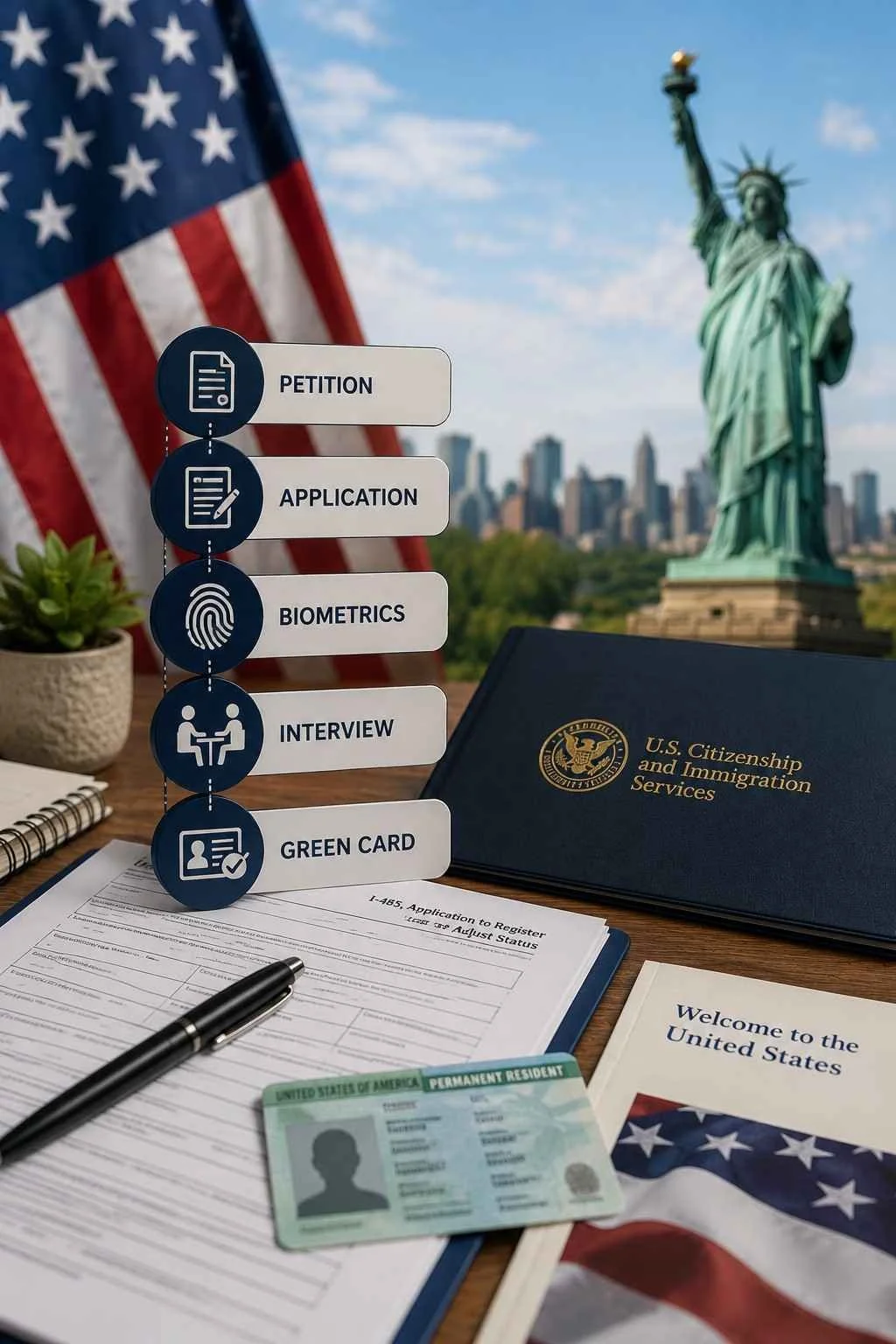
The green card process is designed to provide lawful permanent residency to eligible foreign nationals. Individuals who receive a green card are legally permitted to live and work in the United States without the time restrictions that apply to many temporary visas.
Permanent residents receive a physical identification card that confirms their immigration status. While the card must be renewed periodically, the underlying permanent resident status typically remains valid as long as the individual continues to meet immigration requirements.
Green card holders generally have the right to:
Live permanently in the United States
Work for most employers without special authorization
Travel outside the United States and return, subject to certain conditions
Sponsor certain family members for immigration benefits
Apply for U.S. citizenship after meeting eligibility requirements
However, permanent residents must also comply with U.S. laws and maintain their immigration status. For example, extended trips outside the United States or certain criminal offenses may affect permanent resident status.
The process of obtaining a green card often begins with an immigrant petition. A family member, employer, or other sponsor may submit this petition to demonstrate that the applicant qualifies for a specific immigration category. Once the petition is approved, the applicant may proceed to the final stage of the permanent residency application.
In many cases, applicants must also undergo background checks, medical examinations, and interviews with immigration officials. These steps are intended to confirm that applicants meet the legal requirements for permanent residency.
Types of Green Cards Available
The U.S. immigration system provides several pathways to obtain a green card. The eligibility criteria and application procedures vary by category.
Family-Based Green Cards
Family-based immigration is one of the most common ways individuals obtain permanent residency. U.S. immigration law allows citizens and lawful permanent residents to sponsor certain relatives for a green card.
Immediate relatives of U.S. citizens receive special priority in the immigration system. These relatives include:
Spouses of U.S. citizens
Unmarried children under the age of 21
Parents of U.S. citizens who are at least 21 years old
Because these categories are not subject to annual visa limits, the process for immediate relatives may proceed more quickly than for other immigration categories.
Other family relationships fall under family preference categories. These categories have annual visa limits and may involve longer waiting periods depending on the applicant's country of origin.
Family preference categories include:
Unmarried adult children of U.S. citizens
Married children of U.S. citizens
Brothers and sisters of U.S. citizens
Spouses and unmarried children of lawful permanent residents
The process typically begins with the sponsoring relative filing Form I-130, Petition for Alien Relative. After the petition is approved, the applicant may continue with the permanent residency process when a visa becomes available.
Employment-Based Green Cards
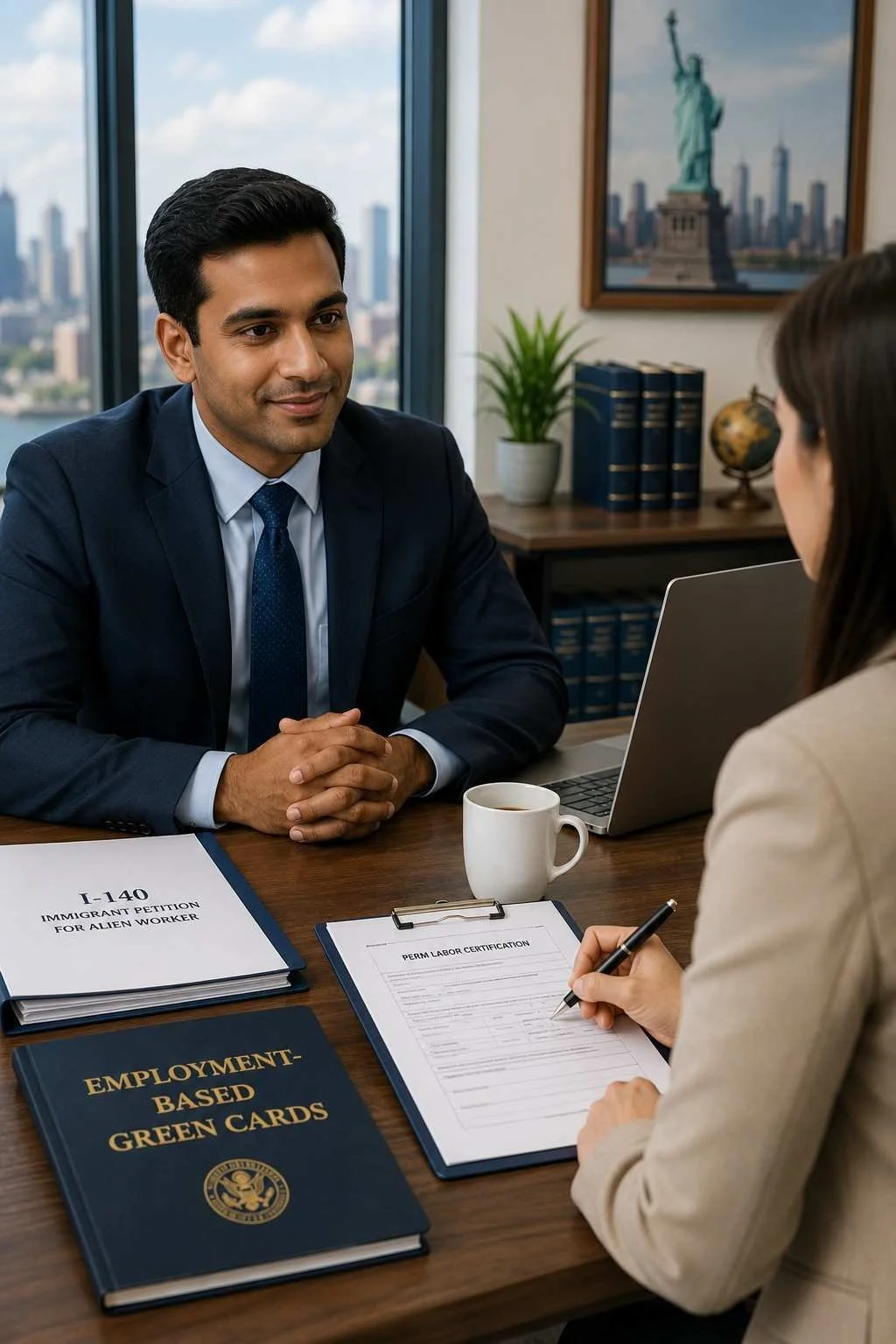
Employment-based immigration provides another pathway for individuals who possess valuable professional skills, educational qualifications, or job offers from U.S. employers.
These green cards are divided into several preference categories based on the applicant’s qualifications and type of employment.
Examples of employment-based categories include:
Individuals with extraordinary ability in fields such as science, arts, education, business, or athletics
Outstanding professors and researchers
Multinational executives or managers
Professionals with advanced degrees
Skilled workers with specialized training
Certain investors who contribute to economic development
In many employment-based cases, the process begins when a U.S. employer files an immigrant petition on behalf of the foreign worker. Some cases also require labor certification through the U.S. Department of Labor. This certification confirms that hiring a foreign worker will not negatively affect job opportunities or wages for U.S. workers.
Once the petition is approved and a visa number becomes available, the applicant may apply for permanent residency.

Marriage-Based Green Cards
Marriage to a U.S. citizen or lawful permanent resident is another common pathway to permanent residency. Immigration authorities carefully review these applications to ensure the marriage is legitimate and not entered into solely for immigration benefits.
Applicants must provide evidence demonstrating that the relationship is genuine. Examples of supporting documents may include:
Marriage certificates
Joint bank accounts or financial records
Shared housing leases or property ownership documents
Photographs and correspondence
Statements from friends or relatives confirming the relationship
If the marriage is less than two years old when the green card is approved, the applicant typically receives a conditional green card valid for two years. After that period, the couple must file a joint petition to remove the conditions and confirm that the marriage remains authentic.
Humanitarian and Special Category Green Cards
Certain individuals may qualify for permanent residency through humanitarian programs or special immigration categories.
These programs are designed to protect individuals who face difficult circumstances or who qualify for specific government programs.
Examples include:
Refugees and individuals granted asylum
Victims of certain crimes who assist law enforcement
Survivors of domestic abuse under specific immigration protections
Special immigrant juveniles
Diversity visa lottery recipients
Each of these programs has unique eligibility requirements and documentation procedures. Applicants must demonstrate that they meet all legal criteria established by U.S. immigration law.

Adjustment of Status vs Consular Processing
Applicants seeking permanent residency generally complete the process through one of two methods: adjustment of status or consular processing.
Adjustment of Status
Adjustment of status allows eligible individuals who are already in the United States to apply for permanent residency without leaving the country.
The process involves submitting Form I-485, Application to Register Permanent Residence or Adjust Status. Applicants must also provide supporting documentation and attend a biometric appointment, during which fingerprints and photographs are collected.
Some applicants may receive additional benefits while their application is pending, such as:
Employment authorization
Travel authorization (advance parole)
In many cases, applicants must attend an interview with a USCIS officer before a final decision is made on their case.
Consular Processing
Consular processing is used when the applicant is located outside the United States. This process takes place through a U.S. embassy or consulate in the applicant’s home country.
The steps typically include:
Approval of the immigrant petition
Case transfer to the National Visa Center
Submission of civil and financial documents
Medical examination by an approved physician
Interview at a U.S. embassy or consulate
If the application is approved, the applicant receives an immigrant visa that allows them to travel to the United States and obtain permanent residency upon entry.

Documents Required for a Green Card Application
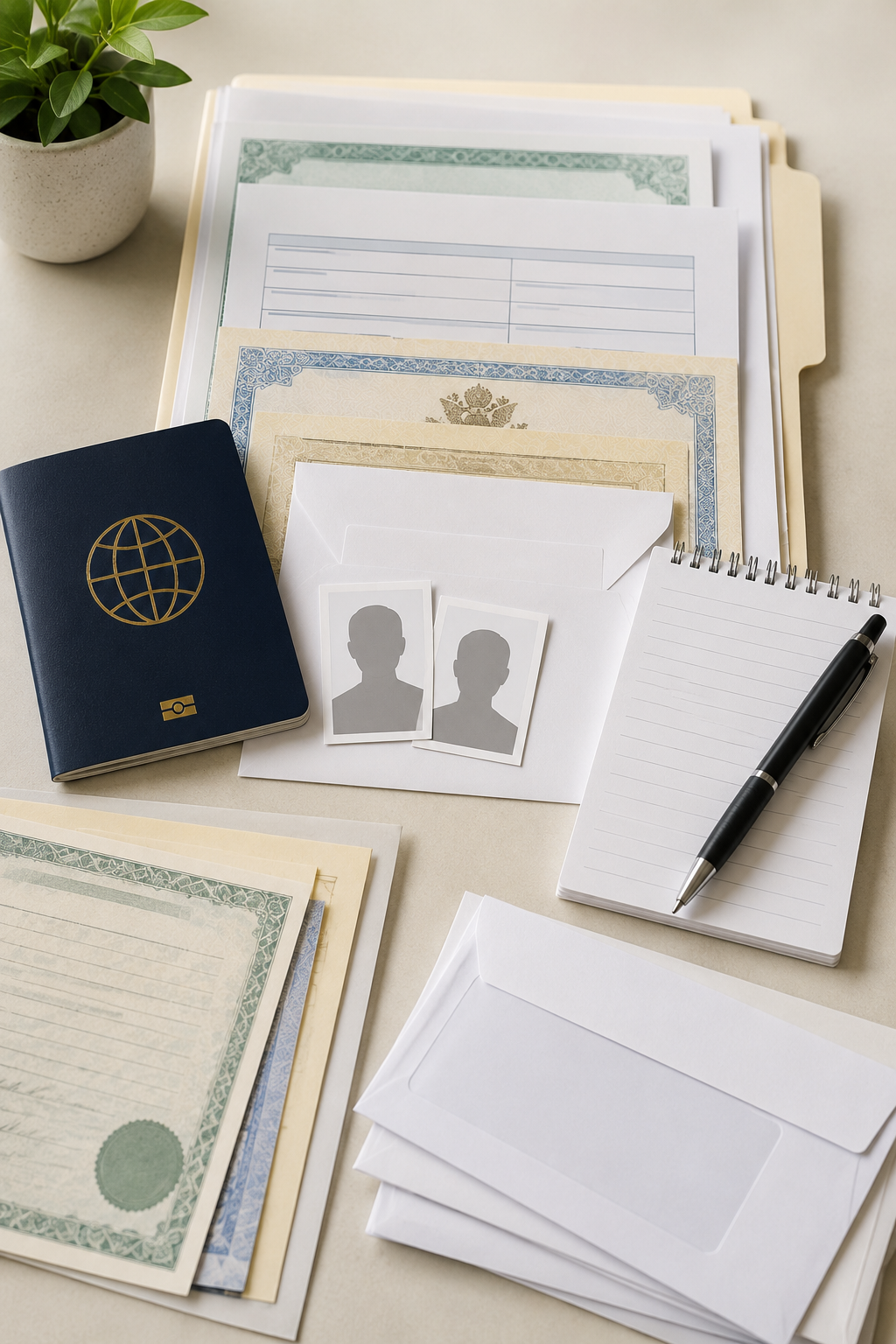
Submitting accurate documentation is one of the most important parts of the green card application process. Immigration authorities rely on these documents to verify identity, eligibility, and compliance with immigration laws.
Commonly required documents include:
Valid passport
Birth certificate
Marriage certificate or divorce records, if applicable
Immigration records and previous visa documentation
Financial sponsorship forms (Affidavit of Support)
Employment verification documents for employment-based cases
Medical examination reports
Police clearance certificates in certain situations
Applicants may also need to provide translations of documents originally issued in another language. Ensuring that all paperwork is accurate and complete helps reduce the risk of delays during processing.
Green Card Interviews: What Applicants Should Know
Many applicants are required to attend an immigration interview before their green card application is approved. The interview allows immigration officers to review the information provided in the application and verify the applicant’s eligibility.
During the interview, officers may ask questions related to:
Personal background and identity
Immigration history
Employment or family relationships
Details regarding the application
For marriage-based green cards, both spouses may be interviewed to confirm the authenticity of the relationship.
Applicants are generally expected to bring original copies of important documents and provide honest answers to all questions. If additional evidence is required, immigration authorities may request further documentation before issuing a decision.
Conditional Green Cards and Removal of Conditions
Some green cards are issued with conditions attached. This is most common in marriage-based cases, where the marriage is less than two years old when the green card is granted.
A conditional green card is valid for two years. Before the card expires, the applicant must submit a petition to remove the conditions and demonstrate that the marriage remains genuine.
Evidence submitted during this stage may include:
Joint tax filings
Shared bank accounts
Lease or mortgage agreements
Utility bills in both spouses’ names
Photographs and records of family events
Failure to submit the petition on time may result in the termination of permanent resident status.


Green Card Processing Times
Processing times for green card applications vary depending on several factors. Some applicants may receive a decision within months, while others may wait several years.
Factors that can affect processing times include:
The immigration category of the applicant
Annual visa limits in certain preference categories
The applicant’s country of origin
Government processing backlogs
Requests for additional evidence
Applicants often monitor case updates on official government websites, which provide processing time estimates and application tracking tools.
Common Challenges in Green Card Applications
Applying for permanent residency can involve several legal and procedural challenges. Even when applicants meet eligibility requirements, the process may become complicated due to documentation issues, changes in immigration regulations, or misunderstandings about eligibility criteria. Being aware of these potential challenges can help applicants prepare more effectively.
One common issue involves incomplete or incorrect documentation. Immigration authorities require applicants to submit detailed records to verify identity, family relationships, employment history, and immigration status. Missing paperwork or inaccurate information may lead to delays or requests for additional evidence.
Another challenge involves visa availability. Certain immigration categories are subject to annual limits, meaning applicants may need to wait until a visa number becomes available before proceeding with their green card application. Waiting periods may vary depending on the applicant’s country of origin and immigration category.
Applicants may also face complications related to prior immigration history. Situations such as visa overstays, previous immigration violations, or unauthorized employment can sometimes affect eligibility for permanent residency. In such cases, applicants may need to provide additional explanations or seek waivers under immigration law.
Other challenges that may arise during the application process include:
Requests for additional evidence from immigration authorities
Delays caused by background checks or security reviews
Changes in personal circumstances such as employment or marital status
Errors in immigration forms or supporting documents
Because the immigration process often involves multiple steps and strict requirements, careful preparation and understanding of immigration procedures can help applicants avoid unnecessary complications.
Preparing for a Green Card Interview
The green card interview is an important stage in many immigration cases. During the interview, immigration officers review the application, verify documentation, and ask questions to confirm the applicant’s eligibility for permanent residency.
Applicants are typically notified of the interview date after their application has progressed through earlier stages of review. Interviews are usually conducted at a local immigration office within the United States or at a U.S. embassy or consulate abroad.
Preparation for the interview often includes reviewing the information submitted in the application forms. Applicants should ensure they are familiar with the details of their case, including personal history, employment information, and family relationships.
Applicants are usually required to bring original copies of key documents to the interview. These may include:
Passports and identification documents
Birth certificates
Marriage certificates or divorce records
Immigration forms previously submitted
Employment verification records
Financial sponsorship documents
For marriage-based green card applications, both spouses may attend the interview together. Immigration officers may ask questions regarding the couple’s relationship, daily routines, and shared experiences to confirm that the marriage is genuine.
Examples of interview questions may include:
When and where did you meet your spouse?
Where do you currently live?
What are your spouse’s job responsibilities?
How do you typically spend weekends or holidays together?
Applicants are expected to answer questions honestly and provide clear explanations when necessary. The interview allows immigration officers to confirm that the information in the application is accurate and consistent.
How a Green Card Lawyer Can Help
Immigration law involves numerous regulations, procedures, and documentation requirements. Individuals applying for permanent residency often seek legal guidance to understand the process better and ensure their applications are properly prepared.
A green card lawyer typically works with applicants at various stages of the immigration process. One of the first steps is to evaluate the applicant’s eligibility for permanent residency under various immigration categories. By reviewing an applicant’s personal circumstances, legal professionals can help determine the most appropriate pathway for pursuing a green card.
Legal assistance may also involve preparing and reviewing immigration forms. Green card applications often require detailed documentation and supporting evidence. Ensuring that forms are completed accurately can help reduce the risk of processing delays.
Some of the ways legal professionals may assist with green card applications include:
Reviewing eligibility for family-based, employment-based, or other immigration categories
Preparing and filing immigration petitions and applications
Organizing supporting documentation and evidence
Responding to requests for additional information from immigration authorities
Preparing applicants for interviews with immigration officers
Monitoring case progress and providing updates regarding immigration procedures

Because immigration regulations can change over time, staying informed about current policies and procedures is important for individuals seeking permanent residency. Legal guidance can help applicants navigate complex rules and understand the requirements associated with their specific immigration case.
Benefits of Obtaining a Green Card
Receiving lawful permanent residency provides several important benefits for immigrants who wish to live in the United States on a long-term basis. While permanent residents must continue to comply with immigration laws, they enjoy many rights and opportunities not available to temporary visa holders.
One of the primary benefits of obtaining a green card is the ability to live permanently in the United States. Unlike temporary visas, which may expire after a limited period, permanent residency allows individuals to remain in the country indefinitely, provided they maintain their legal status.
Green card holders may also work for most employers in the United States without requiring separate employment authorization. This flexibility allows permanent residents to pursue a wide range of career opportunities.
Additional benefits of permanent residency include:
Freedom to travel outside the United States and return, subject to certain rules
The ability to sponsor certain family members for immigration benefits
Access to certain educational opportunities and financial aid programs
Eligibility for certain government protections under federal and state laws
The opportunity to apply for U.S. citizenship after meeting residency requirements
Permanent residents who wish to become U.S. citizens may eventually apply for naturalization after living in the United States for a specific period of time, typically five years in most cases.
Immigration Services for Koreatown Residents
Koreatown, located in Los Angeles, California, is known for its diverse population and strong immigrant community. The neighborhood is home to residents from many different cultural backgrounds, including individuals who have moved to the United States for education, employment, family reunification, or other opportunities.
Because of this diversity, immigration-related legal services are often sought by individuals and families living in the area. Many residents explore options to adjust their immigration status or obtain permanent residency through various legal pathways.
Immigration matters commonly addressed by residents in Koreatown may include:
Family-based immigration petitions
Marriage-based green card applications
Employment-based immigration opportunities
Adjustment of status for individuals already living in the United States
Consular processing for applicants located abroad
Removal of conditions on conditional permanent residency
Community members often seek reliable information about immigration policies and procedures to make informed decisions about their legal status in the United States.
Understanding the steps involved in the green card process helps individuals better prepare their applications and ensure compliance with immigration laws.
Book Your Free Consultation with a Green Card Lawyer in Koreatown, California
Individuals seeking information about permanent residency can schedule a consultation to learn more about the green card process. Rod Armande Law provides legal insight into immigration procedures, eligibility requirements, and documentation needed for green card applications for individuals and families in Koreatown, California.
Frequently Asked Questions About Green Cards
-
A visa allows a foreign national to enter the United States for a temporary purpose such as tourism, study, or employment. A green card grants lawful permanent residency, allowing individuals to live and work in the United States indefinitely.
-
Processing times vary depending on the immigration category, visa availability, and government workload. Some applications may take several months, while others may take several years.
-
Yes, permanent residents may travel outside the United States and return. However, extended trips abroad may raise questions about maintaining permanent resident status.
-
Many permanent residents become eligible to apply for U.S. citizenship through the naturalization process after living in the United States for a specific number of years and meeting other legal requirements.
-
If an application is denied, immigration authorities typically explain the decision. In some situations, applicants may be able to appeal the decision or reapply depending on the circumstances.