
Marriage Green Card Legal Guidance in Koreatown, California
A marriage-based green card provides a pathway for foreign nationals to obtain lawful permanent residency in the United States through a legally recognized marriage to a U.S. citizen or lawful permanent resident. This immigration process allows the immigrant spouse to live and work permanently in the country once the application is approved. Although the process is widely used, it involves strict documentation requirements and detailed immigration procedures.
Marriage-based immigration cases require applicants to demonstrate that their relationship is legitimate and not entered into solely for immigration benefits. Immigration authorities carefully review documentation and interview applicants to verify the authenticity of the marital relationship. Because the process includes multiple stages and government reviews, many couples benefit from understanding the legal requirements before beginning their application.
For individuals living in the Koreatown community, marriage green card applications may involve interactions with federal immigration agencies and local immigration offices. Legal guidance may help applicants understand the filing process, documentation requirements, and procedural requirements for marriage-based immigration cases.
Rod Armande Law provides legal guidance for individuals seeking assistance with marriage-based immigration matters in and around Koreatown and the greater Los Angeles region.

Understanding Marriage-Based Immigration in the United States
Marriage-based immigration falls under the broader category of family-sponsored immigration. Under U.S. immigration law, citizens and lawful permanent residents may sponsor certain family members for lawful permanent residency.
Spouses of U.S. citizens are generally classified as immediate relatives, which means there is no annual limit on the number of visas available. In contrast, spouses of lawful permanent residents fall under a family preference category, which may involve waiting periods due to visa availability limits.
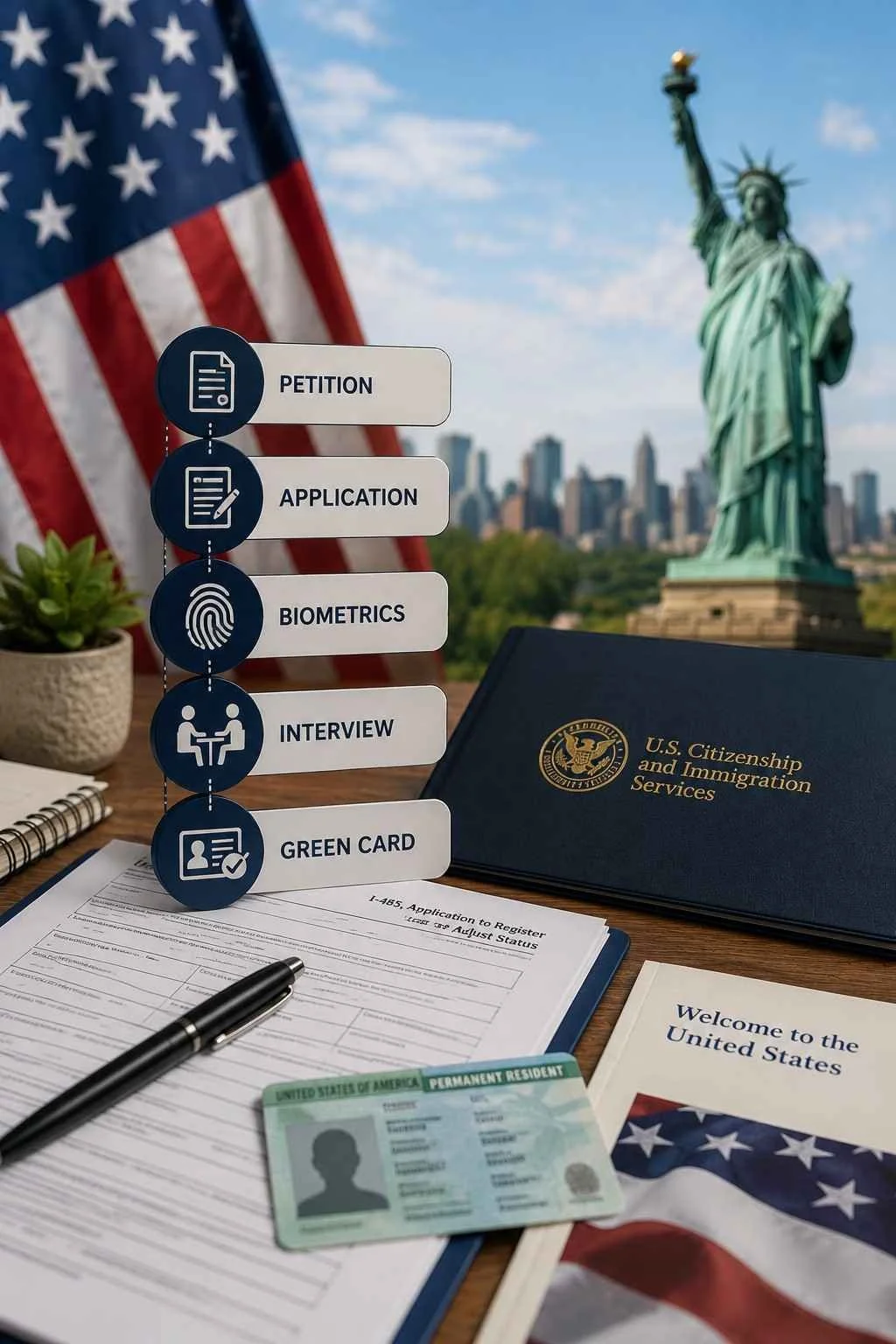
Key stages in the marriage green card process typically include:
Filing an immigrant petition to establish the marital relationship
Providing evidence that the marriage is genuine
Submitting financial sponsorship documentation
Completing background checks and biometric appointments
Attending an immigration interview
Receiving conditional or permanent residency approval
Each step must comply with federal immigration regulations, and any missing or inaccurate documentation may delay the application process.
Eligibility Requirements for a Marriage Green Card
Before applying for a marriage-based green card, both spouses must meet certain legal requirements under U.S. immigration law. Immigration authorities evaluate the sponsor's eligibility and the immigrant spouse's admissibility.
Basic eligibility criteria generally include:
A legally valid marriage recognized under U.S. law
One spouse must be a U.S. citizen or lawful permanent resident
Proof that the marriage is bona fide and ongoing
The immigrant spouse must be admissible to the United States
Completion of required immigration forms and documentation
In addition to these requirements, applicants must provide extensive evidence demonstrating that the marriage is genuine rather than entered solely for immigration purposes.
Evidence Required to Prove a Genuine Marriage
Immigration authorities review various forms of documentation to determine whether a marriage is authentic. Providing strong evidence of a shared life together is an important part of the marriage green card application process.
Common types of supporting evidence include:
Financial records
Joint bank account statements
Shared credit cards
Joint tax filings
Insurance policies listing both spouses
Residential records
Lease agreements or mortgage documents
Utility bills showing shared residence
Property ownership records
Personal documentation
Photographs taken during the relationship
Travel records showing trips together
Wedding invitations or event documentation
Affidavits
Written statements from friends, relatives, or colleagues confirming the authenticity of the relationship
Providing a combination of financial, residential, and personal documentation helps create a comprehensive record of the marital relationship.
Adjustment of Status for Spouses in the United States
Adjustment of status allows certain individuals already living in the United States to apply for permanent residency without leaving the country. This process is commonly used when the immigrant spouse enters the United States legally and meets eligibility requirements.
The adjustment of status process generally includes:
Filing Form I-130 (Petition for Alien Relative)
Filing Form I-485 (Application to Adjust Status)
Submitting medical examination documentation
Completing fingerprinting and biometric screening
Attending a USCIS interview
Applicants may also request temporary immigration benefits while their case is pending.
These may include:
Employment Authorization Documents (EAD) allowing lawful employment
Advance parole travel authorization allowing temporary international travel
These benefits allow applicants to maintain stability while waiting for their green card decision.

Consular Processing for Spouses Living Abroad
When the immigrant spouse lives outside the United States, the green card process is completed through consular processing. After the immigrant petition is approved, the case is transferred to the National Visa Center before being scheduled for an interview at a U.S. embassy or consulate.
Consular processing usually includes the following steps:
Approval of the immigrant petition
Submission of financial and civil documentation
Payment of visa application fees
Completion of a medical examination
Attendance at a visa interview at a U.S. consulate
If the visa is approved, the immigrant spouse may travel to the United States and receive lawful permanent residency upon entry.
Consular processing timelines may vary depending on visa availability, the applicant’s country of residence, and the caseload of the specific U.S. consulate.

Conditional Permanent Residency
If a marriage is less than two years old when the green card is granted, the immigrant spouse typically receives conditional permanent residency. This status is intended to ensure that the marriage remains genuine after residency is granted.
Key features of conditional residency include:
A green card valid for two years
A requirement to file a petition to remove conditions before expiration
Submission of additional evidence confirming the ongoing relationship
Before the conditional green card expires, the couple must file Form I-751 to remove the conditions on residency.
Removal of Conditions on Residence
The removal of conditions process allows conditional residents to obtain a standard 10-year green card. This step requires applicants to demonstrate that their marriage remains genuine.
The removal of conditions process usually involves:
Filing Form I-751 during the 90 days before the conditional card expires
Providing updated documentation about the relationship
Submitting additional financial and residential evidence
Attending another immigration interview if requested
Failure to file the removal of conditions petition on time may result in the loss of permanent resident status.
In certain circumstances, applicants may request a waiver of the joint filing requirement, such as cases involving divorce, abuse, or extreme hardship.
Financial Sponsorship Requirements
Marriage-based green card applications require the sponsoring spouse to demonstrate the financial ability to support the immigrant spouse. This requirement is fulfilled through the Affidavit of Support (Form I-864).
Financial sponsorship requirements typically include:
Income at least 125% of the federal poverty guidelines
Submission of recent federal tax returns
Proof of employment or stable income
Documentation of assets if income alone is insufficient
If the sponsoring spouse does not meet the required income level, a joint sponsor may help meet the financial requirements.
The purpose of this requirement is to ensure that immigrants have adequate financial support after receiving permanent residency.
Marriage Green Card Interviews
The immigration interview is an important part of the marriage green card process. During the interview, immigration officers review the application and ask questions about the couple’s relationship.
Both spouses are usually required to attend the interview together.
Immigration officers may review topics such as:
How the couple met
Important milestones in the relationship
Daily routines and household responsibilities
Financial arrangements
plans as a married couple
In some cases, officers may conduct separate interviews if they have concerns about inconsistencies in the couple’s answers.
Providing honest and consistent information during the interview is an important part of the immigration review process.

Common Challenges in Marriage-Based Immigration Cases
Although many couples successfully obtain marriage-based green cards, certain issues may complicate the process.
Common challenges may include:
Requests for Evidence (RFEs) requesting additional documentation
Missing or incomplete application forms
Insufficient proof of a bona fide marriage
Prior immigration violations
Visa overstays
Criminal history concerns
Careful preparation of documentation and timely responses to immigration requests can help reduce potential delays.

Marriage Green Card Processing Times

Processing times for marriage green card applications vary depending on several factors.
Factors influencing processing times include:
Whether the sponsor is a U.S. citizen or permanent resident
Whether the immigrant spouse is located inside or outside the United States
The workload of immigration offices
Background check processing times
Requests for additional evidence
Some cases may be completed relatively quickly, while others may take longer depending on their complexity.
Legal Guidance for Marriage Green Card Applications
Marriage-based immigration cases require detailed documentation, careful preparation of forms, and adherence to federal immigration laws. Individuals seeking permanent residency through marriage often need to understand complex immigration procedures and filing requirements.
Legal professionals who work in immigration law may assist applicants with preparing immigration petitions, organizing documentation, and responding to requests from immigration authorities.
Legal assistance in marriage green card cases may include:
Reviewing eligibility for immigration benefits
Preparing immigration forms and petitions
Organizing supporting documentation
Preparing applicants for immigration interviews
Addressing issues related to immigration history
Responding to government notices or evidence requests
For individuals seeking immigration guidance in the Los Angeles area, Rod Armande Law offers legal guidance for marriage-based immigration matters for individuals living in or near Koreatown.
Start Your Marriage Green Card Process with Legal Guidance
Applying for a marriage green card requires careful preparation of the forms, submission of supporting evidence, and compliance with immigration regulations. Legal guidance can help clarify the steps involved in the process. Reach out to Rod Armande Law for information about marriage-based immigration options available to couples living in Koreatown.
Frequently Asked Questions About Marriage Green Card Koreatown, California
-
Marriage green card applications usually require identity documents, marriage certificates, financial sponsorship forms, and proof of a genuine relationship. Supporting documentation may include joint financial accounts, photographs, shared housing records, and affidavits from friends or family members.
-
Processing times vary depending on factors such as visa availability, application location, and government workload. Some applications may take several months, while others may require longer processing periods.
-
In many cases, spouses of U.S. citizens may apply for permanent residency shortly after marriage, provided they meet eligibility requirements and submit the necessary documentation.
-
During the interview, immigration officers review the couple’s application and ask questions about their relationship to confirm that the marriage is legitimate.