
Marriage Green Card Services in Montebello, California
Marriage to a U.S. citizen or lawful permanent resident may provide a pathway to lawful permanent residency in the United States. Through a marriage-based green card, a foreign national spouse may obtain the legal right to live and work permanently in the country. While this immigration pathway is common, the application process involves several procedural steps, detailed documentation, and careful compliance with immigration laws.
A marriage-based immigration case requires applicants to demonstrate the legitimacy of their relationship, provide financial sponsorship documentation, and comply with government background checks. Even though the process may appear straightforward at first glance, many applicants encounter procedural challenges such as requests for additional evidence, delays in application processing, or questions regarding documentation.
Understanding how the immigration system evaluates marriage-based applications can help couples prepare their cases more effectively. Immigration authorities examine a variety of factors, including the authenticity of the marriage, the sponsoring spouse's legal status, and whether the immigrant spouse meets admissibility requirements.
Individuals seeking legal guidance regarding marriage-based immigration may consult immigration professionals for assistance with application preparation, documentation review, and communication with immigration agencies. For individuals living in the area, legal assistance is available through Rod Armande Law, which provides immigration-related legal guidance for clients in and around Montebello.

Understanding Marriage-Based Immigration in the United States
Family-based immigration is one of the primary ways individuals obtain permanent residency in the United States. Under federal immigration law, U.S. citizens and lawful permanent residents may petition for certain family members to immigrate to the country.
Marriage-based immigration falls under the family-based immigration category, which allows a U.S. citizen or permanent resident to sponsor their spouse for lawful permanent residency. However, immigration authorities closely examine these applications to prevent fraudulent marriages entered solely for immigration benefits.
A marriage green card application involves multiple government agencies and administrative steps. These steps often include petition approval, eligibility verification, background screening, and an immigration interview.
Major stages of the marriage-based green card process include:
Filing an immigrant petition establishing the marital relationship
Demonstrating that the marriage is legitimate and ongoing
Submitting supporting documentation and financial sponsorship forms
Completing fingerprinting and biometric background checks
Attending an immigration interview
Receiving a conditional or permanent green card
Each stage of the process requires applicants to provide accurate information and well-organized documentation. Any inconsistencies in the application may lead to delays or additional review by immigration authorities.
Types of Marriage-Based Immigration Cases
Marriage-based green card applications may vary depending on the sponsoring spouse's immigration status and the immigrant spouse's location.
Two primary categories exist in marriage-based immigration cases.
Immediate Relative Category
If the sponsoring spouse is a U.S. citizen, the immigrant spouse is typically classified as an immediate relative. This category provides certain advantages under immigration law.
Benefits of this category include:
No annual visa cap for spouses of U.S. citizens
Faster processing times in many cases
Ability to file multiple forms simultaneously when eligible
Immediate relative cases often allow applicants to move through the immigration system more quickly compared to other family preference categories.
Family Preference Category
If the sponsoring spouse is a lawful permanent resident, the immigrant spouse is classified in a family preference category.
This category may involve longer processing times due to visa limitations.
Important aspects include:
Annual limits on the number of visas issued
Waiting periods for visa availability
Priority date tracking through the visa bulletin
Applicants in this category must wait until a visa number becomes available before completing the final stages of the immigration process.
Adjustment of Status for Applicants Living in the United States
Adjustment of status is a procedure that allows eligible individuals to apply for permanent residency while remaining in the United States. Many marriage-based green card applicants use this pathway when the immigrant spouse enters the country legally and meets the eligibility requirements for adjustment of status.
The adjustment of status process allows applicants to remain in the country while their case is pending.
Common steps in the adjustment of status process include:
Filing Form I-130 to establish the marital relationship
Filing Form I-485 to request adjustment of status
Submitting a medical examination conducted by an approved physician
Providing financial sponsorship documentation
Attending a biometric appointment for fingerprinting
Completing an immigration interview
Applicants may also request temporary benefits while waiting for a decision on their case.
These benefits may include:
Employment Authorization Documents (EAD) allowing lawful employment
Advance parole travel permits allowing international travel while the application is pending
These interim benefits provide flexibility for applicants whose cases may take months or longer to process.

Consular Processing for Applicants Outside the United States
When the immigrant spouse resides outside the United States, the marriage-based immigration process typically occurs through consular processing. This method involves coordination between immigration authorities and a U.S. embassy or consulate in the applicant’s home country.
After the immigrant petition is approved, the case is transferred to the National Visa Center (NVC) for document collection and case preparation.
Steps in the consular processing procedure include:
Approval of the immigrant petition by immigration authorities
Submission of required civil and financial documents to the NVC
Payment of visa processing fees
Completion of a medical examination
Scheduling of an interview at a U.S. consulate or embassy
Entry into the United States after visa approval
If the visa application is approved, the immigrant spouse may travel to the United States and receive permanent residency upon arrival.
Consular processing timelines may vary depending on the location of the consulate, case complexity, and government workload.

Evidence Required to Prove a Bona Fide Marriage
Immigration authorities must determine whether a marriage is genuine and not entered solely for immigration purposes. To make this determination, applicants must provide evidence demonstrating that the relationship is authentic and ongoing.
Common forms of relationship evidence include:
Financial documentation
Joint bank account statements
Shared credit card accounts
Joint tax returns
Shared insurance policies
Housing documentation
Lease agreements showing both spouses
Mortgage records
Utility bills listing both spouses at the same address
Personal documentation
Photographs from family gatherings, vacations, and events
Travel itineraries taken together
Correspondence between spouses
Affidavits
Statements from friends or family members describing their knowledge of the relationship
Providing a variety of evidence can help demonstrate the couple's shared life and commitment.
The Marriage Green Card Interview
The immigration interview is one of the most important stages in the marriage green card process. Immigration officers use the interview to verify the authenticity of the relationship and review the details of the application.
Both spouses are typically required to attend the interview together.
Officers may review several aspects during the interview:
Personal biographical information
The timeline of the relationship
Living arrangements
Financial responsibilities
Family connections and social interactions
Interview questions may vary depending on the circumstances of the case.
Examples of interview topics include:
How the couple met
Important relationship milestones
Daily household routines
plans as a couple
In situations where immigration authorities suspect inconsistencies or fraud, couples may undergo a separate interview process in which each spouse is questioned individually.
Consistency and honesty during the interview are important factors in the immigration officer’s decision.
Conditional Permanent Residency
When a marriage is relatively new, and the green card is approved, the immigrant spouse may receive conditional permanent residency.
Conditional residency typically applies when the marriage is less than two years old.
Features of conditional permanent residency include:
A green card valid for two years
A requirement to file a petition to remove conditions
Continued proof that the marriage is genuine
Before the conditional green card expires, the couple must file Form I-751, which requests removal of the conditions on permanent residency.
Failure to file the petition within the required time period may lead to the termination of permanent resident status.
Removing Conditions on Residence
Removing conditions is a separate immigration process that confirms the marriage remains legitimate after conditional residency is granted.
This process usually occurs within the 90 days before the conditional green card expires.
The removal of conditions process typically involves:
Filing Form I-751 jointly by both spouses
Providing updated documentation demonstrating the relationship
Submitting additional financial and residential evidence
Attending another immigration interview if requested
In certain situations, individuals may apply for a waiver of the joint filing requirement.
Waivers may apply in cases involving:
Divorce after a good-faith marriage
Domestic abuse situations
Extreme hardship
Immigration authorities carefully review waiver requests before granting permanent residency.
Financial Sponsorship and the Affidavit of Support
A key component of family-based immigration is the Affidavit of Support, which ensures that the immigrant spouse will have financial support in the United States.
The sponsoring spouse must demonstrate sufficient income or financial resources.
Sponsorship requirements may include:
Income at or above 125% of the federal poverty guidelines
Evidence of stable employment or income
Submission of recent tax returns
Proof of assets if income requirements are not met
If the sponsoring spouse does not meet the income threshold, a joint sponsor may assist by providing financial support documentation.
The purpose of these requirements is to ensure that immigrants will not rely on public benefits after receiving permanent residency.

Common Issues That May Affect Marriage Green Card Applications
While many couples successfully obtain marriage-based green cards, certain complications may arise during the immigration process.
These issues may require additional documentation or legal clarification.
Potential complications may include:
Missing or incomplete documentation
Requests for Evidence (RFEs) from immigration authorities
Previous visa overstays
Prior immigration violations
Criminal background issues
Inconsistent application information
In some cases, applicants may be required to provide additional evidence to address immigration concerns.
Thorough preparation and accurate documentation can help reduce potential delays.

Processing Times for Marriage-Based Immigration Cases

The time required to complete a marriage green card application varies widely. Immigration timelines are influenced by several factors, including the applicant’s situation and government processing capacity.
Factors affecting processing times include:
Whether the sponsor is a U.S. citizen or permanent resident
Whether the immigrant spouse lives inside or outside the United States
Government workload and case backlog
Requests for additional documentation
Security and background check completion
Although some applications may move quickly, others may take longer depending on the circumstances of the case.
Applicants should monitor their case status and respond promptly to requests from immigration authorities.
Legal Guidance for Marriage-Based Immigration Cases
Marriage-based immigration applications involve complex legal requirements and procedural steps. Individuals seeking permanent residency through marriage often need to understand federal immigration regulations, filing procedures, and documentation requirements.
Legal professionals working in immigration law may assist applicants with preparing petitions, organizing supporting documents, and responding to requests from immigration authorities.
Legal assistance in marriage green card cases may include:
Reviewing eligibility for immigration benefits
Preparing immigration petitions and supporting forms
Organizing documentation for submission
Preparing clients for immigration interviews
Addressing issues involving prior immigration history
Responding to government notices or evidence requests
Legal guidance may help applicants navigate the immigration system while ensuring that documentation is properly prepared.
For individuals seeking immigration guidance in the Montebello area, Rod Armande Law may be able to assist, serving individuals and families in and around Montebello.
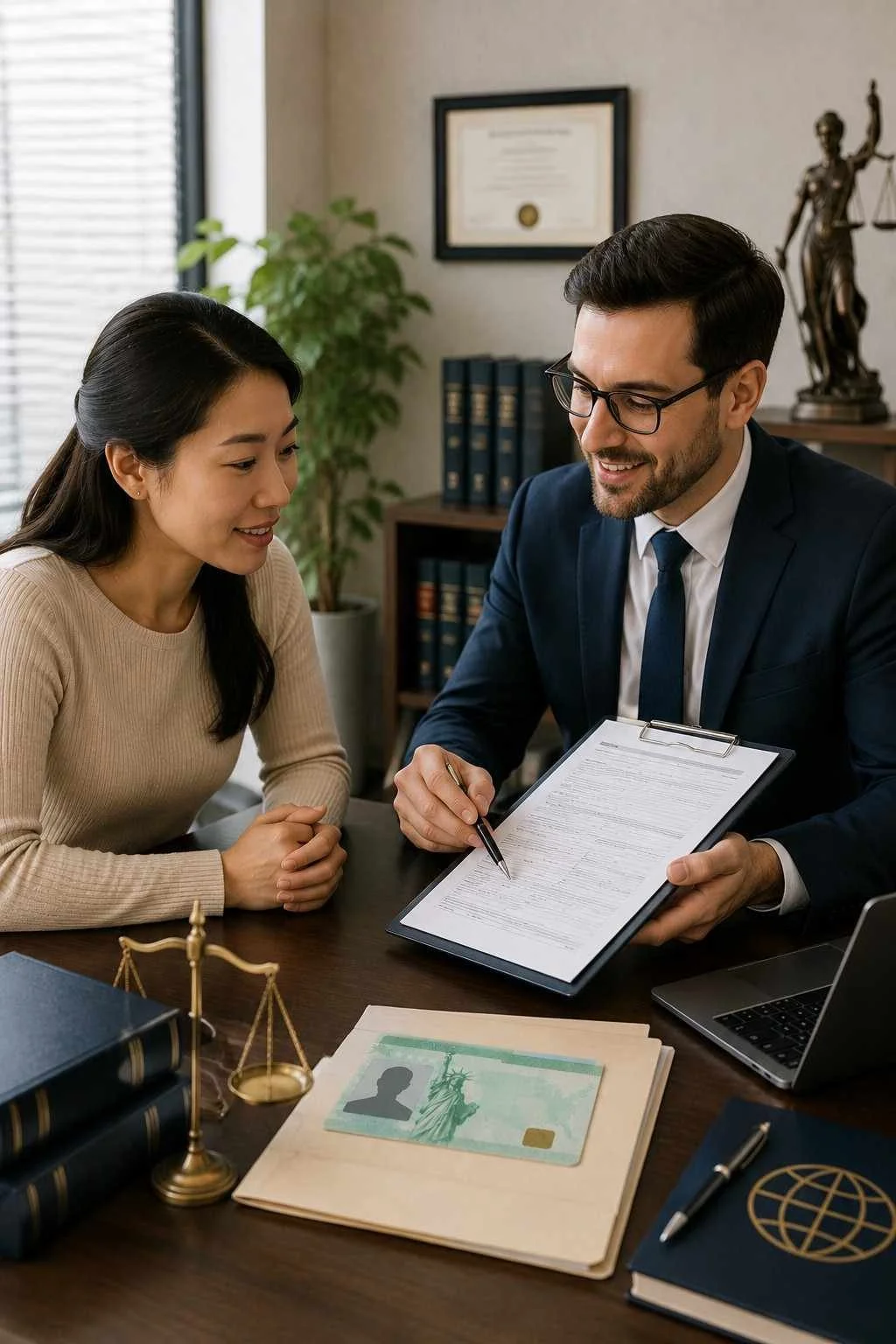
Start Your Marriage Green Card Application with Legal Support
Applying for a marriage-based green card involves multiple legal steps and detailed paperwork. Individuals seeking reliable legal guidance for immigration matters may benefit from professional assistance. Reach out to Rod Armande Law for information about the marriage green card process and available legal services in Montebello.
Frequently Asked Questions About Marriage Green Card Montebello, California
-
Marriage green card applications usually require identity documents, a marriage certificate, proof of financial sponsorship, and evidence showing that the marriage is genuine. Applicants often submit joint financial records, photographs, shared housing documents, and affidavits from individuals familiar with the relationship.
-
Processing times vary depending on factors such as the applicant’s location, immigration category, and government workload. Some cases may take several months, while others may require longer processing periods due to additional documentation requests or administrative backlogs.
-
In many cases, spouses of U.S. citizens may apply for permanent residency soon after marriage, provided they meet eligibility requirements and submit the required documentation. The application process typically includes filing a petition, background checks, and an immigration interview.
-
During the interview, immigration officers review the couple’s application and ask questions about their relationship to verify that the marriage is legitimate. Officers may ask about daily routines, living arrangements, family interactions, and shared experiences.