
Green Card Lawyer in Montebello, California
Obtaining lawful permanent residency in the United States is a significant milestone for many immigrants and their families. A Green Card allows eligible individuals to live and work permanently in the country while enjoying many of the rights and protections provided under U.S. law. However, the process of applying for and securing a Green Card can be complex, involving detailed documentation, strict eligibility requirements, and several procedural steps with immigration authorities.
Many applicants face challenges such as understanding eligibility categories, preparing accurate paperwork, responding to requests for evidence, and attending immigration interviews. Even small errors or missing documents can delay an application or lead to additional scrutiny during the review process. Because immigration regulations and procedures are continually evolving, applicants need to understand the requirements that apply to their specific situation.
A Green Card lawyer can help individuals and families navigate these processes by providing legal guidance and assistance with preparing immigration applications. At Rod Armande Law, legal services focus on helping clients understand the Green Card process and ensuring that applications are prepared with careful attention to detail. Individuals in Montebello, California, and nearby communities often seek legal guidance when pursuing permanent residency through family relationships, employment opportunities, or other immigration pathways.
Understanding how the Green Card process works, what eligibility requirements apply, and what documentation is needed can help applicants prepare more effectively for each stage of the immigration process.

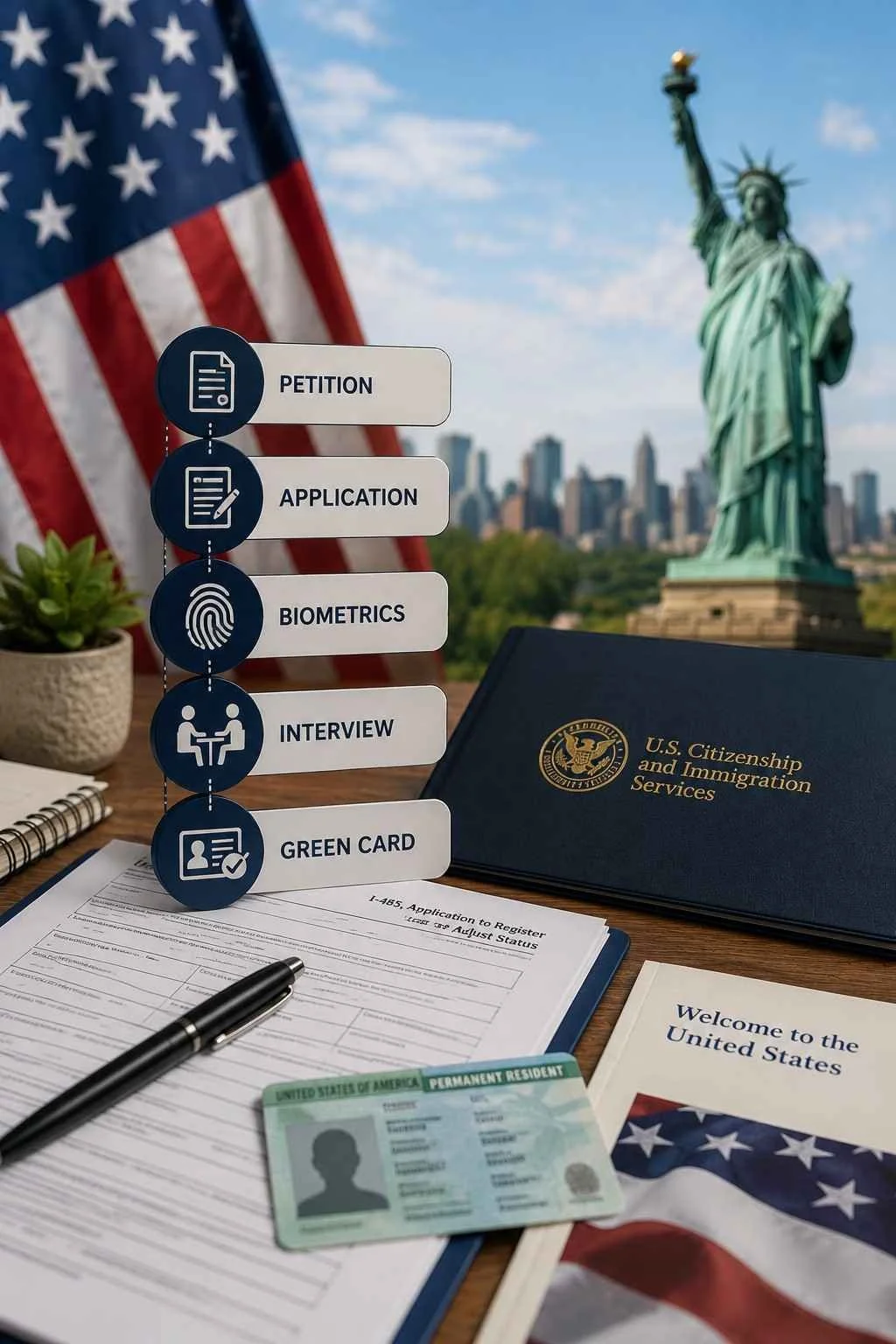
Understanding the U.S. Green Card Process
A Green Card, officially known as a Permanent Resident Card, allows a non-U.S. citizen to live and work permanently in the United States. Lawful permanent residents may pursue employment opportunities, establish residence anywhere in the country, and, in many cases, sponsor certain family members for immigration benefits.
The Green Card process involves several stages, beginning with determining eligibility under a specific immigration category. Many applicants receive Green Cards through family relationships, employment sponsorship, or other specialized immigration programs. Each category has its own requirements, procedures, and timelines.
Once eligibility is determined, the applicant typically submits an immigrant petition or is sponsored by a qualifying relative or employer. The petition must be reviewed and approved by immigration authorities before the applicant can proceed to the next stage of the process. After approval, applicants may either apply for adjustment of status if they are already in the United States or complete consular processing through a U.S. embassy or consulate abroad.
Throughout the process, immigration agencies review documentation, conduct background checks, and may schedule interviews to verify eligibility. Because the Green Card process often involves multiple steps and government agencies, careful preparation and accurate documentation are essential for avoiding delays.
Benefits of Obtaining a Green Card
Receiving a Green Card provides several important advantages for individuals seeking to establish long-term residence in the United States. Lawful permanent residency offers stability and expanded opportunities for individuals and their families.
Some of the key benefits include:
Permanent residence in the United States, allowing individuals to live in the country indefinitely
Authorization to work for most employers without the need for temporary employment visas
Freedom to travel internationally, with the ability to return to the United States as a permanent resident
Eligibility to sponsor certain family members for immigration benefits
Access to some social and educational opportunities, depending on eligibility requirements
A pathway toward U.S. citizenship, once residency requirements are met
Permanent residents are also protected under U.S. laws. They can pursue many of the same opportunities available to citizens, although certain rights—such as voting in federal elections—are reserved exclusively for U.S. citizens.

Types of Green Cards Available
Several immigration pathways allow individuals to apply for lawful permanent residency. Each category is designed to address different immigration circumstances, including family relationships, employment opportunities, and humanitarian programs.
Family-Based Green Cards
Family-based immigration is one of the most common ways individuals obtain permanent residency. U.S. citizens and lawful permanent residents may sponsor certain relatives to immigrate to the United States.
Immediate relatives of U.S. citizens generally receive priority consideration. These categories include spouses, unmarried children under 21, and parents of adult U.S. citizens. Because these relationships are considered immediate family, they are not subject to annual visa limits.
Other relatives fall under preference categories, which are subject to yearly numerical limits. These categories include adult children and siblings of U.S. citizens, as well as spouses and unmarried children of lawful permanent residents. Applicants in these categories may experience longer wait times depending on visa availability.
Marriage-Based Green Cards
Marriage to a U.S. citizen or lawful permanent resident may provide a pathway to permanent residency. Applicants must demonstrate that the marriage is genuine and was entered into in good faith rather than solely for immigration purposes.
If the marriage is less than two years old at the time permanent residency is granted, the applicant may receive conditional permanent resident status, which is valid for two years. The couple must later file a petition to remove conditions and demonstrate that the marriage continues to be legitimate.
Employment-Based Green Cards
Employment-based Green Cards allow individuals to obtain permanent residency based on their professional skills, qualifications, or employment opportunities in the United States.
Common employment-based categories include:
EB-1: Individuals with extraordinary ability, outstanding researchers, and multinational executives
EB-2: Professionals with advanced degrees or exceptional ability in specialized fields
EB-3: Skilled workers, professionals, and certain other workers
These categories typically require employer sponsorship, labor certification, and verification that the applicant meets the position's qualifications.
Other Green Card Categories
Several additional immigration pathways allow individuals to obtain permanent residency, including:
Diversity Visa Lottery programs
Special immigrant categories
Refugee or asylum adjustments
Certain humanitarian programs
Each category has specific eligibility criteria and documentation requirements.
Eligibility Requirements for a Green Card

Eligibility for a Green Card depends on the immigration category under which the individual is applying. While each category has unique criteria, several general requirements apply to most applicants.
Applicants typically must demonstrate their eligibility through a valid sponsorship or immigration program. In family-based cases, this means having a qualifying relationship with a U.S. citizen or permanent resident. For employment-based applications, the applicant must usually receive a qualifying job offer from a U.S. employer.
Additional requirements often include:
Passing background and security checks
Completing a medical examination by an authorized physician
Providing proof of identity and civil documents
Demonstrating financial sponsorship when required
Complying with immigration laws and procedures
Applicants must also complete immigration forms accurately and provide supporting documentation that confirms their eligibility. In some cases, immigration authorities may request additional evidence before making a final decision.
The Green Card Application Process
The process for obtaining a Green Card generally involves several steps. While the exact procedure varies by immigration category, the overall structure remains similar for many applicants.
1. Determining Eligibility
The first step is to identify the immigration category under which the applicant qualifies. This may involve family sponsorship, employment opportunities, or other specialized immigration programs.
4. Adjustment of Status or Consular Processing
Applicants who are already in the United States may apply for adjustment of status to become permanent residents without leaving the country. Those outside the United States usually complete consular processing through a U.S. embassy or consulate.
5. Biometrics Appointment
Applicants are typically required to attend a biometrics appointment, where fingerprints, photographs, and other identifying information are collected for background checks.
2. Filing the Immigrant Petition
A qualifying sponsor—such as a family member or employer—typically submits an immigrant petition on behalf of the applicant. The petition establishes the relationship or employment basis for the Green Card application.
6. Immigration Interview
In many cases, applicants attend an interview with an immigration officer. The purpose of the interview is to review the application, verify information, and confirm eligibility.
3. Visa Availability
A qualifying sponsor—such as a family member or employer—typically submits an immigrant petition on behalf of the applicant. The petition establishes the relationship or employment basis for the Green Card application.
7. Final Decision
After reviewing all documentation and interview results, immigration authorities issue a decision approving or denying the Green Card application.
Adjustment of Status vs Consular Processing
Individuals seeking lawful permanent residency typically complete the Green Card process through either Adjustment of Status (AOS) or Consular Processing. The appropriate procedure depends primarily on whether the applicant is currently in or out of the United States and whether they meet the eligibility requirements to adjust their immigration status.
Adjustment of Status
Adjustment of Status allows eligible individuals who are already present in the United States to apply for permanent residency without leaving the country. Applicants file their Green Card applications with U.S. immigration authorities and attend required appointments in the United States.
Key features of Adjustment of Status include:
The applicant remains in the United States during the application process
Forms are filed with U.S. immigration agencies, typically including Form I-485
Applicants attend biometrics appointments for fingerprinting and background checks
In many cases, applicants may apply for work authorization and travel permits while the application is pending
An interview with an immigration officer may be scheduled before a final decision is issued
Adjustment of Status is often used in family-based immigration cases, employment-based immigration, and other situations where the applicant is legally present in the country.


Consular Processing
Consular processing is used when the applicant is living outside the United States or must complete immigration processing abroad. After the immigrant petition is approved and a visa number becomes available, the applicant completes the Green Card process through a U.S. embassy or consulate in their home country.
The consular processing procedure generally includes:
Submission of civil documents and visa applications to the National Visa Center
Payment of required government processing fees
Completion of a medical examination with an authorized physician
Attendance at an immigrant visa interview at a U.S. embassy or consulate
Entry into the United States with an approved immigrant visa
After entering the United States with an immigrant visa, the individual becomes a lawful permanent resident and later receives a Green Card.
The choice between these two processes depends on the applicant’s immigration status, location, and eligibility criteria.
Documents Required for a Green Card Application
Green Card applications require extensive documentation to confirm an applicant’s identity, eligibility, and immigration background. Submitting complete and accurate documentation is essential because immigration authorities rely on these records to evaluate the application.
Although document requirements vary by immigration category, most applicants must provide several standard forms of identification and supporting evidence.
Commonly required documents include:
Personal Identification Documents
These documents verify the applicant’s identity and personal background.
Valid passport
Birth certificate issued by the appropriate civil authority
Government-issued identification documents
Passport-style photographs that meet immigration requirements
Family Relationship Documents
For family-based or marriage-based Green Card applications, applicants must demonstrate the qualifying relationship with the sponsor.
Examples include:
Marriage certificates
Divorce decrees or death certificates from prior marriages
Birth certificates showing family relationships
Adoption records, if applicable
Immigration Forms and Petitions
Applicants must submit official immigration forms and petitions that establish the legal basis for permanent residency.
These may include:
Immigrant petition filed by a sponsor
Adjustment of Status application forms
Consular processing visa application forms
Affidavit of Support showing financial sponsorship
Medical Examination Documentation
Applicants must undergo a medical examination performed by a government-authorized physician. The physician completes the required medical forms confirming that the applicant meets health-related immigration standards.
Financial Support Documents
Some Green Card categories require proof that the applicant will not become a public charge. Sponsors may need to provide financial evidence, such as:
Tax returns
Employment verification letters
Pay stubs or financial statements
Employment Documentation
For employment-based Green Cards, additional records may be required, including:
Job offer letters
Labor certification approvals
Educational credentials
Professional experience documentation
Providing complete documentation helps reduce the likelihood of delays or requests for additional evidence.
Common Challenges in Green Card Applications
Applying for a Green Card can involve several complex procedures, and applicants sometimes encounter obstacles during the process. These challenges may arise due to documentation issues, eligibility concerns, or procedural delays.
Understanding common difficulties can help applicants better prepare for the process.
Incomplete or Incorrect Documentation
One of the most common issues involves missing or inaccurate documentation. Immigration applications require multiple forms and supporting records, and incomplete submissions may lead to delays or requests for additional evidence.
Examples include:
Missing civil records
Incorrectly completed forms
Inconsistent information between documents
Requests for Evidence (RFEs)
Immigration authorities may issue a Request for Evidence (RFE) if additional documentation is needed to verify eligibility. An RFE does not necessarily indicate a denial, but it requires the applicant to submit additional information within a specified timeframe.
Visa Availability Delays: Many immigration categories are subject to annual limits on the number of visas available. Applicants in these categories may experience waiting periods before they can complete the Green Card process.
Immigration Status Complications: Applicants who have previously overstayed a visa, worked without authorization, or violated immigration rules may face additional challenges when applying for permanent residency.
Interview Concerns: Some applicants may feel unprepared for the immigration interview. Inconsistencies between the interview responses and the application documentation may lead to further review by immigration officers.
Processing Delays: Administrative processing delays can occur due to factors such as background checks, increased application volume, or additional document review.
Understanding these challenges allows applicants to prepare more effectively and respond appropriately if issues arise during the application process.
Preparing for a Green Card Interview
Many Green Card applicants are required to attend an interview with an immigration officer as part of the application review process. The interview allows immigration authorities to confirm the information provided in the application and determine whether the applicant meets the eligibility requirements for permanent residency.
Preparing for the interview can help applicants feel more confident and ensure they have the necessary documentation.
Purpose of the Interview
The immigration interview is conducted to verify important aspects of the application, including:
The authenticity of documents submitted
The applicant’s immigration history
Eligibility for the specific Green Card category
The legitimacy of family or marital relationships when applicable

Questions During the Interview
The immigration officer may ask questions about the applicant’s background and the information provided in the application. In marriage-based cases, questions may focus on the relationship between the spouses to ensure that the marriage is genuine.
Importance of Accurate and Consistent Information
Applicants should ensure that their answers during the interview are consistent with the information submitted in the application forms. Providing clear and accurate responses helps immigration officers verify eligibility and finalize the application review.
Green Card Processing Times
Processing times for Green Card applications can vary significantly depending on several factors. Some applicants receive decisions within months, while others may experience longer waiting periods due to visa availability or administrative processing.
Several factors influence processing timelines.
Immigration Category
Different Green Card categories have different processing timelines. Immediate relatives of U.S. citizens often experience shorter processing times because these visas are not subject to annual limits. Preference categories may involve waiting periods due to visa quotas.
Visa Bulletin Availability
For categories with numerical limits, applicants must wait until a visa number becomes available, as indicated in the U.S. Department of State Visa Bulletin. This can affect whether an applicant is eligible to move forward with the application process.
Government Processing Workload
Processing times may fluctuate based on the volume of applications received by immigration agencies and the availability of resources.
Background and Security Checks
Immigration authorities conduct security and background checks for all applicants. Completing these checks can sometimes extend processing times.
Requests for Additional Evidence
If immigration authorities request additional documentation, the processing timeline may be extended while the requested information is reviewed.
Applicants can often monitor their case status through official immigration case tracking systems while waiting for updates.
How a Green Card Lawyer Can Help
The Green Card application process often involves multiple steps, detailed paperwork, and strict procedural requirements. Immigration laws and regulations can also change over time, making it important for applicants to understand current policies and eligibility requirements.
A Green Card lawyer can assist individuals and families by providing guidance throughout the immigration process and helping ensure that applications are prepared accurately.
Evaluating Eligibility
An attorney may review an individual’s immigration history and circumstances to determine which Green Card category is most appropriate.
Responding to Requests for Evidence
If immigration authorities request additional documentation, legal assistance can help applicants prepare the required response within the specified deadline.
Preparing Immigration Petitions and Applications
Green Card applications involve several forms and supporting documents. Legal assistance can help ensure that these materials are prepared accurately and submitted in accordance with immigration guidelines.
Preparing for Immigration Interviews
Applicants may benefit from guidance on what to expect during the interview process and how to prepare documentation and responses.
Organizing Supporting Documentation
Applicants must provide various records, including identification documents, financial information, and evidence of relationships. Legal guidance may help ensure that documentation is organized and submitted correctly.
Addressing Complicated Immigration Situations
Applicants must provide various records, including identification documents, financial information, and evidence of relationships. Legal guidance may help ensure that documentation is organized and submitted correctly.
Through careful review of documentation and procedures, legal professionals help applicants navigate the complex steps involved in obtaining lawful permanent residency.
Why Choose Rod Armande Law for Green Card Services in Montebello
Rod Armande Law provides legal services focused on immigration matters, including assistance with Green Card applications. Individuals seeking lawful permanent residency often require guidance to understand eligibility requirements, prepare documentation, and complete immigration forms accurately.
Legal representation may involve evaluating the applicant’s immigration history, identifying appropriate Green Card categories, and assisting with petition preparation. Careful attention to documentation is an important part of the immigration process, as incomplete or inaccurate filings can lead to delays.
Applicants in Montebello, California, frequently seek legal guidance when navigating immigration procedures that involve multiple government agencies and complex regulatory requirements. Legal assistance can help ensure the application process is handled in a structured, organized manner.

Schedule a Consultation with a Green Card Lawyer in Montebello
Individuals seeking lawful permanent residency often benefit from understanding the immigration process and the documentation required for their specific situation. A consultation with a Green Card lawyer can guide eligibility, application procedures, and immigration requirements. Rod Armande Law assists individuals in Montebello and nearby communities with legal matters related to Green Card applications and permanent residency.
Frequently Asked Questions About Marriage Green Card Montebello, California
-
U.S. citizens and lawful permanent residents may sponsor certain family members for Green Cards. Employers may also sponsor workers for employment-based Green Cards.
-
Processing times vary depending on the immigration category, visa availability, and government processing workloads. Some applications may take months, while others may take several years.
-
In some cases, applicants may apply for a work authorization document while their Green Card application is pending.
-
If an application is denied, the applicant may have options such as filing a motion, appealing the decision, or reapplying, depending on the circumstances.
-
Yes. Lawful permanent residents may sponsor certain relatives, including spouses and unmarried children.
-
Permanent residents may apply for U.S. citizenship after meeting residency and other eligibility requirements, typically after five years.