
How Is Fault Determined in a California Car Accident?
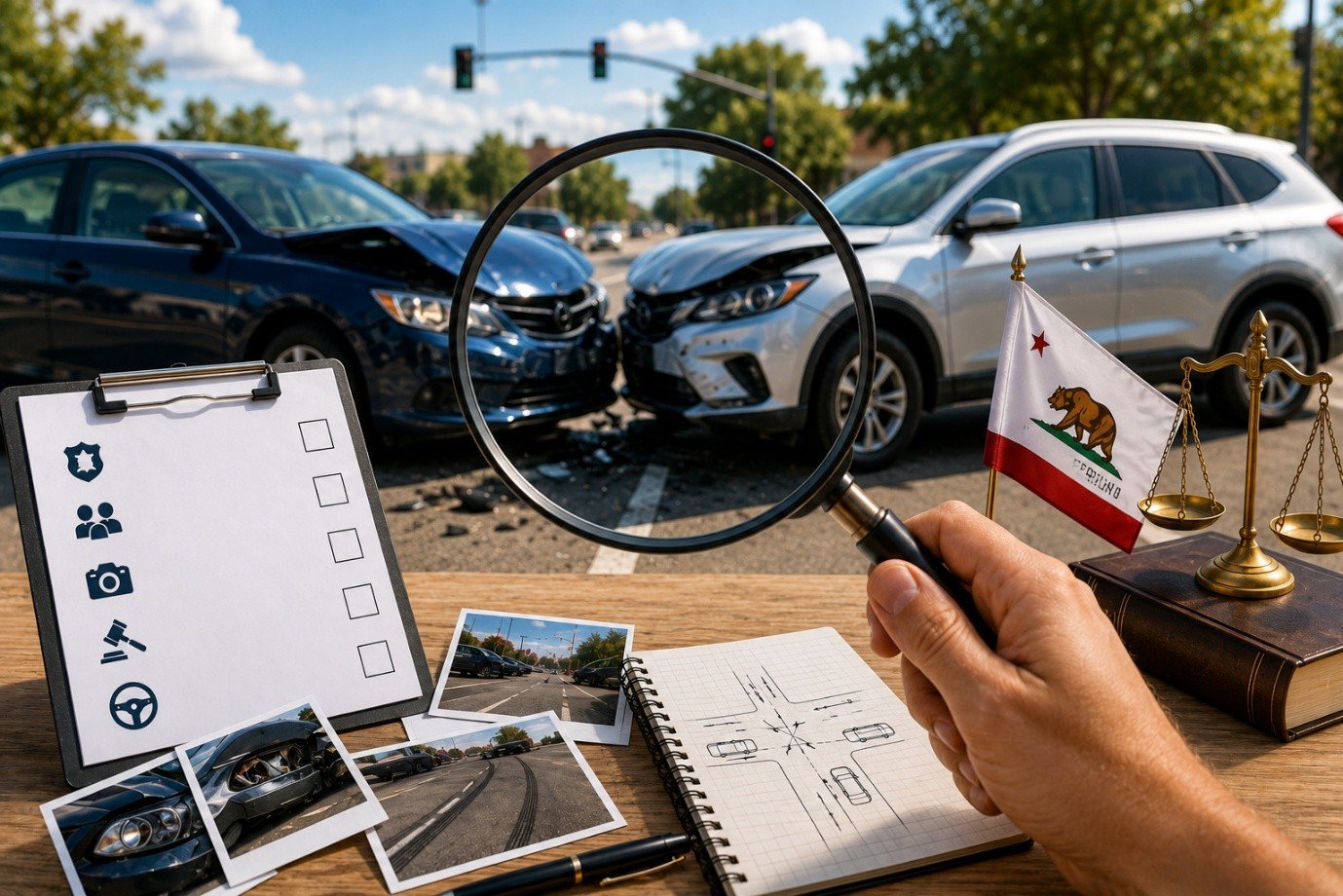
If you are involved in a car accident in Los Angeles, California, determining who is responsible for the collision can be one of the most important parts of your injury claim. Fault can affect whether you receive compensation, how much compensation you may recover, and how an insurance company evaluates your case.
California follows a pure comparative negligence system. This means you may still be able to recover damages even if you share some responsibility for an accident. However, your compensation can be reduced according to your percentage of fault.
Because fault is not always obvious, you should understand how responsibility is evaluated, what evidence can support your position, and what steps you can take after a crash.
If you were injured in Los Angeles, you can also review Rod Armande Law's information about a Car Accident Lawyer in Los Angeles, California to learn more about the legal issues that may arise after a collision.
What Does Fault Mean in a California Car Accident?
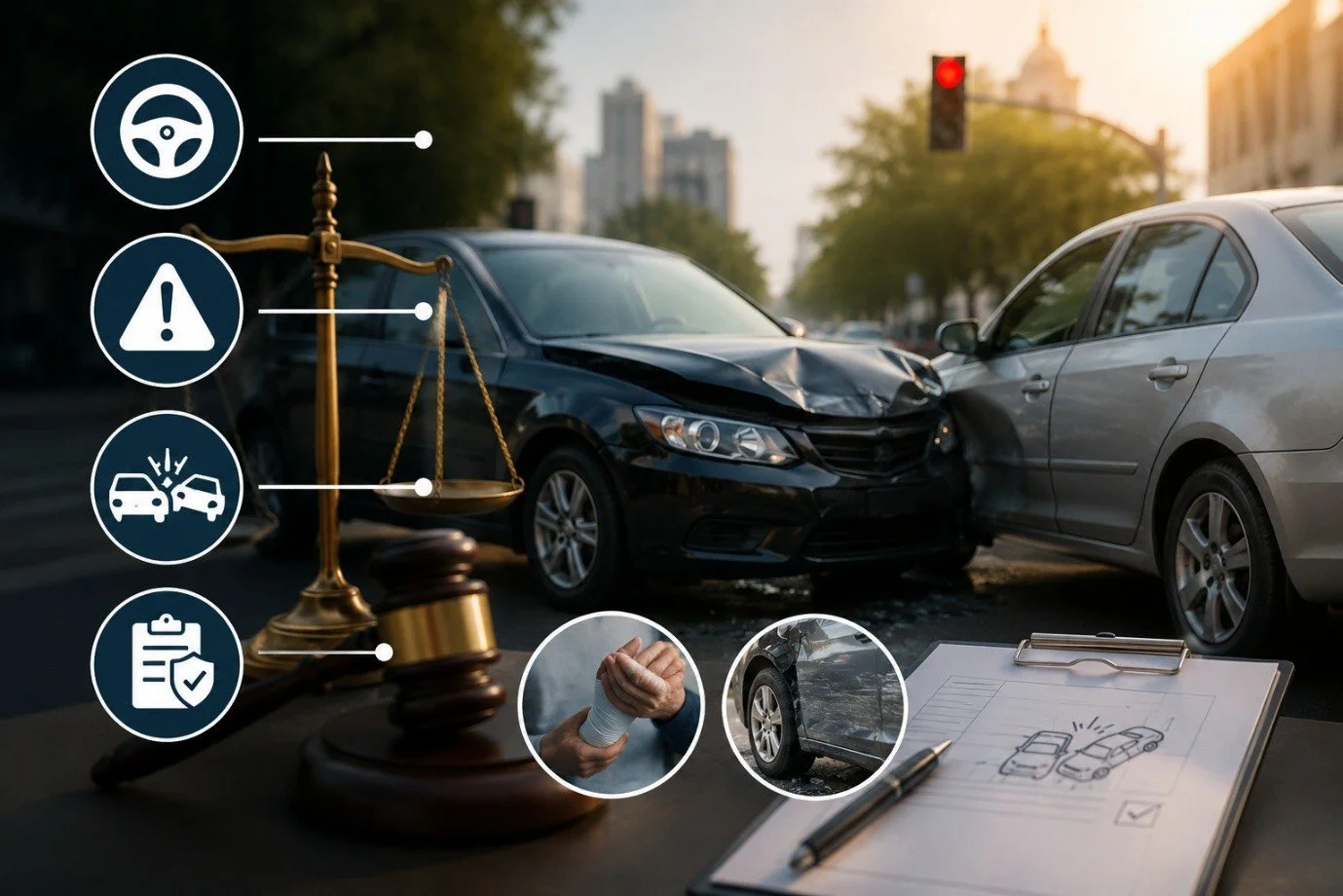
Fault generally means legal responsibility for causing an accident. In many California car accident cases, fault is based on negligence.
You may establish negligence by showing that another driver:
Had a responsibility to operate the vehicle safely.
Failed to use reasonable care.
Caused or contributed to the collision.
Caused injuries, property damage, or other legally recoverable losses.
For example, if another driver runs a red light and crashes into your vehicle, evidence showing that the driver ignored the traffic signal may support your claim that the driver was responsible.
However, some accidents involve several contributing factors. Another driver may have been speeding while you were changing lanes, or poor road conditions may have affected both drivers. That is why fault should be evaluated using the complete circumstances of the collision.
California Uses Comparative Negligence
California's comparative negligence rules allow you to seek compensation even when you are partly responsible for an accident.
For example, suppose you have $100,000 in legally recoverable damages and are found to be 20% responsible for the collision. Your potential recovery could be reduced by 20%, leaving $80,000.
This means you should not automatically assume that being partially responsible prevents you from pursuing compensation.
The percentage of fault assigned to each person can become an important issue when an insurance company disputes your claim. You should gather evidence that accurately explains what happened instead of accepting an unsupported percentage of responsibility.
Evidence Used to Determine Fault
Fault is usually determined by examining multiple sources of evidence. The more clearly the evidence establishes what happened, the easier it may be to evaluate responsibility.
Police Reports
A police report may contain information about the accident location, statements from drivers and witnesses, traffic violations, road conditions, and the responding officer's observations.
Although a police report can be valuable, it does not automatically determine legal liability. Additional evidence may change how responsibility is evaluated.
Photographs and Videos
If you can safely do so, take photographs of:
Vehicle damage
The accident scene
Road conditions
Traffic signals and signs
Skid marks
Debris
Visible injuries
Nearby vehicles or property damage
Dashcam recordings, traffic-camera footage, security cameras, and other video evidence may also help establish how the collision occurred.
You should preserve original photographs and videos whenever possible.
Witness Statements
Independent witnesses can provide important information about what happened before and during a collision.
A witness may have seen another driver speeding, using a cellphone, running a traffic signal, making an unsafe lane change, or failing to yield.
If you can safely obtain witness names and contact information, keep those details with your accident records.
Vehicle Damage
Damage to the vehicles can sometimes provide clues about the direction, speed, and manner of impact.
Photographs, repair estimates, inspection reports, and other documentation may help explain how the collision occurred. You should keep copies of repair estimates and invoices related to the accident.
Electronic Evidence
Modern vehicles and surrounding infrastructure may produce additional evidence. Depending on the circumstances, this can include dashcam recordings, surveillance footage, GPS information, and certain vehicle data.
You should act promptly when you believe relevant video or electronic evidence exists because some systems may automatically delete older recordings.
Traffic Violations Can Help Establish Fault
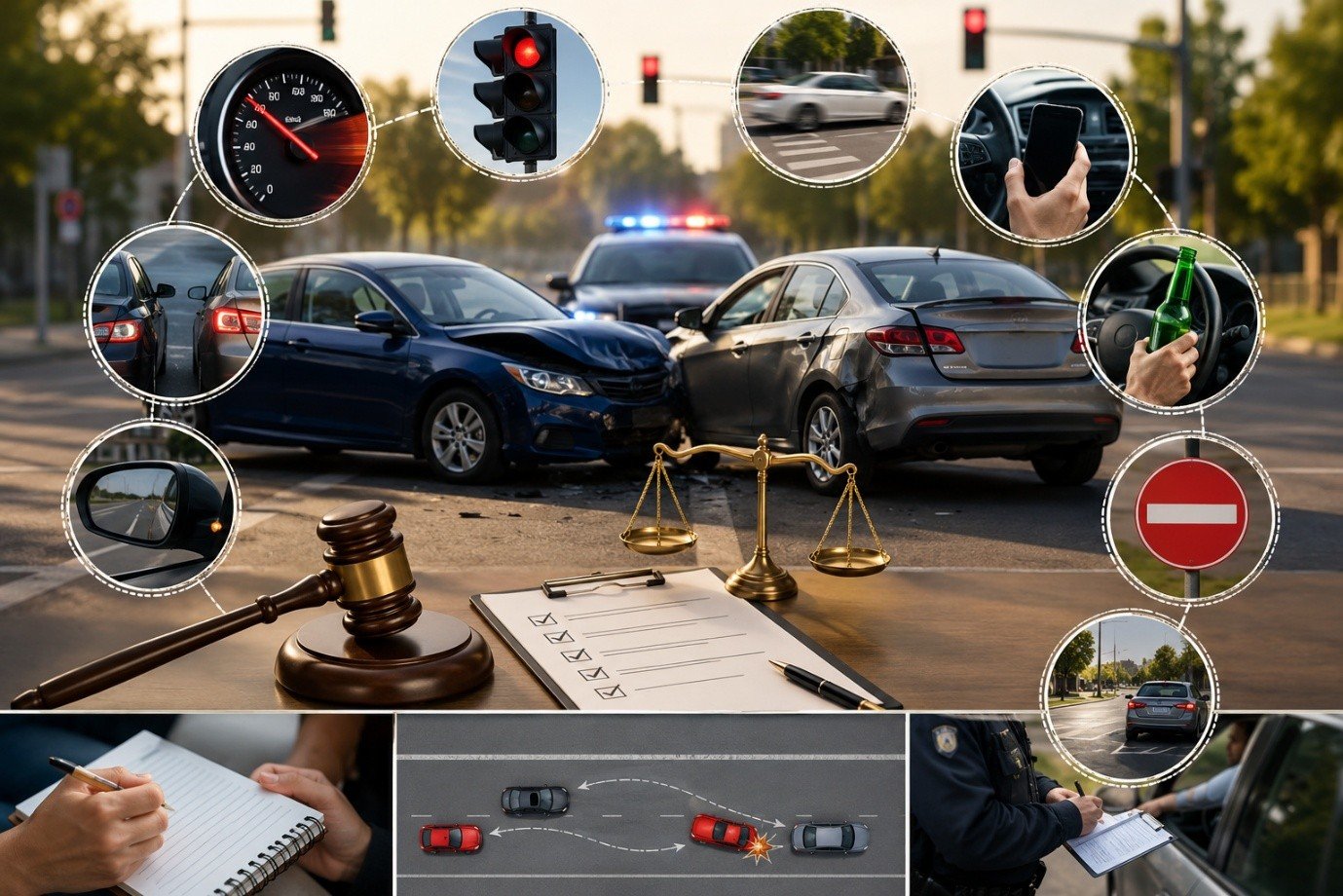
A driver's violation of California traffic laws may be important when determining responsibility.
Common examples include:
Speeding
Running a red light
Failing to yield
Following too closely
Making an unsafe lane change
Distracted driving
Driving under the influence
Ignoring traffic signs
Making an unsafe turn
A traffic citation can support your position, but it does not necessarily resolve every question about fault.
You should consider the entire sequence of events. Even when another driver violated a traffic law, evidence may show that additional factors contributed to the accident.
How Insurance Companies Determine Fault
After your accident, you may need to communicate with one or more insurance companies. An insurer will generally investigate the circumstances and decide how it believes responsibility should be allocated.
The investigation may include:
Police reports
Statements from drivers
Witness information
Photographs
Medical records
Vehicle damage
Video footage
Accident-related documents
You should remember that an insurance company's decision is not necessarily the final determination of legal fault.
If an insurer claims you caused the accident or assigns you a percentage of responsibility that you believe is inaccurate, you may need evidence to challenge that position.
You should also avoid guessing about facts you do not know. Statements made immediately after an accident can sometimes be misunderstood or used to dispute your claim.
For additional information about the role of an attorney in an accident claim, you can read How a Car Accident Lawyer in Los Angeles, California Helps Injury Victims, which discusses accident investigation, evidence collection, insurance negotiations, and liability issues.
What Happens When Both Drivers Are at Fault?
Some California accidents involve shared responsibility.
For example, imagine another driver was speeding while you were changing lanes. If both actions contributed to the crash, each driver could potentially be assigned a percentage of responsibility.
Under California's comparative negligence rules, your compensation may be reduced according to your percentage of fault.
This makes documentation particularly important. You should preserve evidence showing not only what the other driver did, but also the circumstances surrounding your own actions.
What Should You Do After a California Car Accident?
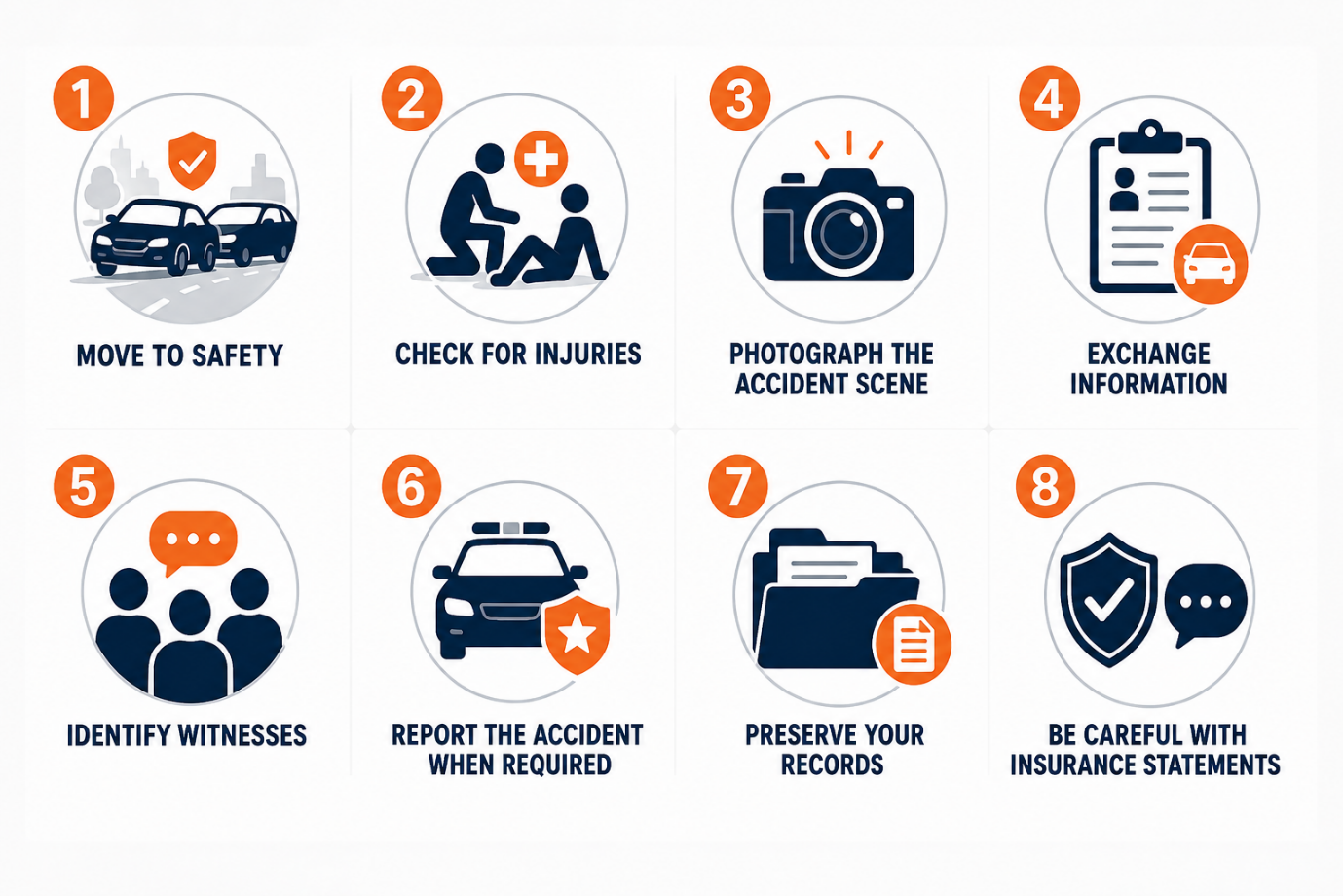
Your actions after a collision can help preserve evidence and protect your legal interests.
1. Move to Safety
If possible and safe, move away from active traffic. Call emergency services when necessary and avoid putting yourself in danger while documenting the scene.
2. Check for Injuries
Check yourself and others for injuries. If you are hurt or experience symptoms after the collision, seek appropriate medical attention.
Do not assume that you are uninjured simply because you feel fine immediately after the crash.
3. Photograph the Accident Scene
Take photographs of the vehicles, road, traffic signs, signals, debris, visible injuries, and other relevant conditions when it is safe.
4. Exchange Information
Obtain the other driver's identifying, vehicle, and insurance information. You should also provide your information as required.
5. Identify Witnesses
If people witnessed the collision, ask for their names and contact information if it is safe and practical to do so.
6. Report the Accident When Required
Depending on the circumstances, you may have legal obligations to report the accident. You should understand the applicable reporting requirements rather than assuming another person will handle them.
7. Preserve Your Records
Keep your photographs, videos, medical records, repair bills, insurance correspondence, witness information, and other accident-related documents in one location.
8. Be Careful With Insurance Statements
You should cooperate with legitimate insurance investigations, but you should avoid speculating about fault or minimizing your injuries.
If you do not know an answer, it is better to say that you do not know than to guess.
For more information about choosing an attorney after a Los Angeles collision, you can also review How Do You Choose the Right Car Accident Lawyer in Los Angeles?. This related resource discusses factors such as local experience, communication, case evaluation, and insurance-related representation.
How an Attorney Can Help Determine Fault
When fault is disputed, an attorney can review the available evidence and help you understand how California negligence rules may apply to your circumstances.
An attorney may examine:
Police reports
Accident photographs
Witness statements
Medical documentation
Vehicle damage
Traffic laws
Insurance communications
Surveillance footage
Potentially responsible parties
If you need legal guidance after an accident, Rod Armande Law can help you understand your potential options regarding a California personal injury claim.
If your collision occurred in Downtown Los Angeles, you can also review the firm's Downtown Los Angeles car accident legal resources, which address issues involving evidence, insurance claims, liability, and different types of collisions in the area.
Why You Should Act Quickly
Evidence can become more difficult to obtain as time passes. Witnesses may forget important details, surveillance footage may be overwritten, vehicles may be repaired, and documents may become harder to locate.
For this reason, you should begin documenting your accident as soon as reasonably possible.
You should also be aware that California law establishes deadlines for pursuing certain legal claims. The applicable deadline can depend on the type of claim and circumstances involved. Waiting too long may affect your legal options.
How Fault Can Affect Your Compensation
The percentage of fault assigned to you can affect the amount you may recover.
Depending on the circumstances, recoverable damages may include medical expenses, lost income, property damage, and other losses recognized under California law.
For example, if you are awarded $75,000 in damages but are determined to be 10% responsible, your recovery could potentially be reduced by 10%.
The actual value of your claim depends on the evidence, severity of your injuries, financial losses, liability issues, insurance coverage, and other circumstances.
Common Mistakes That Can Complicate Fault Determination
You can make the process more difficult if you:
Admit fault at the accident scene without knowing all the facts.
Fail to photograph the vehicles or accident location.
Forget to collect witness information.
Delay medical evaluation despite experiencing symptoms.
Post statements or photographs about the accident on social media.
Give inaccurate or speculative information to an insurer.
Throw away accident-related documents.
Accept a settlement before understanding your losses.
You should focus on documenting facts and preserving evidence rather than trying to determine the entire legal case at the accident scene.
When Should You Contact an Attorney?
Fault determination after a California car accident is based on evidence and applicable legal principles, not simply on who appears responsible at the scene.
If you were involved in a car accident in Los Angeles, California, you should preserve evidence, document your injuries and losses, follow applicable reporting requirements, and be cautious when discussing fault with an insurance company.
California's comparative negligence rules mean that even partial responsibility does not necessarily prevent you from pursuing compensation. However, the percentage of fault assigned to you can affect your recovery.
If you want to discuss your accident and potential legal options, you can Contact Us at Rod Armande Law.
Get Legal Guidance After a California Car Accident
Fault determination after a California car accident is based on evidence and applicable legal principles, not simply on who appears responsible at the scene.
If you were involved in a Car Accident in Los Angeles, California, you should preserve evidence, document your injuries and losses, follow applicable reporting requirements, and be cautious when discussing fault with an insurance company.
California's comparative negligence rules mean that even partial responsibility does not necessarily prevent you from pursuing compensation. However, the percentage of fault assigned to you can affect your recovery.
If you want to discuss your accident and potential legal options, you can Contact Us at Rod Armande Law.
Frequently Asked Questions
1. How is fault determined in a California car accident?
Fault is determined by examining evidence such as police reports, witness statements, photographs, videos, vehicle damage, traffic laws, and other relevant information. Insurance companies may conduct their own investigations, while a court can ultimately decide disputed legal responsibility.
2. Can you recover compensation if you are partially at fault?
Yes. California follows a pure comparative negligence system. You may recover damages even when you share responsibility for an accident. However, your potential compensation can generally be reduced according to your percentage of fault.
3. Does a police report determine who is at fault?
No. A police report can provide valuable evidence, but it does not necessarily make the final legal determination of fault. Insurance companies and courts may consider additional evidence, including photographs, witness accounts, videos, and accident-related records.
4. What evidence can prove another driver caused the accident?
Evidence may include photographs, dashcam footage, surveillance video, witness statements, police reports, vehicle damage, traffic citations, medical records, and other documentation. You should preserve relevant evidence as soon as possible after the collision.
5. Should you contact an attorney when fault is disputed?
Legal guidance may be helpful when fault is disputed, your injuries are serious, multiple parties are involved, or an insurance company challenges your claim. An attorney can review the evidence and explain your potential options under California law.
Legal Disclaimer
This content is published by Rod Armande Law for general educational and informational purposes. It is intended to provide general information about California car accident and personal injury issues and should not be interpreted as legal advice for any individual case. Laws, regulations, court decisions, agency procedures, and other legal requirements may change, and the information in this article may not always reflect the latest developments.
Your use of this article or the Rod Armande Law website, or your decision to contact the Firm, does not automatically establish an attorney-client relationship. Representation begins only if the Firm completes any applicable conflict review and expressly agrees to represent you.
References to previous cases, settlements, approvals, verdicts, or other legal outcomes, if any, are provided for informational purposes only. Each legal matter is different and depends on its specific facts, evidence, applicable law, and circumstances. A result obtained in one matter should not be understood as a guarantee, prediction, or assurance of the result in another case.