
What Can Cause a Green Card Application to Be Delayed?

Applying for a Green Card can be an important step toward becoming a permanent resident of the United States. However, your application may take longer than expected for several reasons. Some delays happen because of incomplete paperwork, missing evidence, mistakes, Requests for Evidence, background checks, processing backlogs, or issues involving your immigration history.
You cannot control every factor that affects USCIS processing times, but you can take steps to reduce avoidable problems. Understanding the common causes of Green Card delays can help you prepare your application carefully and respond to immigration notices on time.
If you are preparing your application, reviewing the Green Card application process and eligibility requirements can help you understand what may be required before filing.
Incomplete or Incorrect Application Forms
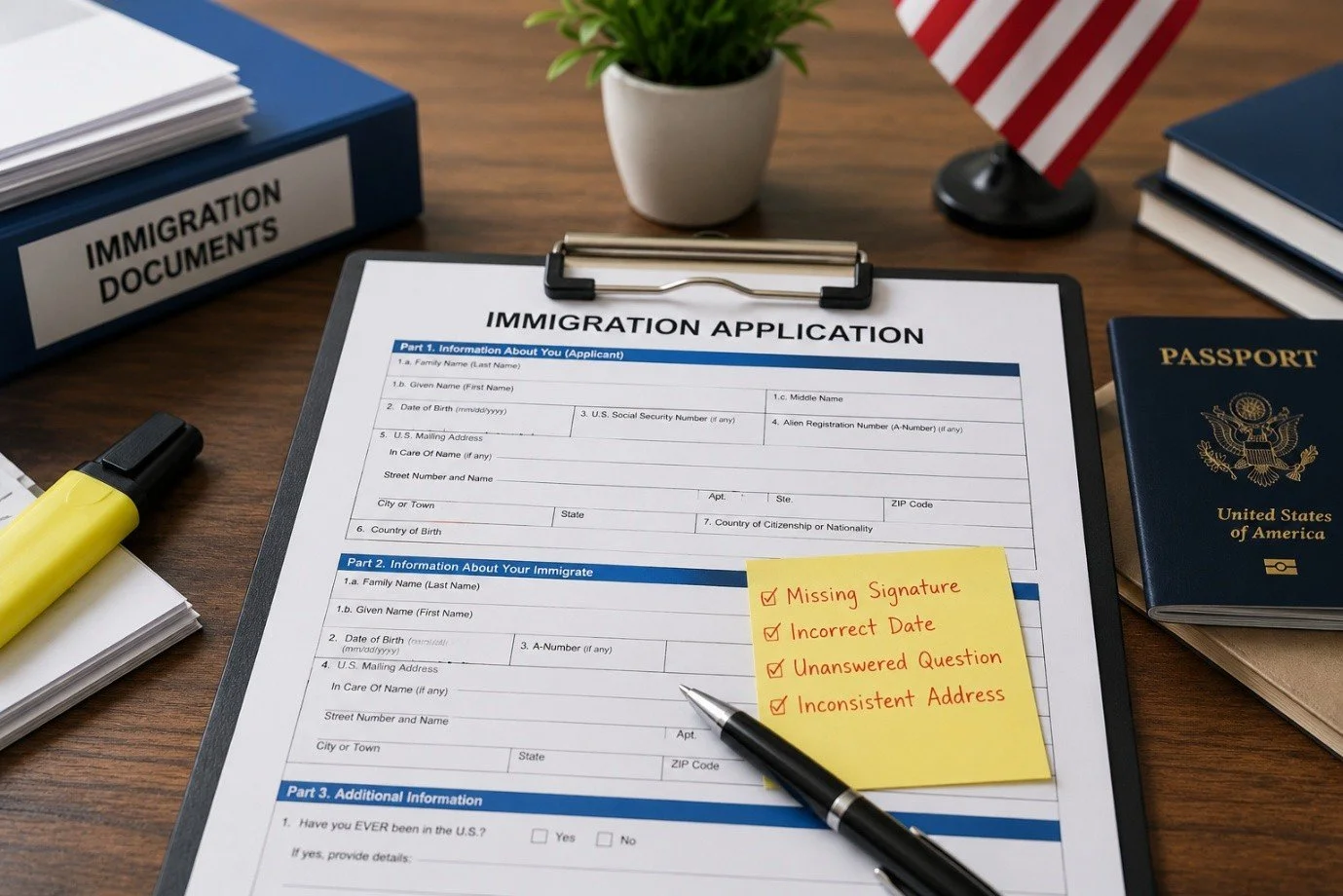
One of the most preventable causes of immigration delays is an incomplete or inaccurate application.
A missing signature, incorrect date, inconsistent address, unanswered question, or other error can create additional processing issues. USCIS may need clarification before continuing with your case.
Before filing, carefully review every form and compare the information across your entire application package. You should make sure your name, date of birth, addresses, immigration history, employment information, and other important details are consistent.
You should also confirm that you are using the appropriate form versions and have provided all required signatures.
Taking additional time before filing can help you avoid problems that could have been prevented with a careful review.
1.Missing Supporting Documents
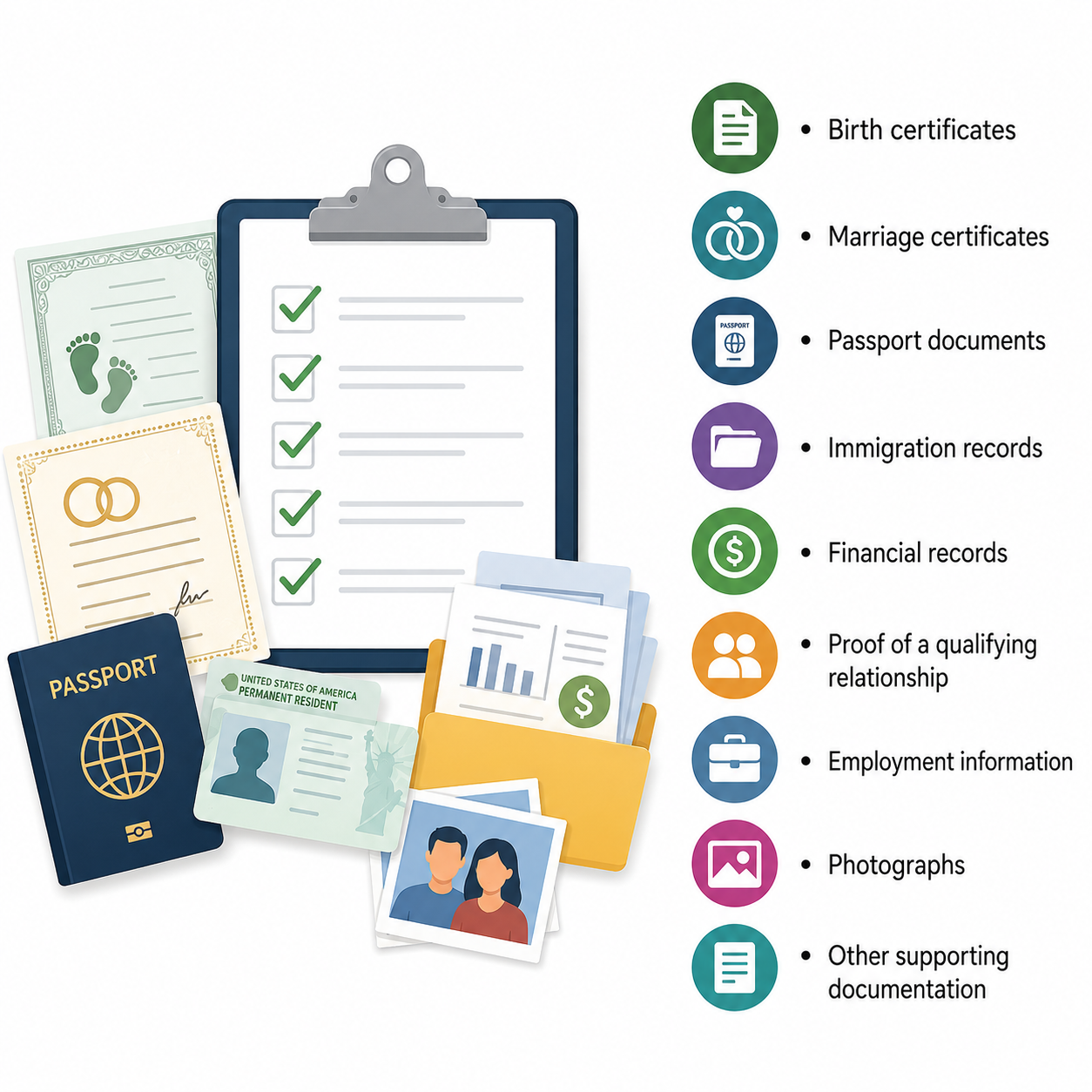
USCIS generally requires evidence showing that you qualify for the Green Card category under which you are applying.
Depending on your circumstances, your evidence may include:
Birth certificates
Marriage certificates
Passport documents
Immigration records
Financial records
Proof of a qualifying relationship
Employment information
Photographs
Other supporting documentation
If required evidence is missing, USCIS may request additional documentation before making a decision.
You should review the requirements that apply specifically to your immigration category. Do not assume that documents submitted by another applicant will automatically satisfy the requirements for your case.
If you are applying through your spouse, reviewing marriage-based Green Card information can help you better understand the documentation that may be relevant to your application.
A complete application package can reduce the possibility of unnecessary requests and processing interruptions.
2. A Request for Evidence From USCIS
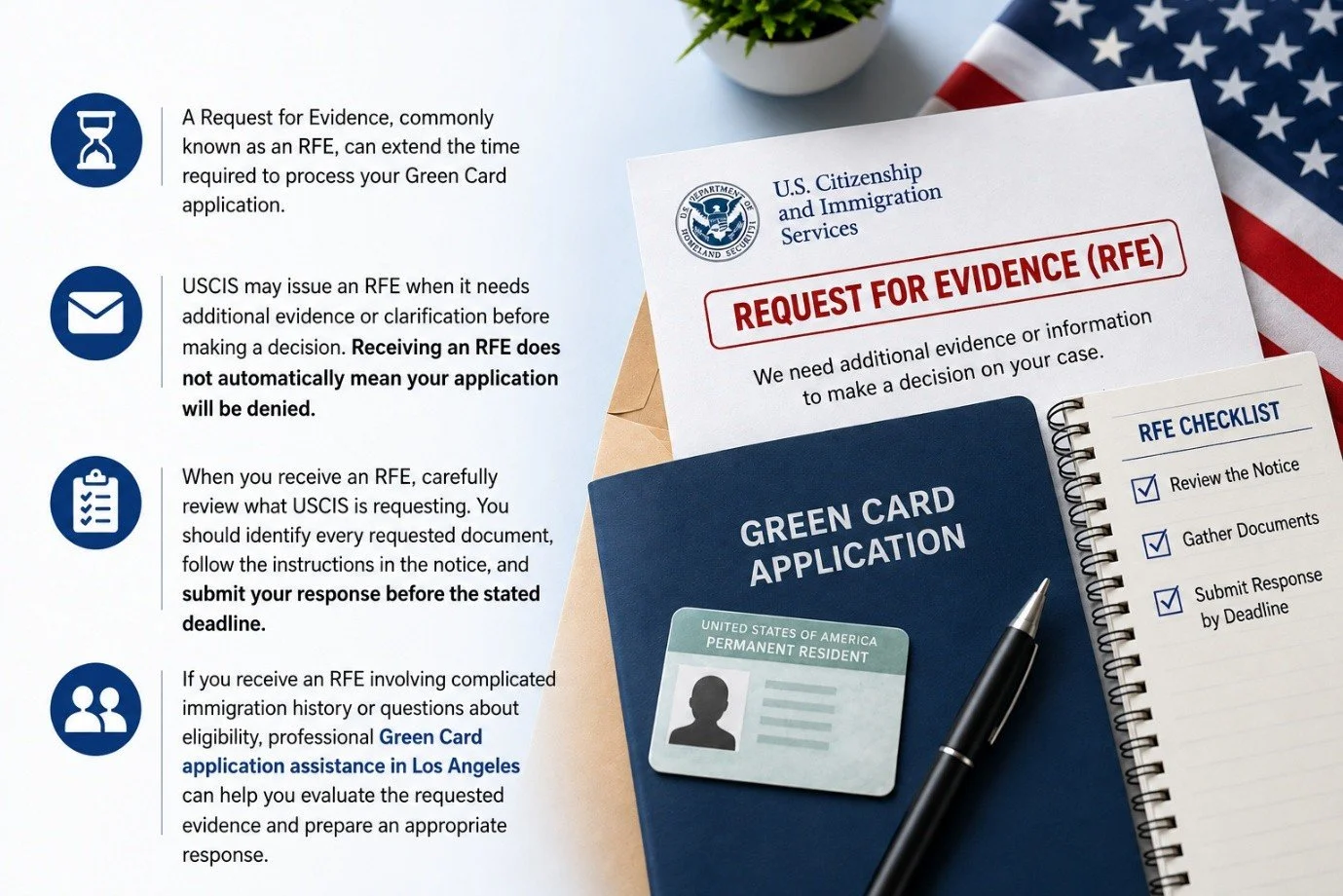
A Request for Evidence, commonly known as an RFE, can extend the time required to process your Green Card application.
USCIS may issue an RFE when it needs additional evidence or clarification before making a decision. Receiving an RFE does not automatically mean your application will be denied.
When you receive an RFE, carefully review what USCIS is requesting. You should identify every requested document, follow the instructions in the notice, and submit your response before the stated deadline.
If you receive an RFE involving complicated immigration history or questions about eligibility, Green Card application legal assistance may help you understand the issues raised in the notice and determine what information may need to be addressed.
1. Background and Security Checks
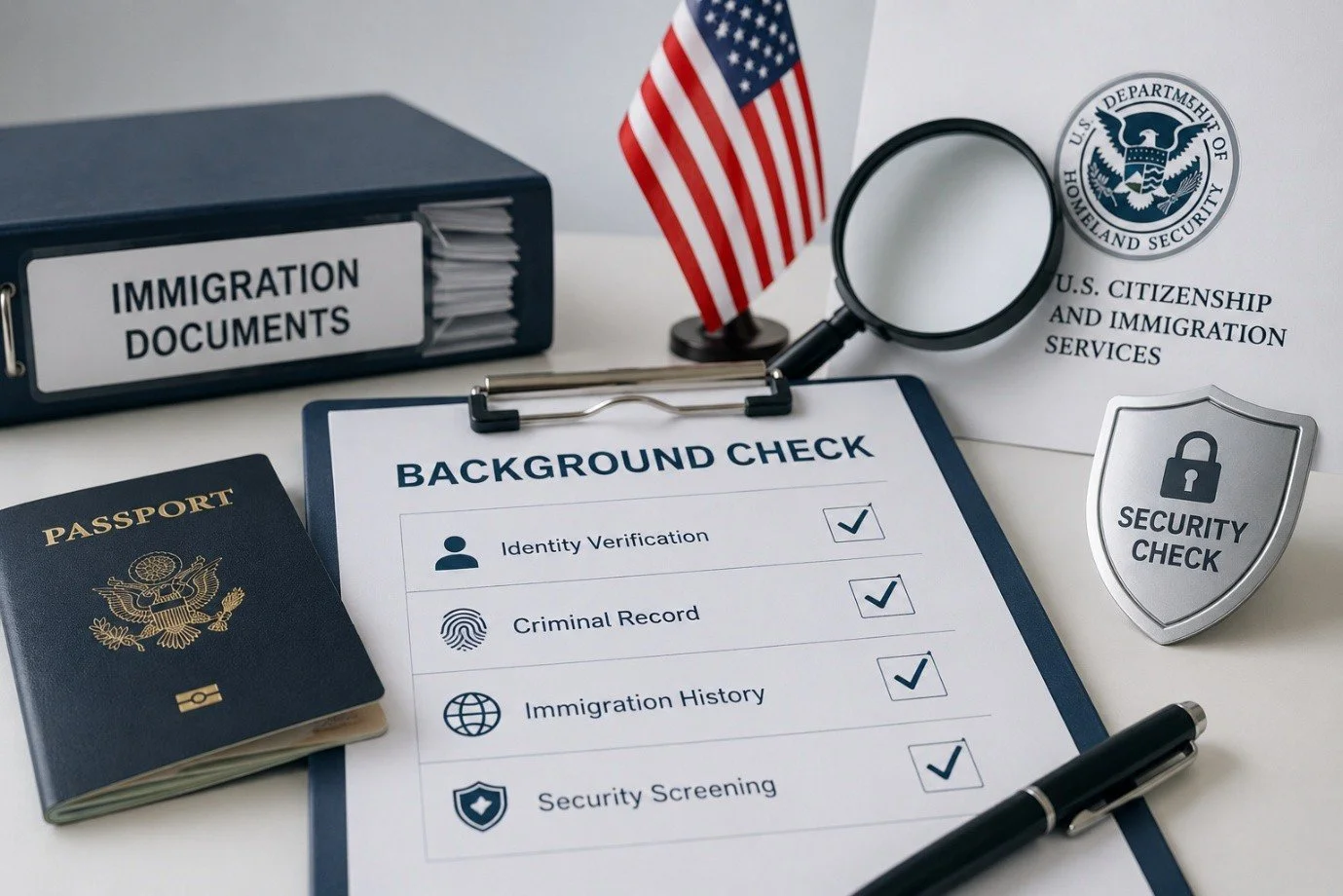
USCIS may conduct background and security checks during the Green Card process. These checks can involve information maintained by different government agencies and systems.
Because these checks are generally outside your direct control, they can sometimes take longer than expected.
You can, however, reduce potential complications by providing accurate information about your identity, immigration history, and other information requested in your application.
A background-check delay does not necessarily mean USCIS has found a problem. Processing times can vary significantly depending on the circumstances of each case.
2. Complicated Immigration History
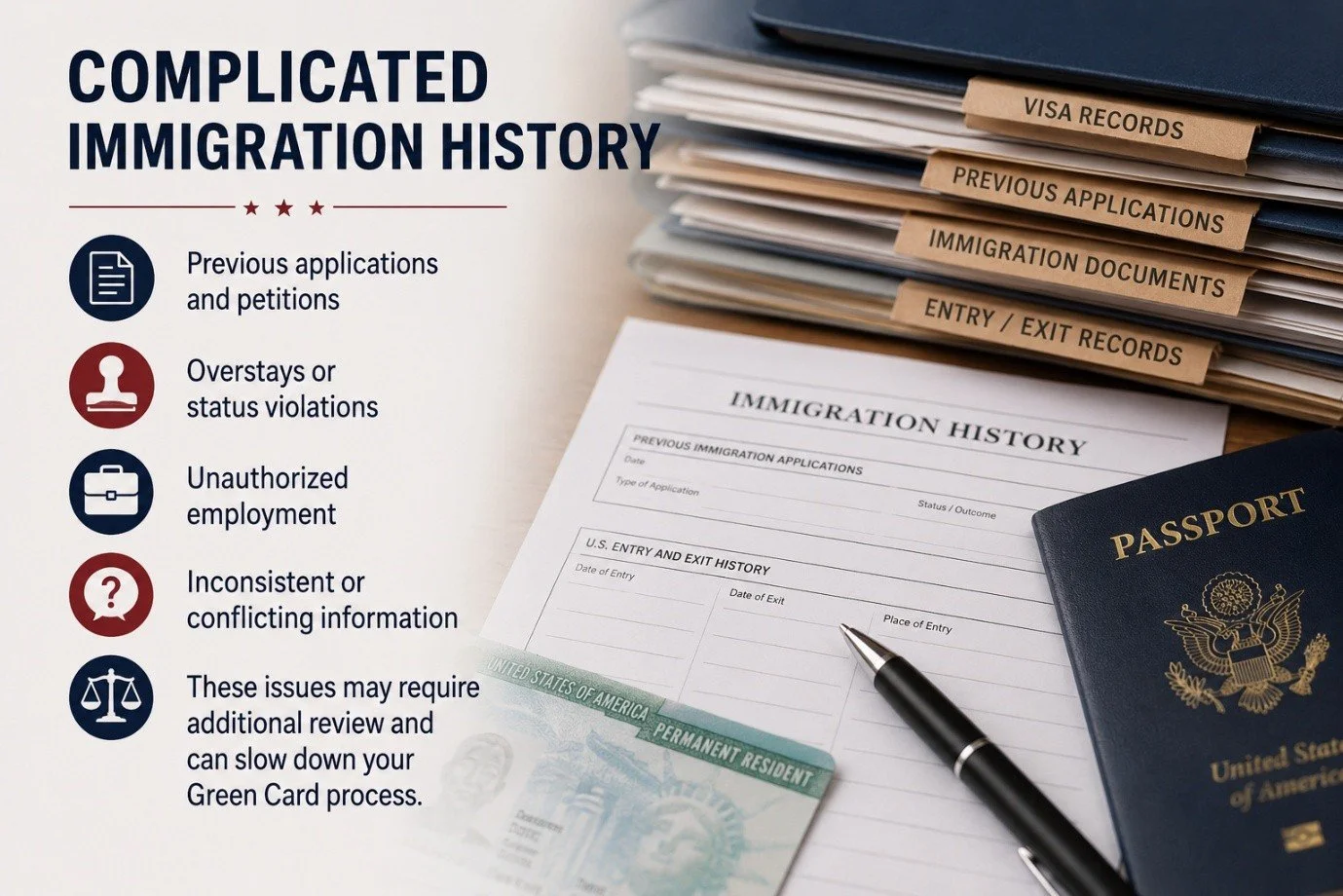
Your previous immigration history can affect the processing of your Green Card application.
Issues involving previous applications, immigration status, unauthorized employment, overstays, or inconsistent information may require additional review.
You should provide complete and truthful information about your immigration history. Leaving out an important issue because you believe it is insignificant can create additional problems if USCIS discovers the information elsewhere.
Before filing, review previous applications, notices, visas, and other immigration documents. If you identify inconsistencies or complicated issues, consider obtaining legal advice before submitting your application.
If your Green Card application is based on a family relationship, family-based immigration services may also be relevant to your circumstances.
6. Problems With a Required Medical Examination
Depending on your Green Card category and circumstances, you may need to complete an immigration medical examination.
A problem with the examination or related documentation may delay your case. For example, missing information or improperly prepared documentation may require additional action.
If your application requires a medical examination, follow the applicable USCIS requirements and make sure the examination is completed by an authorized civil surgeon when required.
You should also follow instructions regarding the submission of medical documentation.
7. USCIS Processing Backlogs
Sometimes your application is delayed even though you submitted everything correctly.
USCIS processing times can vary because of application volume, staffing, workload, immigration category, and other operational circumstances.
You should therefore avoid assuming that another applicant's timeline will be the same as yours. Two applicants with similar circumstances can receive decisions at different times.
Check the applicable USCIS processing information for your specific form and category to determine whether your case is still within the expected processing timeframe.
8. Filing Fee Problems
Incorrect filing fees or payment problems can interfere with the processing of your application.
Before submitting your Green Card application, verify the current fee and payment requirements applicable to your filing. Immigration filing fees and procedures can change, so you should confirm the current requirements before submitting your documents.
A rejected payment can result in your filing being rejected rather than processed normally.
Carefully checking the fee and payment method is a simple step that can help you avoid an unnecessary problem.
9. Inconsistent Information
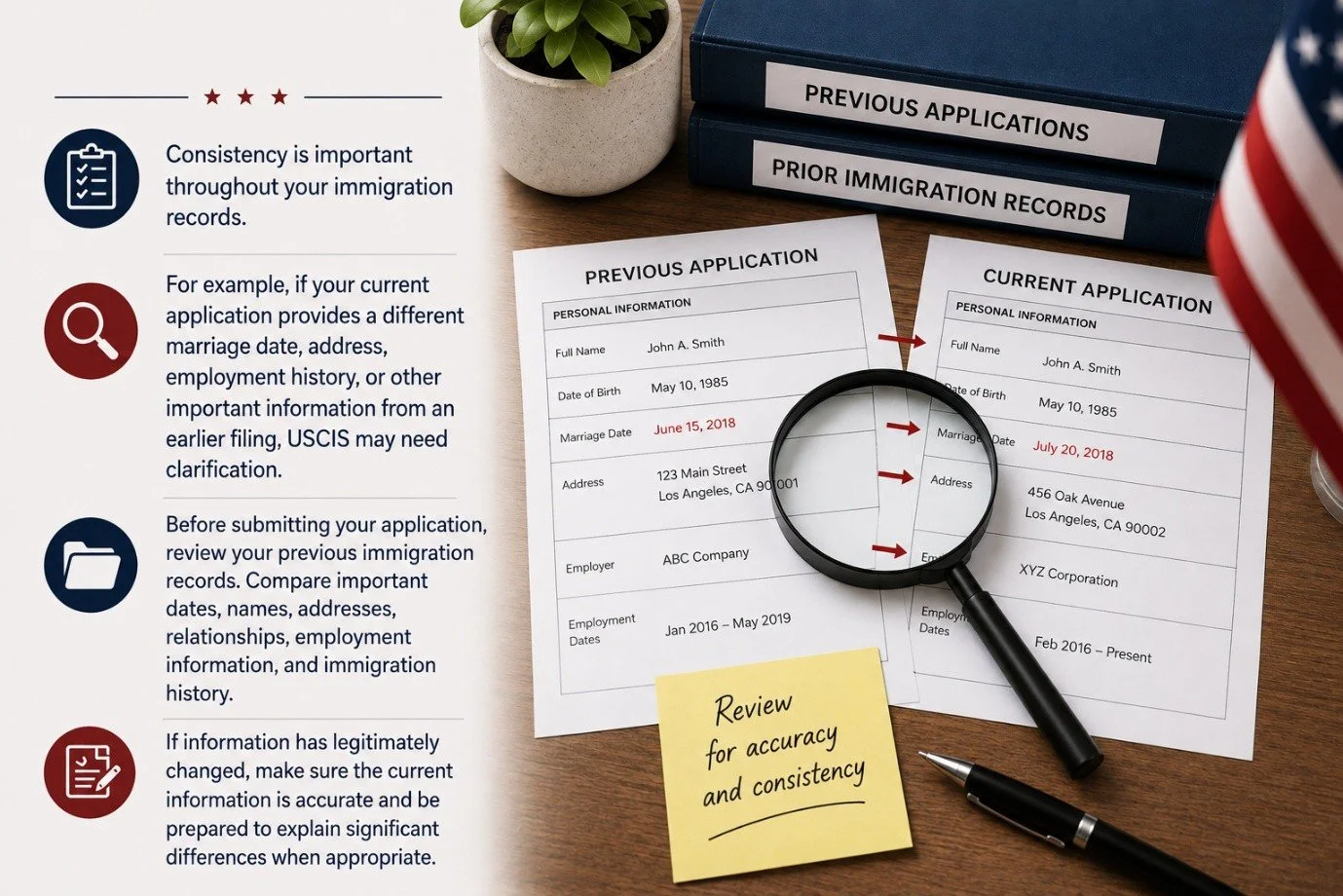
Consistency is important throughout your immigration records.
For example, if your current application provides a different marriage date, address, employment history, or other important information from an earlier filing, USCIS may need clarification.
Before submitting your application, review your previous immigration records. Compare important dates, names, addresses, relationships, employment information, and immigration history.
If information has legitimately changed, make sure the current information is accurate and be prepared to explain significant differences when appropriate.
For applicants pursuing permanent residence through marriage, marriage-based Green Card guidance can provide additional information about the process and documentation involved.
10. Changes in Your Personal Circumstances
Your circumstances can change while your Green Card application is pending.
You may move to a new address, change your marital status, change employment, or experience another event that affects information previously provided to USCIS.
You should not assume that USCIS automatically knows about important changes. Depending on the circumstances, you may need to update your information or provide additional documentation.
Keeping your address and contact information current is particularly important because you need to receive USCIS notices and requests.
11. Delayed Responses to USCIS Notices
USCIS may send you a notice requiring action by a specific deadline.
If you fail to respond or submit an incomplete response, your application could experience additional complications.
You should regularly monitor your mail and, when applicable, your USCIS online account. Keep copies of notices, receipts, forms, evidence, and correspondence related to your case.
Creating an organized immigration file can make it easier to respond quickly if USCIS requests additional information.
How Can You Help Prevent Green Card Delays?
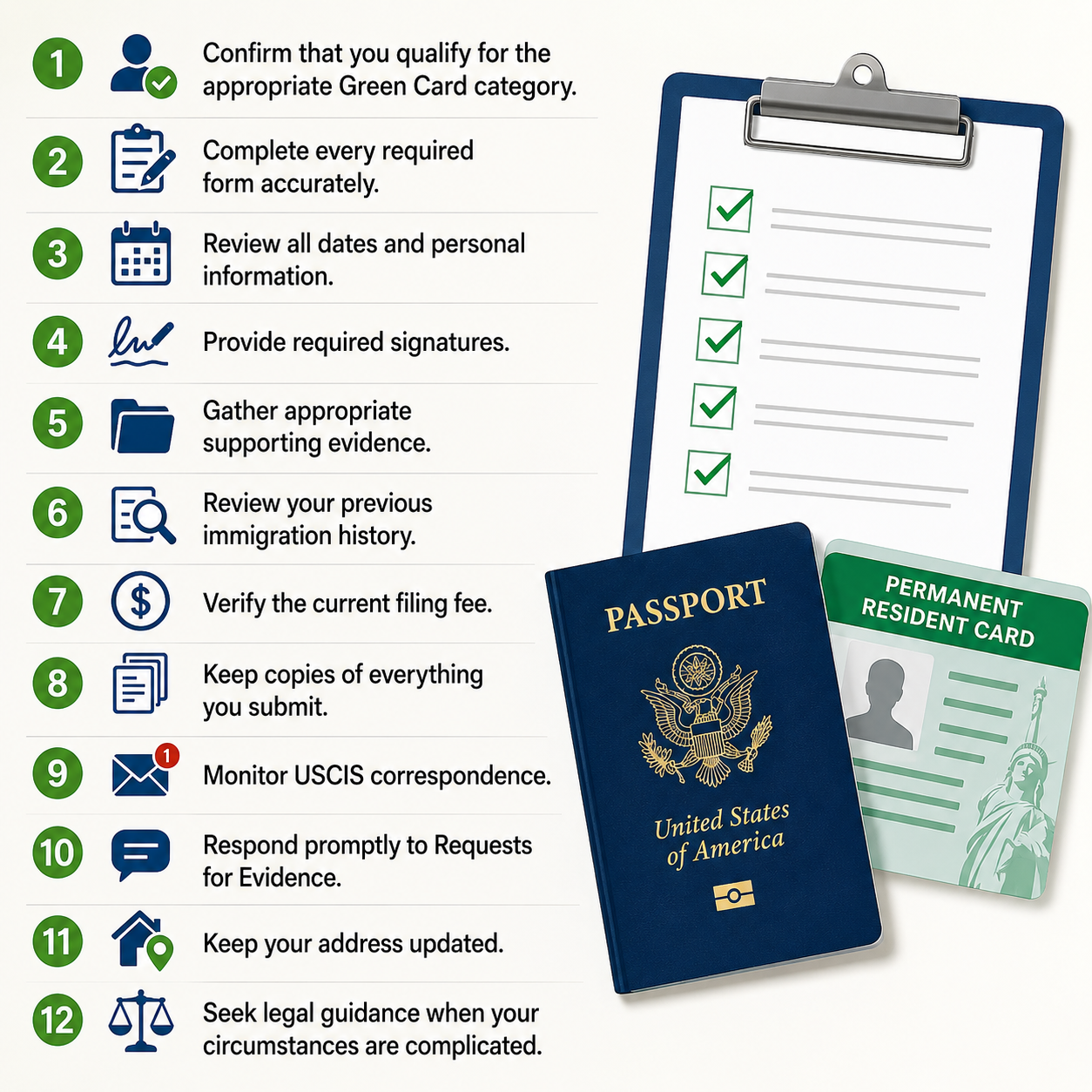
Although you cannot control every factor affecting USCIS processing, you can reduce many preventable problems.
Before filing, you should:
Confirm that you qualify for the appropriate Green Card category.
Complete every required form accurately.
Review all dates and personal information.
Provide required signatures.
Gather appropriate supporting evidence.
Review your previous immigration history.
Verify the current filing fee.
Keep copies of everything you submit.
Monitor USCIS correspondence.
Respond promptly to Requests for Evidence.
Keep your address updated.
Seek legal guidance when your circumstances are complicated.
These steps cannot guarantee faster processing, but they can help you avoid delays caused by incomplete or inaccurate submissions.
If you are still determining which immigration pathway may apply to you, reviewing Green Card attorney services in Los Angeles can help you learn more about available legal assistance.
When Should You Contact a Green Card Attorney?
You may want legal assistance if you are uncertain about your eligibility, have complicated immigration history, received an RFE, discovered inconsistencies in previous applications, or believe your case has been delayed unusually.
A Green Card Attorney in Los Angeles who provides personalized guidance for permanent residence applications can review your circumstances and help you understand potential next steps.
Rod Armande Law's Green Card and family-based immigration services focus on immigration matters including Green Cards, marriage-based immigration, family-based immigration, visas, and naturalization.
Attorney Rod Armande serves immigration clients nationwide, including clients who may need remote legal assistance outside Los Angeles, California.
Frequently Asked Questions
1. What can cause a Green Card application to be delayed?
Incomplete forms, missing evidence, Requests for Evidence, background checks, processing backlogs, inconsistent information, filing fee problems, and complicated immigration history can all contribute to delays.
2. Does an RFE mean your Green Card will be denied?
No. An RFE means USCIS needs additional evidence or clarification before deciding your application. You should carefully review the notice and provide a complete response before the deadline.
3. Can mistakes on your Green Card application cause delays?
Yes. Incorrect information, missing signatures, incomplete answers, or inconsistent information can create processing problems. Reviewing your application carefully before filing can help reduce preventable delays.
4. How can you respond to a Green Card delay?
Review your USCIS notices, case status, submitted documents, and applicable processing timeframe. If USCIS requested evidence, respond according to the notice. For complicated cases, consider seeking immigration legal guidance.
5. When should you contact a Green Card attorney?
You may benefit from legal assistance if you received an RFE, have complicated immigration history, have eligibility concerns, discovered inconsistencies, or believe your application has been delayed beyond the applicable processing timeframe.
Get Help With Your Green Card Application
A delayed Green Card application can be frustrating, particularly when you are waiting for permanent residence and planning your future in the United States. While some delays are outside your control, careful preparation can help you avoid many preventable issues.
You should keep your records organized, monitor USCIS correspondence, respond to requests promptly, and review your application carefully.
If you need assistance, Green Card Attorney in Los Angeles for personalized permanent residence guidance is a descriptive internal-link phrase you can use naturally within your website content.
Legal Disclaimer
The information presented in this article is intended solely for general educational and informational purposes. It should not be considered legal advice or treated as a substitute for advice based on your specific situation. Immigration laws, regulations, government procedures, agency policies, and legal decisions may change over time. As a result, some information discussed in this article may not reflect the latest legal or procedural developments.
Reviewing this article, using the Rod Armande Law website, or communicating with the Firm does not automatically establish an attorney-client relationship. No attorney-client relationship is formed unless Rod Armande Law completes any required conflict-of-interest review and expressly confirms that the Firm will represent the individual.
References to previous cases, legal results, settlements, approvals, or other outcomes are included only for general informational purposes. The circumstances of each legal matter are different, and the outcome of any case depends on its specific facts, applicable law, evidence, and other relevant factors. Results from prior matters should not be understood as a promise, guarantee, or indication of what may occur in another case.