
What Are the Main Steps in the Green Card Application Process?

Applying for a Green Card is an important step toward becoming a lawful permanent resident of the United States. Depending on your immigration category, the process may involve a family petition, supporting documentation, government forms, biometrics, a medical examination, an interview, and additional requests from U.S. immigration authorities.
The process is not exactly the same for every applicant. Your eligibility category, family relationship, current location, immigration history, visa availability, and other circumstances can affect the steps you need to complete.
If you are unsure where to begin, working with a Green Card Attorney in Los Angeles, California can help you understand the requirements that may apply to your situation and prepare your application more carefully.
1. Determine Whether You Qualify for a Green Card
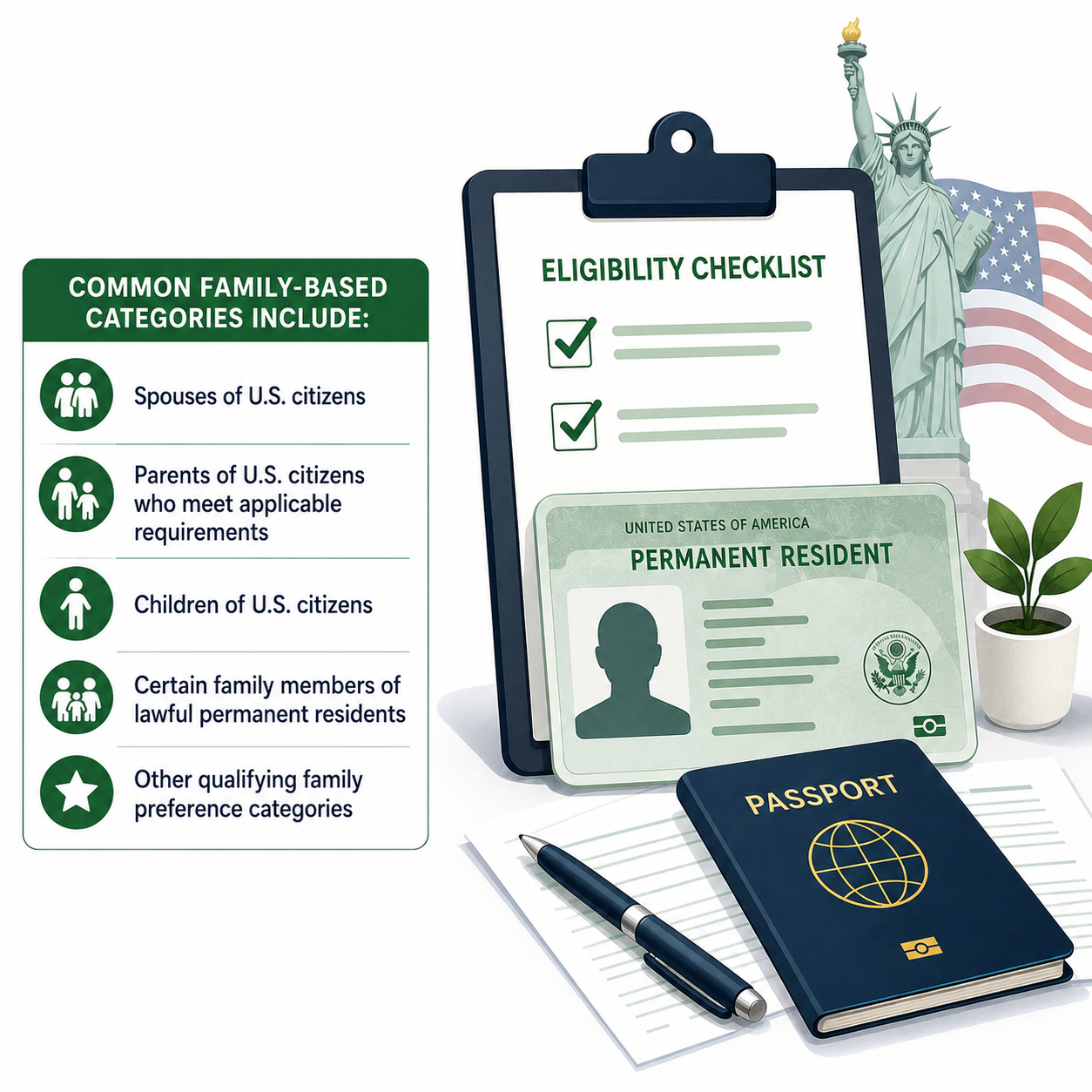
Before preparing your application, you should determine whether you qualify for lawful permanent residence under an available immigration category.
Many applicants qualify through family-based immigration. Depending on your circumstances, you may have a pathway through a qualifying relationship with a U.S. citizen or lawful permanent resident.
Common family-based categories can include:
Spouses of U.S. citizens
Parents of U.S. citizens who meet applicable requirements
Children of U.S. citizens
Certain spouses and children of lawful permanent residents
Other qualifying family-preference categories
Your eligibility category is important because it can determine which forms you need, whether an immigrant visa must be available, and what evidence you should submit.
If you are considering a family-based application, reviewing how family-based Green Card applications work can give you additional information about the general process.
2. Identify the Correct Green Card Process
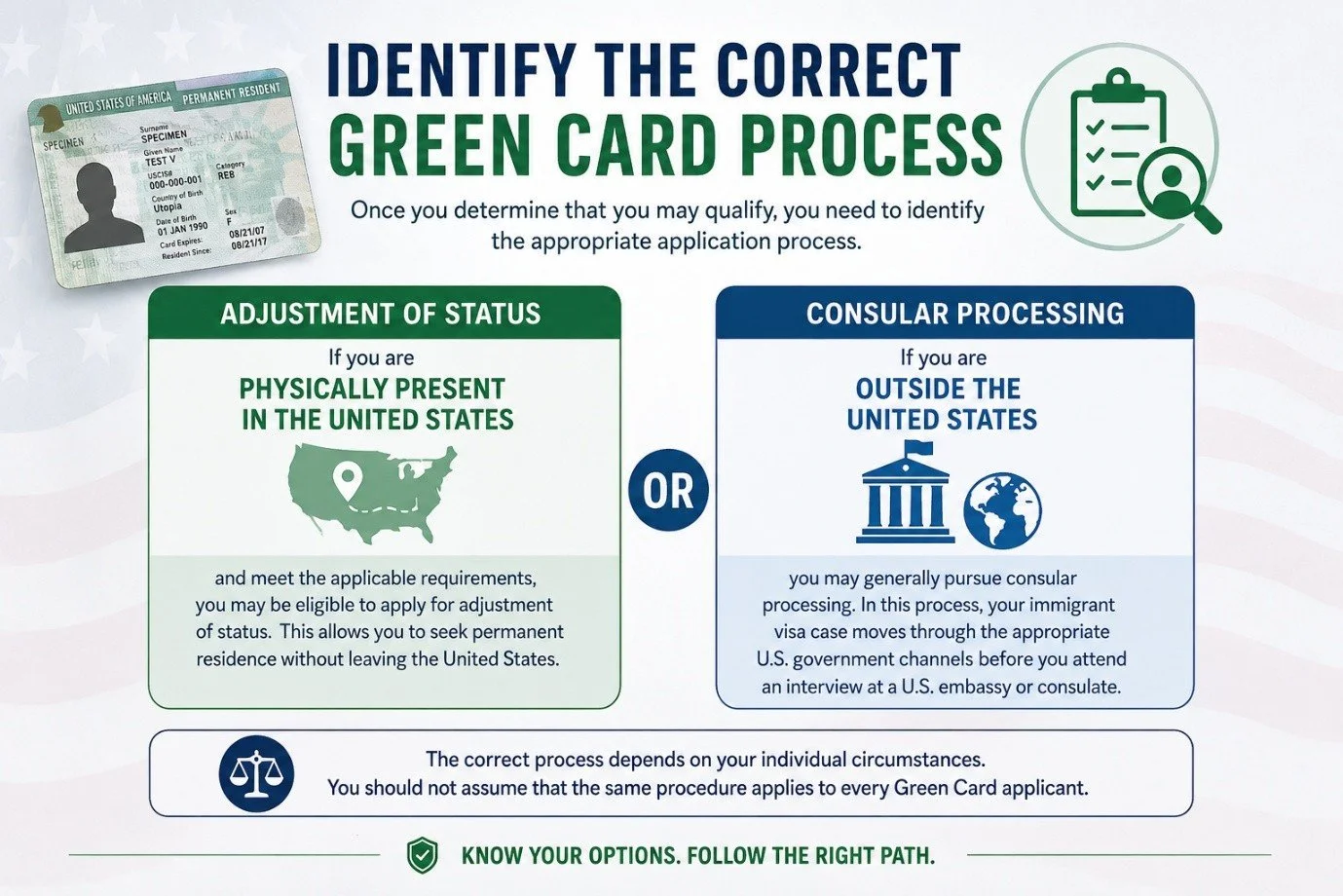
After determining that you may qualify, you need to identify the appropriate process for applying for permanent residence.
If you are physically present in the United States and meet the applicable requirements, you may be eligible for adjustment of status. This process allows certain eligible applicants to seek permanent residence without leaving the United States.
If you are outside the United States, you may generally pursue consular processing. In this process, the immigrant visa case moves through the appropriate U.S. government channels before the applicant attends an interview at a U.S. embassy or consulate.
The correct process depends on your individual circumstances. You should not assume that the procedure used by another applicant will automatically apply to your case.
For additional information, you can review Adjustment of Status and Consular Processing options for Green Card applicants.
3. Determine Whether a Family Petition Is Required
For many family-based Green Card cases, the process begins with a family petition.
For example, if you are applying based on marriage to a U.S. citizen, your U.S. citizen spouse may need to file a petition establishing the qualifying relationship.
The petition generally requires documentation showing that the relationship exists and that the petitioner meets the applicable requirements.
You should make sure that names, dates, addresses, immigration history, and other important information are accurate and consistent throughout your forms and supporting documentation.
If your case is based on marriage, you may also find it useful to review the marriage-based Green Card application process, which explains important issues involving petitions, evidence, interviews, and processing options.
You can also read the firm's detailed guide on marriage-based Green Cards and the application steps for additional background.
4. Check Whether an Immigrant Visa Is Available
Visa availability can affect when you can move forward with certain Green Card categories.
Some family-based categories are subject to annual numerical limits. Other categories, including certain immediate-relative categories involving U.S. citizens, are treated differently under immigration law.
Your specific immigration category and priority date can therefore affect when an immigrant visa becomes available.
The U.S. Department of State's Visa Bulletin provides information about visa availability for categories subject to numerical limits.
Because visa availability can change, you should review current government information instead of relying on an old processing timeline.
5. Gather Your Supporting Documents
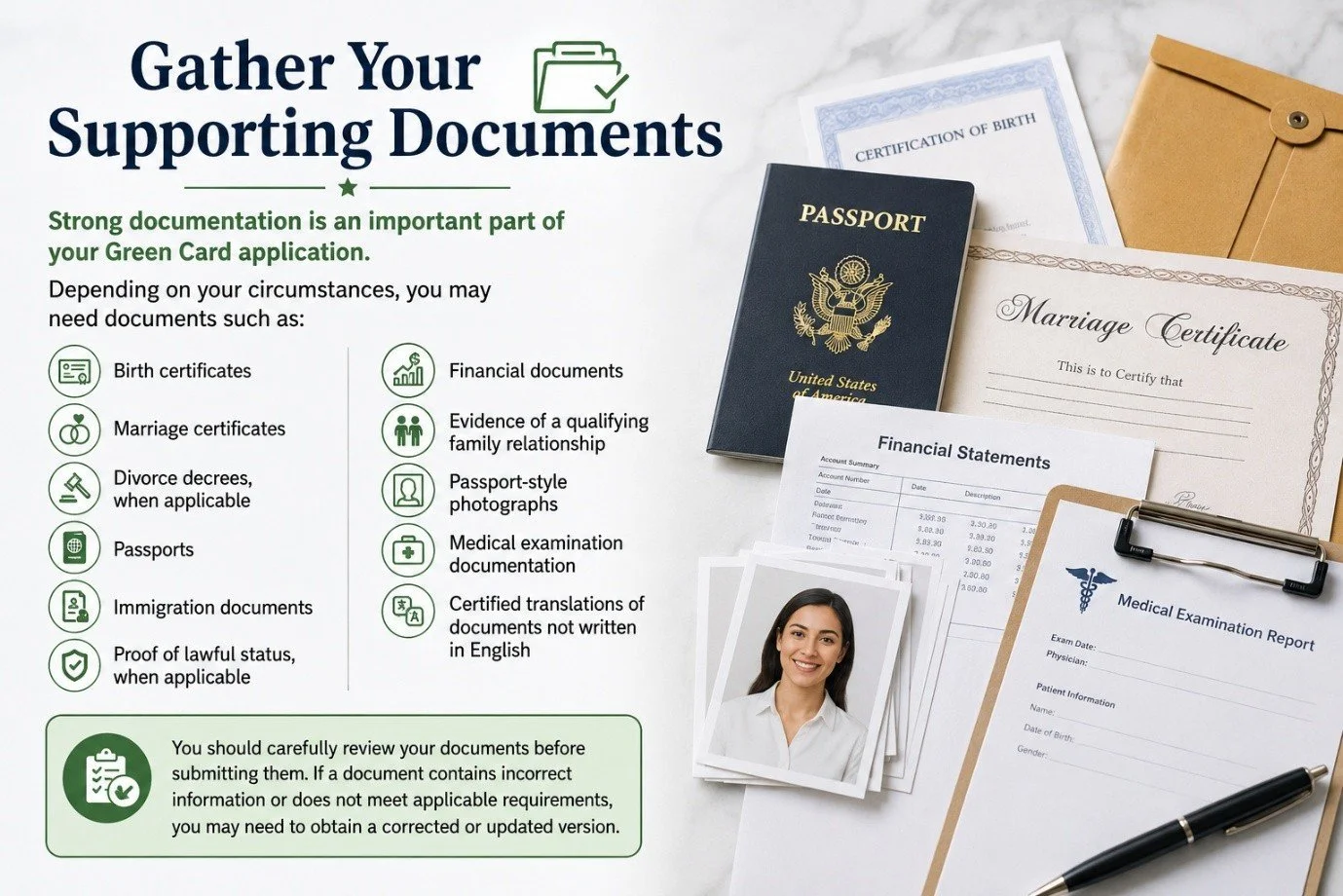
Document preparation is an important part of a Green Card application.
Depending on your circumstances, you may need documents such as:
Birth certificates
Marriage certificates
Divorce decrees, when applicable
Passports
Immigration documents
Proof of lawful status, when applicable
Financial documents
Evidence of a qualifying family relationship
Passport-style photographs
Medical examination documentation
Certified translations of documents that require translation
The documents you need will depend on your immigration category and individual circumstances.
If your Green Card application is based on marriage, relationship evidence can be particularly important. You can review bona fide marriage documents for a marriage-based Green Card application for additional information about evidence that may help demonstrate a genuine marital relationship.
You can also review the firm's marriage-based Green Card legal guidance for more information about documentation and the application process.
Before submitting your application, carefully check your documents for incorrect information, missing pages, inconsistent dates, and translation requirements.
6. Prepare and File the Required Forms
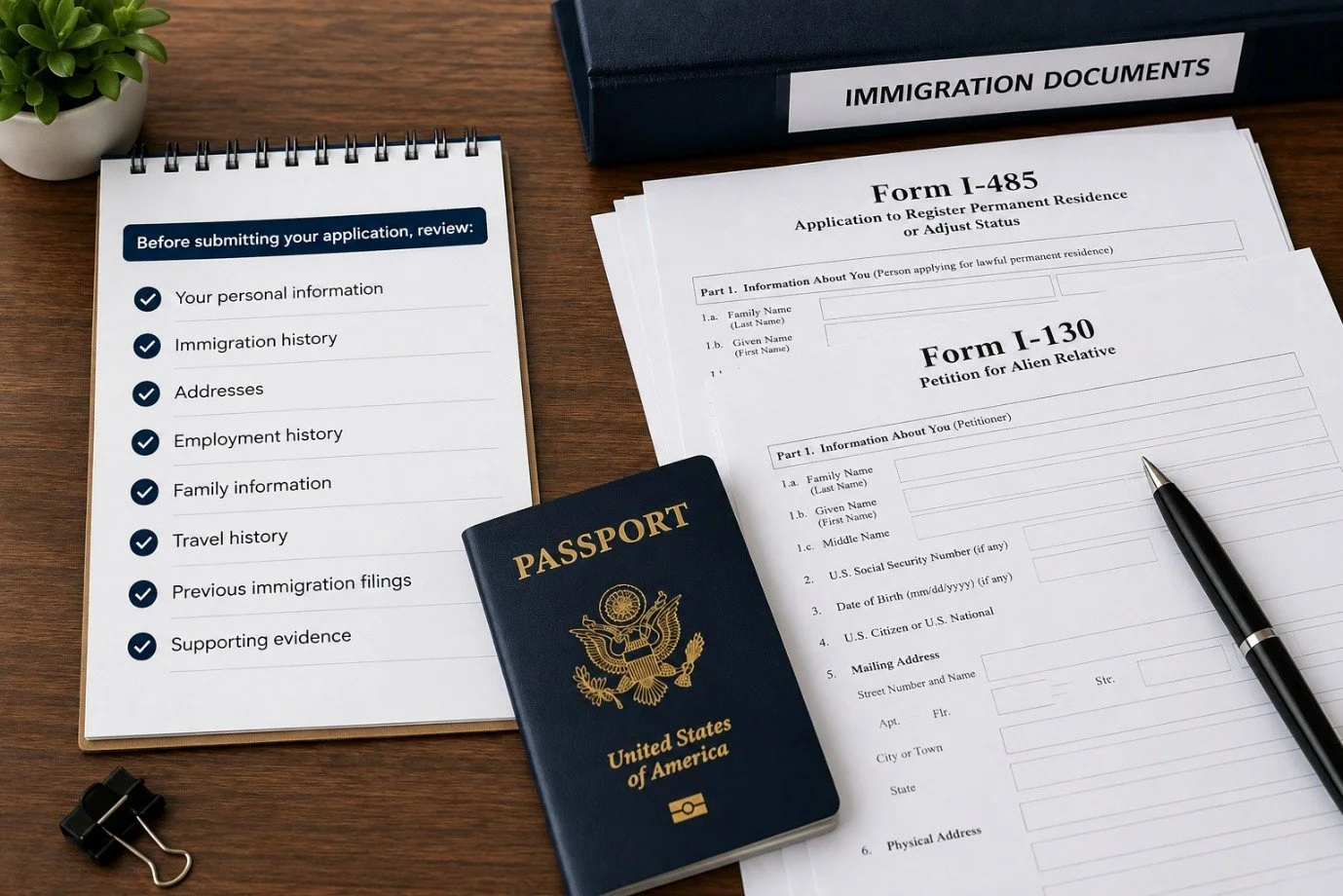
After determining your eligibility and gathering your documentation, you can prepare the immigration forms required for your particular case.
For an adjustment-of-status case, Form I-485 may be required. A family-based case may also involve Form I-130 and additional forms depending on the circumstances.
Before submitting your application, carefully review:
Your personal information
Immigration history
Addresses
Employment history
Family information
Travel history
Previous immigration filings
Supporting evidence
Answers to eligibility questions
You should also make sure you are using the appropriate version of each form and following the current filing instructions.
If you want additional information about Green Card application forms and adjustment of status, Rod Armande Law provides legal guidance for qualifying immigration clients.
For marriage-based cases, you can also review the steps involved in applying for a marriage-based Green Card.
7. Pay the Required Government Fees
Most Green Card applications involve government filing fees, although the applicable fees depend on the forms and immigration process involved.
Before filing, check the current government fee requirements for your specific application.
Government fees can change, so you should not rely on information from an older article, previous application, or another applicant's case.
Submitting an incorrect fee can result in your filing being rejected or returned.
8. Complete Biometrics if Required
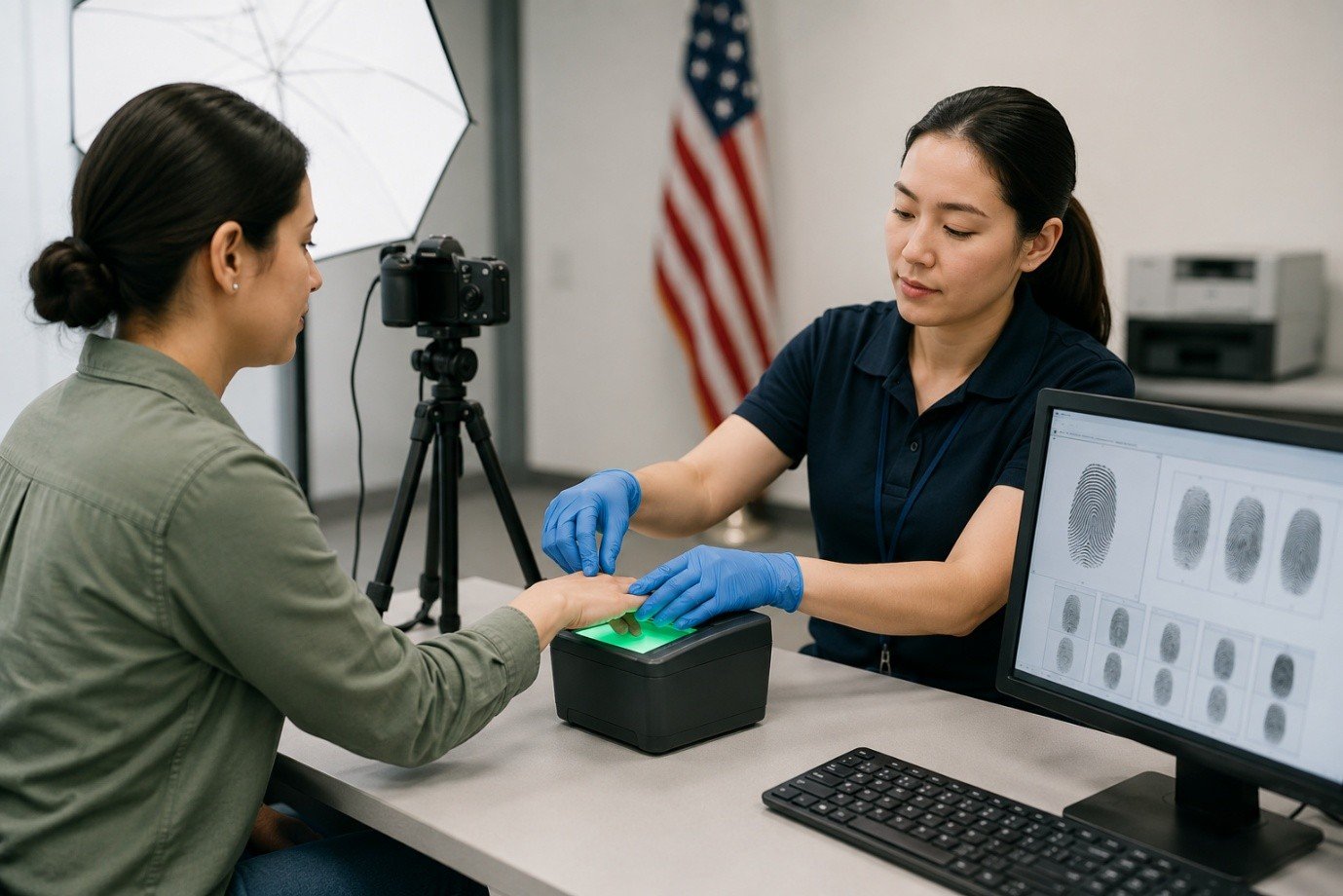
After filing, you may receive a notice requiring you to attend a biometrics appointment.
Biometrics may include fingerprints, photographs, and other information used for identity verification and required background checks.
You should carefully review your appointment notice and follow the instructions provided.
If you cannot attend your scheduled appointment, follow the appropriate procedure for addressing the scheduling issue rather than simply ignoring the notice.
Keeping copies of your appointment notices and immigration correspondence can also help you maintain an organized record of your case.
9. Complete the Required Medical Examination
Depending on your application, you may need to complete an immigration medical examination with an authorized physician.
Medical examination requirements can depend on the type of immigration application and the current government instructions.
Before completing the examination, confirm whether it is required for your case and review the current instructions concerning the authorized physician and required documentation.
You should also make sure that medical documentation is submitted according to the applicable USCIS requirements.
10. Prepare for Your Green Card Interview
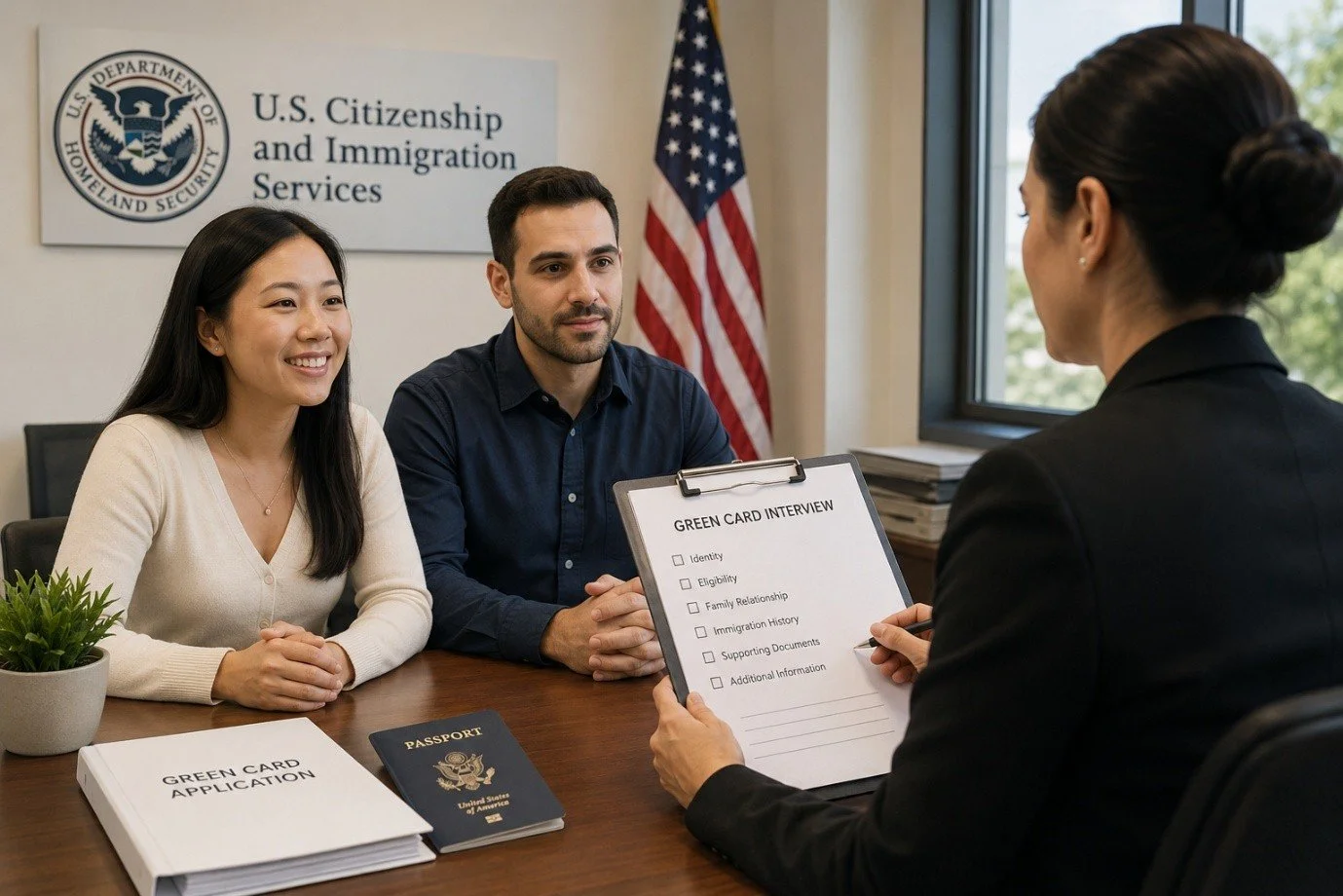
Some Green Card applicants are required to attend an interview.
During the interview, an immigration officer may review your application and ask questions about your eligibility, family relationship, immigration history, and other information relevant to your case.
If you are applying for a marriage-based Green Card, you may be asked questions about your relationship and shared life with your spouse.
You should answer every question honestly. If you do not remember something, it is better to explain that than to guess.
Before your interview, review the information you previously submitted and bring the documents identified in your interview notice.
For couples applying through marriage, marriage Green Card interview preparation can be an important part of preparing for the next stage of the case.
You can also review Rod Armande Law's guide to marriage-based Green Cards for additional information about the process.
11. Respond to Requests for Evidence
USCIS may sometimes request additional documentation or information before making a final decision.
This communication is commonly called a Request for Evidence, or RFE.
If you receive an RFE, read the entire notice carefully. It should explain what additional evidence USCIS is requesting and provide instructions for responding.
Your response should directly address the issues identified in the notice and should be submitted by the applicable deadline.
For marriage-based cases, additional evidence may relate to the relationship, financial information, immigration history, or other eligibility requirements.
If you need more information about relationship evidence, you can review bona fide marriage evidence for Green Card applications.
If the RFE involves complicated issues, professional legal guidance may help you understand what USCIS is asking for and how to organize your response.
12. Wait for a Decision
After reviewing your application, supporting documentation, interview information when applicable, and other required materials, USCIS will make a decision on your case.
If your application is approved, you may receive documentation confirming your lawful permanent resident status and your physical Green Card.
Processing times can vary substantially. Your immigration category, visa availability, filing location, government workload, and individual circumstances can all affect how long your case takes.
You should monitor your case and keep your contact information updated when required.
If you need assistance reviewing your immigration circumstances, you can contact Rod Armande Law for Green Card legal guidance.
You should monitor your case and keep your contact information updated when required.
13. Understand Your Responsibilities as a Permanent Resident
Receiving a Green Card is an important milestone, but lawful permanent residents continue to have responsibilities.
You should keep important immigration records safe, follow applicable U.S. laws, and understand the requirements for maintaining permanent resident status.
Extended travel outside the United States can also raise immigration concerns depending on the circumstances. Before taking a lengthy trip abroad, you should understand how your travel plans may affect your permanent residence.
Many permanent residents eventually consider applying for U.S. citizenship through naturalization after meeting the applicable eligibility requirements.
Understanding the path from permanent residence to U.S. citizenship can help you plan for the next stage of your immigration journey.
How a Green Card Attorney Can Help You
The Green Card process involves more than completing a few forms. You may need to determine the correct immigration category, establish a qualifying family relationship, gather evidence, prepare government forms, respond to USCIS communications, and prepare for an interview.
A Green Card Attorney in Los Angeles, California can help you understand the process and identify potential issues before you submit your application.
Rod Armande Law provides personalized immigration guidance for qualifying clients. The firm's immigration practice includes family-based immigration, Green Cards, marriage-based immigration, visas, and naturalization.
For applicants who are not located in Los Angeles, immigration matters can often be handled remotely. Rod Armande Law serves qualifying immigration clients nationwide across all 50 states.
If you are pursuing permanent residence through a qualifying family relationship or marriage, getting legal guidance early can help you understand your options and prepare your application more carefully.
Common Green Card Application Mistakes to Avoid
Submitting Incomplete Forms
Leaving required questions unanswered can create problems with an application. Review every form carefully before filing.
Providing Inconsistent Information
Your forms and supporting documents should contain accurate and consistent information. Differences in names, dates, addresses, or other important information may require clarification.
Using Outdated Information
Immigration forms, filing fees, and government procedures can change. Always verify current requirements before filing.
Sending Insufficient Evidence
Your application should contain documentation supporting your eligibility and the information provided in your forms.
For marriage-based applications, evidence demonstrating a genuine relationship may be particularly important. You can review documents commonly used to prove a bona fide marriage for additional information.
Missing Deadlines
Pay close attention to USCIS notices, appointment dates, interview requirements, and response deadlines.
Missing a required deadline can affect the progress of your immigration case.
Frequently Asked Questions
1. What is the first step in applying for a Green Card?
The first step is determining whether you qualify for permanent residence under an available immigration category. For many applicants, this involves identifying a qualifying family relationship, marriage, or another eligible basis for immigration.
2. How long does a Green Card application take?
There is no single processing time for every Green Card application. Processing can vary based on your immigration category, visa availability, filing location, government workload, and individual circumstances.
3. Do marriage-based Green Card applicants need an interview?
Some marriage-based Green Card applicants must attend an interview. During the interview, an officer may ask questions about your marriage, relationship, immigration history, and application. You should answer honestly and bring the documents requested in your interview notice.
4. What happens if USCIS requests additional evidence?
You should carefully review the Request for Evidence and provide the requested documentation by the deadline. Your response should directly address the issues identified in the notice and include relevant evidence supporting your application.
5. Can an attorney help with my Green Card application?
Yes. An immigration attorney can help you evaluate your eligibility, prepare forms, organize supporting evidence, prepare for an interview, and respond to USCIS communications throughout the application process.
Take the Next Step Toward Permanent Residence
Your Green Card application represents an important step toward building your future in the United States. By understanding your eligibility, selecting the appropriate process, preparing accurate forms, gathering supporting evidence, and responding to government requests promptly, you can approach the process with greater confidence.
If you are pursuing a family-based or marriage-based Green Card, you do not have to navigate every step without guidance. Rod Armande Law focuses on family-based immigration, Green Cards, marriage-based immigration, visas, and naturalization.
Legal Disclaimer
The information in this article is intended for general educational and informational purposes only. It is not intended to provide legal advice or create an attorney-client relationship between you and Rod Armande Law. Immigration laws, regulations, filing procedures, government policies, and processing practices may change over time, and information that applies today may not apply to every case or remain current in the future.
Your eligibility, required forms, supporting evidence, processing options, and potential outcomes depend on the specific facts of your immigration matter. Reading this article, using information from this website, or contacting Rod Armande Law does not establish an attorney-client relationship. Representation is established only after Rod Armande Law completes any required conflict review and confirms an attorney-client engagement.
Any references to immigration approvals, case results, or other outcomes are provided for general informational purposes and should not be understood as a promise or indication of what may happen in another case. Prior results do not guarantee a particular result in any future immigration matter.